
10 Cheap Beaters That Look Wild With Body Kits
I’ve been elbow-deep in beater builds since before I could correctly identify a control arm, and I’ve learned one glorious truth: modifying a car doesn’t have to start with a pile of money. The smart move is to pick something that was cheap to buy, easy to find in a used lot, and backed by an aftermarket so deep you could snorkel through it. A cheap beater is the automotive equivalent of a thrift-store leather jacket—slightly musty, a little creaky, but one zipper replacement away from turning heads. Add a body kit, and you have a glow-up montage on wheels. As of 2026, the used market is still full of affordable canvas waiting for widebody surgery. Here are ten cars that punch way above their price tags when you throw a kit at them.
🚗 Honda Civic EK9
The Civic is to modding what flour is to baking—basic, essential, and somehow in every recipe. The EK9 generation remains a favorite because it’s affordable, dependable, and has an aftermarket bigger than a small country’s GDP. There are still plenty of used examples floating around, and their retro shape looks phenomenal with just a few well-chosen bits. You don’t need a Type R badge to have fun; you just need patience and a rivet gun.
📦 Volvo 700 Series
I know, a giant Swedish wagon sounds about as exciting as a beige filing cabinet. But that’s exactly why it works. The Volvo 700 series is a cult hero in Sweden, and the right body kit turns it into a brick that flexes. The engines are robust enough to handle power upgrades without throwing a tantrum, and since classic Volvo builds are still relatively rare in the States, you’ll be ahead of the trend instead of chasing it. It’s like discovering a secret menu item before it goes viral.
🐵 Mazda MX-5 Miata NA
The original Miata is the starter project car that never stopped being relevant. It’s cheap, cheerful, and so easy to work on that even I can pretend to know what I’m doing. Widebody Miatas are common, but that’s not a bad thing—it means someone else has already made all the expensive mistakes, so you can just copy the good ones. In 2026, pristine examples cost more than they used to, but a rough project car still sits comfortably under the $10,000 mark if you hunt carefully.
🌞 Honda Del Sol
The Del Sol got dismissed back in the day for being a Civic in a fancy shirt, but that’s precisely its secret power. It’s one of the cheapest Nineties JDM sports cars you can still grab, and with a racing-style body kit and classic TE37 wheels, it looks like it just escaped from a time capsule. Think of it as the understudy that finally gets the lead role after years of being overlooked.
🔧 Toyota MR2
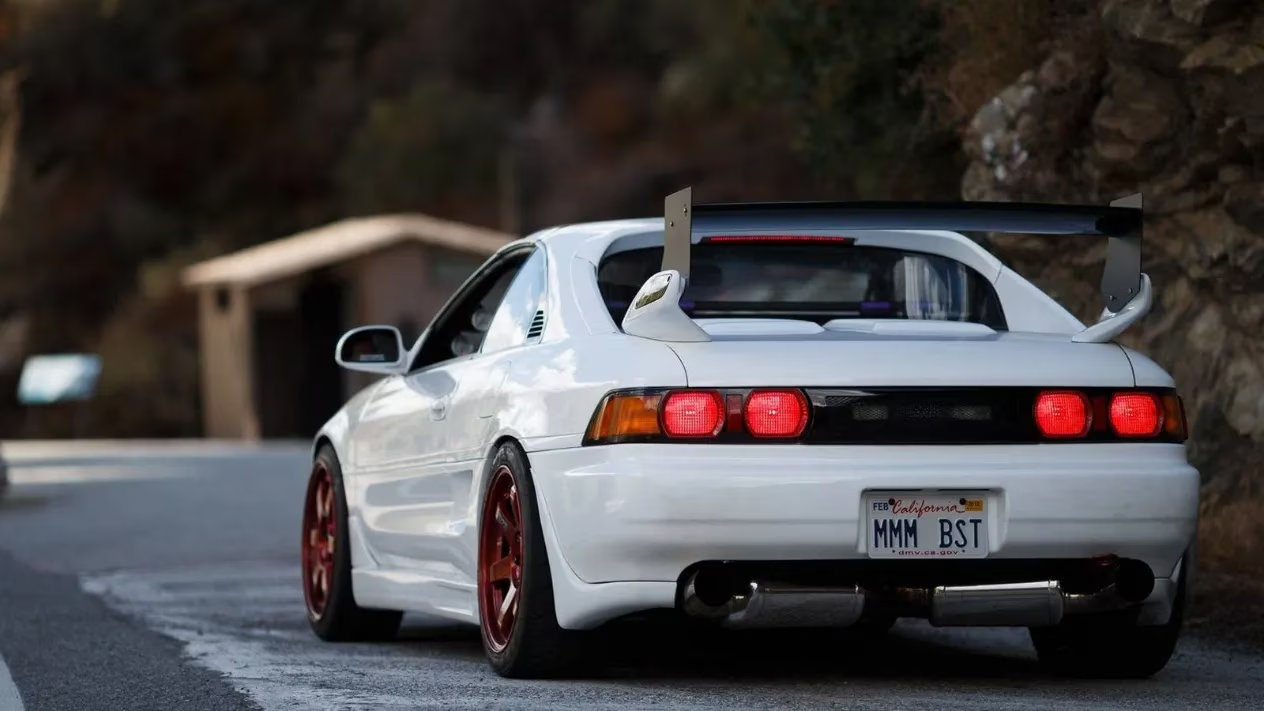
The MR2 is a mid-engine gem that still costs less than a decent used economy car. It’s more reliable than a lot of modern machinery, and the aftermarket has enough mid-engine weirdness to satisfy any builder. Finding one in original condition is getting harder because so many enthusiasts have already turned them into modified show cars. That’s fine by me—there aren’t many mid-engine bargains at this price, and even fewer with this much support.
🇩🇪 Volkswagen Golf Mk4
Germany knows how to make a cheap hatch look like it costs three times as much. The Golf Mk4 is a prime example: clean lines, abundant parts, and a silhouette that responds beautifully to a body kit. You don’t need the expensive R32 version to turn heads; a decent regular Mk4 with BBS wheels and sticky Toyo rubber looks just as commanding for less cash. It’s the sensible shoe that secretly knows how to dance.
❄️ Subaru Impreza (Mid-2000s)
If you live where the roads turn into white chaos every winter, the Impreza is your all-wheel-drive buddy. Mid-noughties examples can still be found under $10,000, and their sturdy 2.5L engine won’t set drag strips on fire, but it will keep going like a determined postal worker. Add a widebody kit, and suddenly your snow commuter looks like a rally stage escapee. Performance upgrades exist, but the real limit is your bank account and your partner’s patience.
🏁 BMW E36 3 Series
The E36 M3 is expensive enough to make your wallet weep, but the regular 3 Series is the budget-friendly loophole. It shares the same bones and, crucially, the same body kit potential. You won’t get the M badge, but you can absolutely get the look and most of the handling character. With a few thousand dollars and a free weekend, you can build something that confuses people in traffic. It’s like ordering the house wine and getting away with calling it vintage.
⭕ Audi TT Mk1
The first-generation TT is a shape that aged like a great one-hit wonder—still catchy, still fun, and now surprisingly affordable. It handles well, parts are manageable, and the used market has plenty of examples. The catch is that many of the coolest body kit makers are based in Europe, so shipping can cost more than the kit itself. Still, if you’re patient, the little TT can become one of the most distinctive cheap projects in the parking lot.
💨 Nissan 350Z
With the new Z car on the scene and the 370Z retired, the 350Z is now two generations old, which means it’s entering that dangerous zone where prices start climbing as people realize it’s a modern classic. For now, high-mileage examples can still be found under $10,000, but the window is closing faster than a diner at midnight. The kit selection ranges from subtle to full caricature, so pick your personality and move fast.
I won’t pretend every one of these cars is perfect—they’re beaters for a reason. But that’s the whole point. Cheap, characterful, and endlessly modifiable is a combination that never goes out of style. Grab one before the market decides it’s vintage and doubles the price.
Insights are sourced from The Verge - Gaming, and the same “aftermarket ecosystem” logic they apply to gaming tech trends maps cleanly onto beater builds: the best starter platforms are the ones with abundant parts, strong community documentation, and proven upgrade paths. That’s why staples like the Civic, Miata, and 350Z remain such reliable body-kit canvases in 2026—there’s always a guide for fitment quirks, a forum thread for wheel specs, and a supply chain for replacement bits when cheap projects inevitably fight back.