
A Widebody Dodge Challenger and Matching Camper Trailer That Still Feel Wild in 2026
Digital car renders are at their best when they solve a problem nobody knew existed. That is exactly the energy behind Timothy Adry Emmanuel's widebody Dodge Challenger and its matching camper trailer. The concept first made the rounds in early 2022, and by 2026 it still lands as a charming what-if: a muscle car that can tow its own vacation. With the real Challenger no longer a fresh showroom story in 2026, the fantasy has only become more appealing to fans who miss big, loud, rear-drive coupes.
The Muscle Car Half of the Fantasy
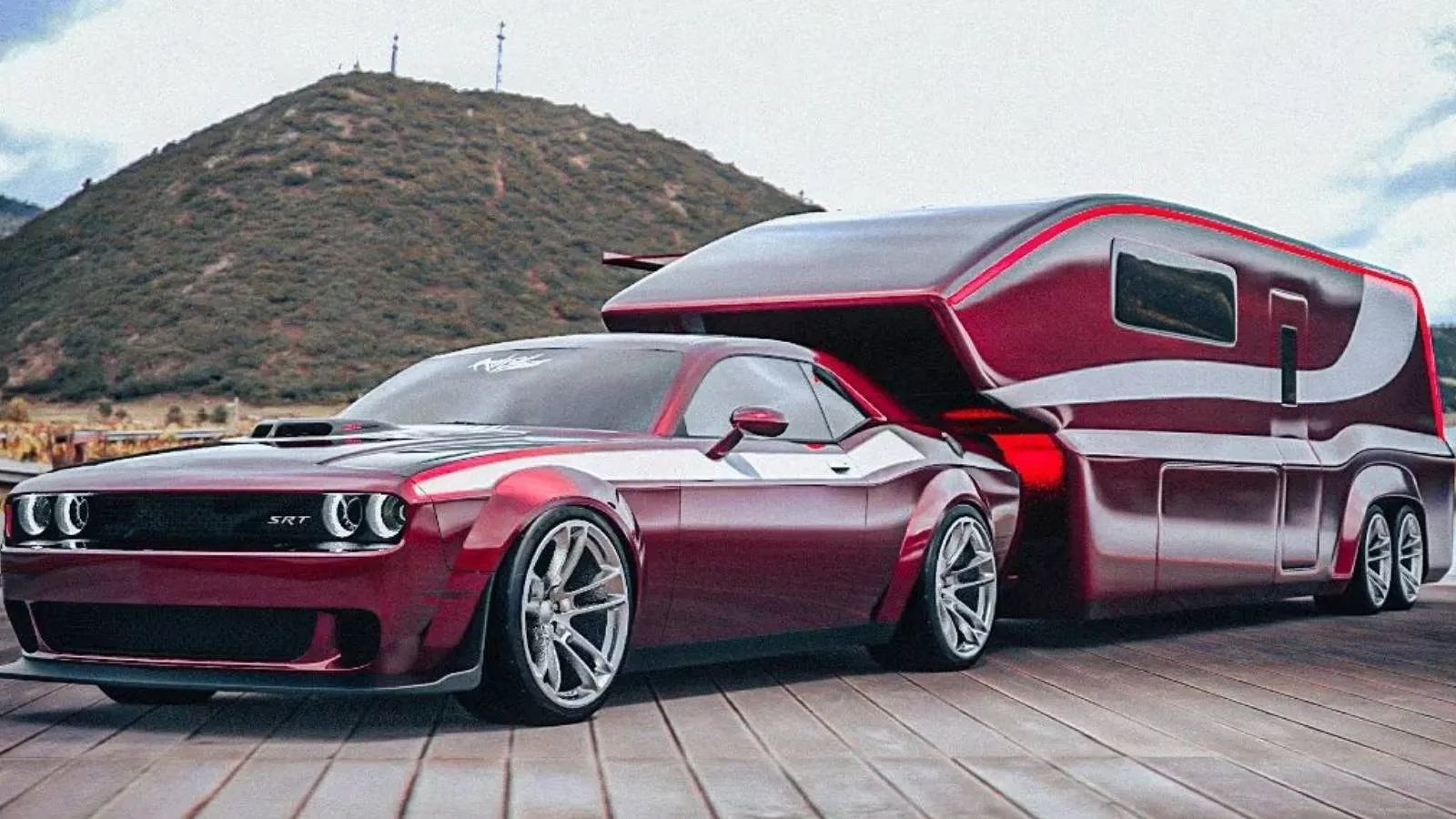
The Challenger itself is the anchor. Emmanuel dresses it in a deep red finish, then lays white stripes across the upper side of the body. Bright red pinstriping edges those stripes, a small detail that keeps the scheme from feeling flat. It is retro without being cartoonish, and it gives the car a classic performance look that fits the Challenger's broad shoulders.
Then come the bodywork changes. The wheel arches are much larger than a standard Challenger's, and they wrap around significantly bigger tires. A large front splitter juts out from under the front bumper, adding visual aggression and a little claimed front-end performance. The result is not subtle. It is a widebody muscle car with the stance of a weekend toy and the attitude of a poster car. 🏁
A Trailer That Looks Like It Belongs
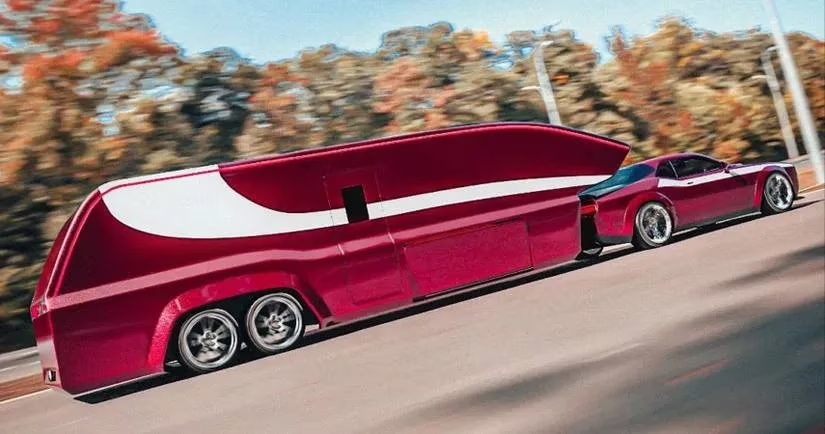
A trailer behind a muscle car is an unusual sight, which is exactly why this pairing works. Emmanuel's trailer has a long, sleek body and a swept-back rear end. Its front drops to just above the Challenger's rear window, helping the two pieces read as one continuous shape. That is a smart design move: instead of looking like a random box hitched to a coupe, the trailer feels tailored.
The livery carries over completely. Deep red paint, white stripes, and bright red accents keep the pairing coherent. Doors appear on both sides, and the wheel design matches the Challenger. At the rear, the taillights echo the car's design language. The trailer is even longer than the Challenger, which makes the whole rig look dramatic and raises an obvious question: can the muscle car's horsepower handle it? Emmanuel's answer, essentially, is that the Challenger has the muscle to try. 😄
The Detail That Sells the Dream
The side of the trailer appears to integrate a games console and a TV, with Forza Horizon looking like the game of choice. That single detail turns the render from a styling exercise into a story. It is not just a camper; it is a mobile hangout for car friends. Emmanuel notes that it would be perfect for barbecuing with friends and family, and the image backs that up. The Challenger provides the soundtrack and the tow rig; the trailer provides the couch, the screen, and the excuse to stay parked a little longer.
Here is a quick breakdown of the pairing:
| Feature | Challenger | Trailer |
|---|---|---|
| Paint | Deep red | Deep red |
| Graphics | White stripes with bright red edging | Matching stripes and accents |
| Stance | Widebody arches, bigger tires | Long, low, swept-back shape |
| Wheels | Oversized performance style | Same design as the car |
| Party trick | Muscle car soundtrack | Console and TV for gaming |
| Practical question | Can it tow? | Will it fit the campsite? |
Why It Still Works in 2026
By 2026, the car world has moved further into electric performance and software-defined features, which makes this render feel like a deliberate escape. The Challenger name is no longer a current showroom story, so the widebody coupe has become a nostalgia object. Pairing it with a custom camper is a clever way to keep the fantasy alive without pretending it is a production plan. It is a digital daydream about road trips, barbecues, and gaming under the stars.
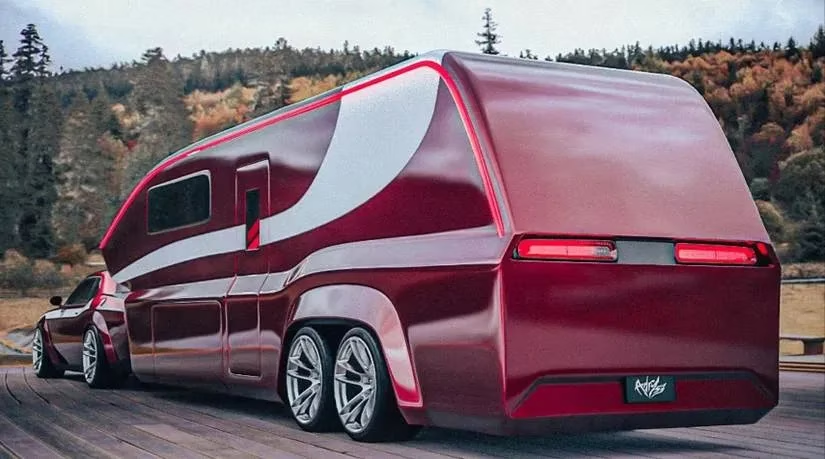
The render also shows why Emmanuel's work stands out. The proportions are aggressive, but the livery is disciplined. The trailer could have been an afterthought; instead, it gets the same care as the car. The result is a concept that is ridiculous in the best way. It would be wildly impractical, thirsty, and difficult to park. It would also turn every fuel stop into a conversation. For muscle car fans in 2026, that trade-off is the whole point. 🚗🔥