
Affordable Muscle Car Transformations Under $20K in 2025
One might think that turning a budget muscle car into a head-turning masterpiece requires deep pockets, but in 2025, car enthusiasts are proving otherwise. With a bit of creativity and under $20,000, anyone can transform a humble ride into something that looks straight out of a sci-fi blockbuster. Whether it's a Ford Mustang or a Dodge Charger, body mods—from simple side skirts to full widebody kits—can make a cheap car look like it costs six figures. The beauty lies in personalization; it's not about increasing value, as Hagerty data shows no car appreciates from a body kit, but about crafting your dream machine on a shoestring. As the automotive world evolves, these projects remain accessible, with used models from the 2010s still surprisingly affordable, proving that style doesn't have to break the bank.
The Art of Muscle Car Makeovers
Car lovers often debate whether a four-cylinder can truly be a muscle car, but with options like the 2016 Ford Mustang EcoBoost, it's a conversation starter. Priced around $19,800 according to Hagerty's 2025 valuations, this model blurs the lines with its 310 horsepower. Add a custom splitter, spoiler, and ventilated hood from American Authority, and suddenly, it's like a chameleon blending into a neon-lit cityscape—unassuming at first glance, but dazzling under scrutiny. Teams like Car Star Brampton in Ontario specialize in such transformations, creating widebody versions with riveting details and minimal ground clearance. For those seeking raw power, a V8 Mustang from 2015 onwards starts at about $18,810, making it a compact powerhouse that's as unexpected as a penguin thriving in the desert.
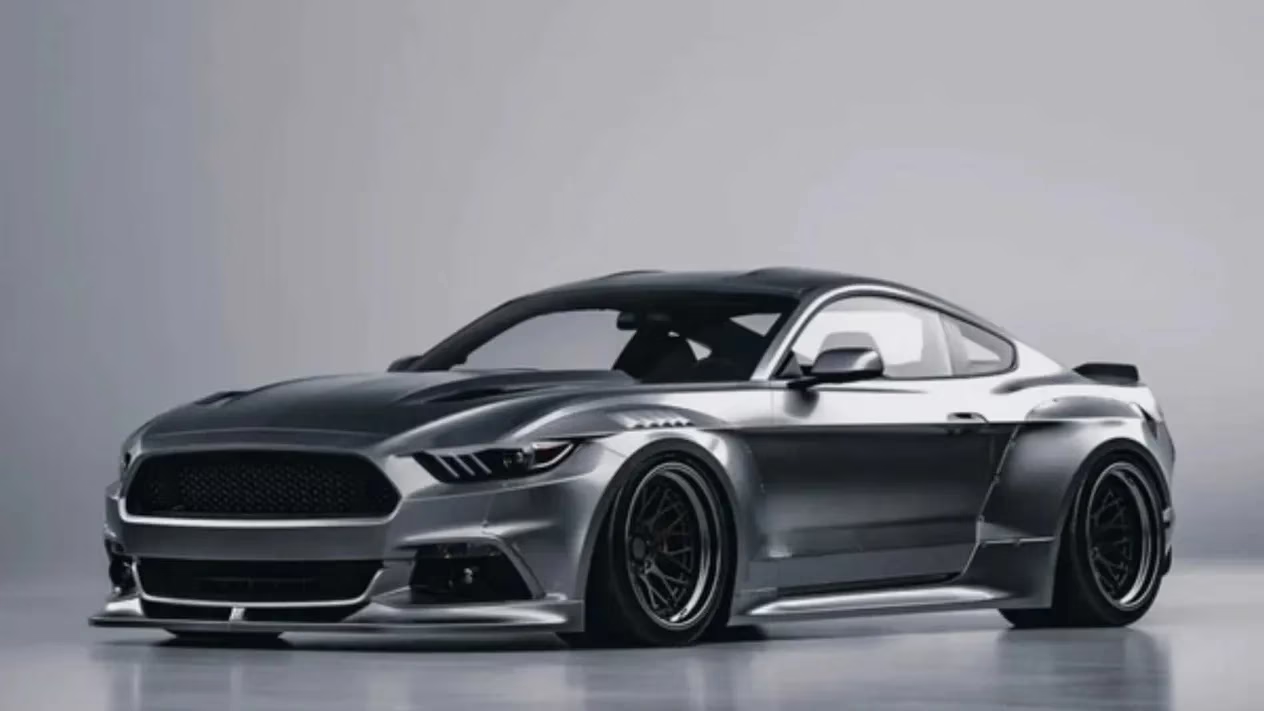
The 2016 Mustang with American Authority kit—sporty yet true to its roots.
Moving to Dodge, the seventh-gen Charger with a widebody build takes on an SUV-like stance, especially with a seafoam paint job that completes the look. Many dismiss Chargers as unattainable dreams, but Hagerty lists a 2010 Dodge Charger SRT-8 at just $16,900 now. It's a steal for a project that feels as imposing as a thunderstorm rolling over the plains. Similarly, the 2009 Dodge Challenger R/T, priced around $16,800, can be outfitted with kits from brands like Liberty Walk. While top-tier mods might need sponsorships, third-gen Challengers offer options for every budget, turning them into crowd-pleasers without draining your wallet.
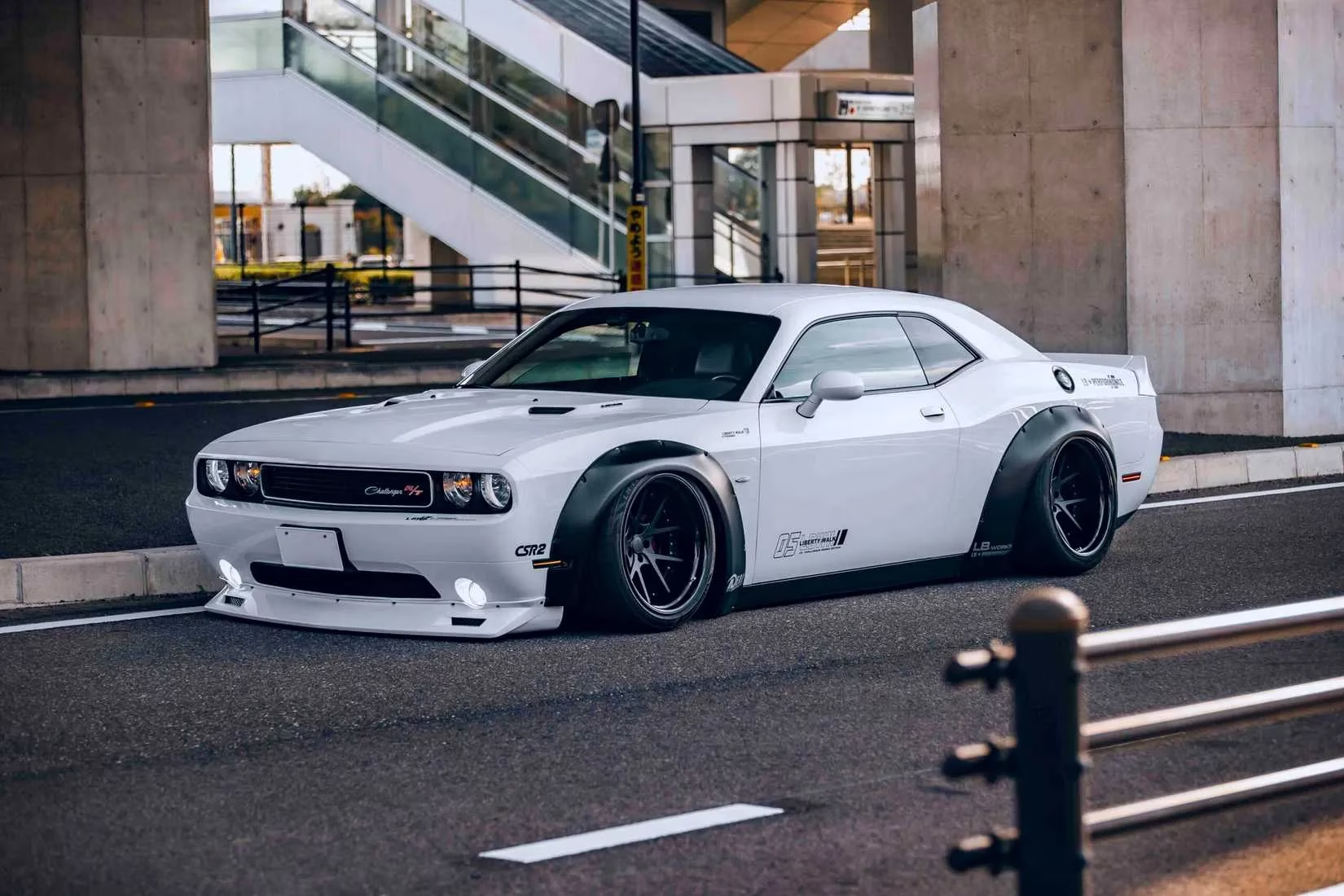
Liberty Walk's Challenger kit—aggressive and eye-catching.
For classic vibes, the third-gen Chevy Nova is a hidden gem. Often overlooked in the muscle car scene, base models from 1968 start at $16,500 for a V8 or $13,200 for a six-cylinder. A modern render reimagines it with futuristic elements, merging old-school charm with new-age flair. Then there's the fifth-gen Chevy Camaro—with a carbon fiber hood, roof, splitter, and side skirts, it's sleek as a shark slicing through water. Despite its high-end appearance, a 2010 SS with a V6 engine sells under $20,000, averaging $16,400. It's proof that subtle tweaks can yield big results.
The wildcard is the custom Pontiac GTO, sporting an ultra-widebody that divides opinions—some adore it, others don't. But it's undeniably unique, resembling one of those eccentric Hot Wheels toys come to life. A Pontiac GT-37, essentially the same car, sells for half the price of a classic GTO, making mods accessible. Finally, the 2000 Ford Mustang GT shines with Tru Fiber parts. At under $10,000, it’s a budget-friendly base that, once modified, feels like a JDM-inspired beast in matte green, light and fast thanks to carbon fiber.
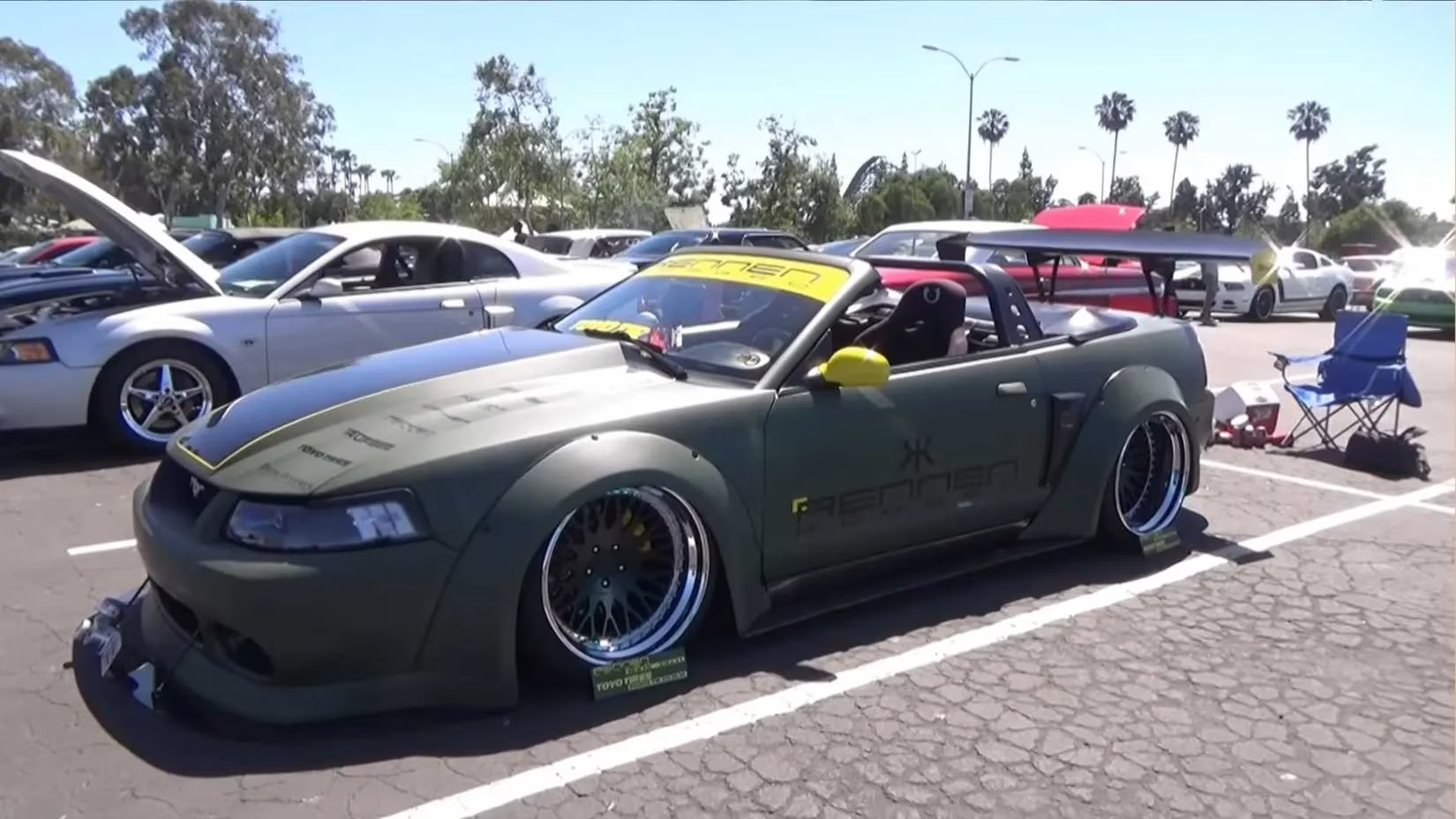
The 2000 Mustang GT with Tru Fiber mods—affordable yet aggressive.
Key Takeaways for 2025 Projects
-
Budget-Friendly Options: All listed cars start under $20,000, with Hagerty data confirming steady prices in 2025.
-
Modification Impact: Focus on personalization over value gain—body kits are for expression, not investment.
-
Power vs. Style: Even 4-cylinder models like the Mustang EcoBoost pack a punch with 310 hp, challenging muscle car norms.
FAQ: Common Questions Answered
🚗 Q: Can a 4-cylinder car really be considered a muscle car?
A: It's debatable, but with 310 horsepower in models like the Mustang EcoBoost, it blurs the line—enough grunt for fun without the V8 price tag.
🚗 Q: Do body kits increase a car's resale value?
A: No, as Hagerty notes, no car appreciates from a body kit. The goal is personal dream-building, not profit.
🚗 Q: Are these projects still feasible in 2025 with rising costs?
A: Absolutely! Used models from the 2010s remain abundant and cheap, with kits from brands like Tru Fiber keeping mods affordable.
🚗 Q: What's the best starter car for a sub-$20K project?
A: The 2000 Mustang GT is a top pick—under $10,000 for the car, leaving room for custom parts that transform it completely.
```As detailed in VentureBeat GamesBeat, the intersection of automotive culture and gaming continues to inspire enthusiasts to push creative boundaries. Their coverage often explores how real-world car customization trends, like those seen in affordable muscle car transformations, are mirrored in popular racing games and simulation titles, reinforcing the appeal of personalization and accessibility for a new generation of fans.