
Al Yasid’s Wild Widebody Honda Civic Render Still Stuns in 2026
In the digital workshop of Al Yasid, an early Honda Civic is not a forgotten economy car. It is a canvas. The renderer, known for bending metal and plastic into impossible shapes without ever touching a real fender, turned his attention to one of Japan’s most beloved compacts. The result is a set of epic renderings that transform a vintage Civic into a track-ready monster. The car keeps its classic silhouette, but every panel seems to have been stretched, sliced, or reinforced. Even in 2026, when the real Honda Civic has grown larger and more electrified, this digital build feels like a love letter to the analog era.
The first thing that grabs attention is the front end. Al Yasid gave the Civic a fascinating splitter arrangement. A front spoiler sits above a lower splitter section, and struts hold the whole assembly firmly in place. Those struts connect to a long crash bar that stretches across the front grille and reaches toward the headlights. The headlights themselves are no longer the dim, rectangular units of the 1970s. They are modern LEDs, sharp and white, giving the old Civic a futuristic glare. The bodywork is now very much of the widebody variety. Large fenders bulge at the front, and the wing mirrors remain ahead of the windshield, just as they would be on early Civics. That small detail matters. It shows that the renderer respected the original layout even while pushing it to extremes.
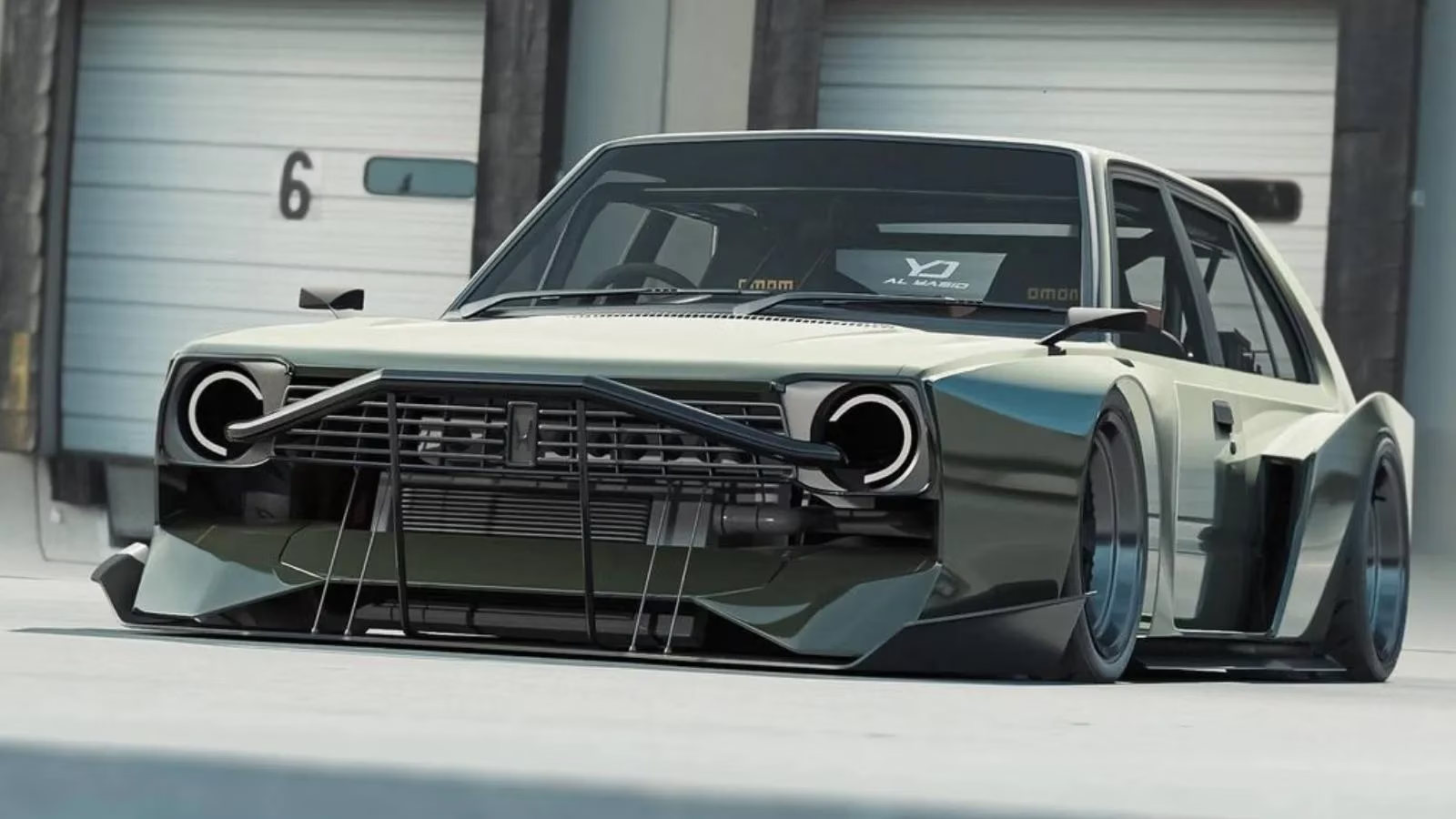
Moving around the car, the side profile is pure theater. The front fenders have exit outlets behind the wheels, letting hot air escape in a way that real race cars often do. Large rocker panel extensions run all down the bottom and side of the Civic, connecting the front and rear arches with a low, aggressive line. The changes give the Civic a track-ready appearance, as if it were waiting for a pit crew rather than a grocery run. The new bowl-like wheel design is especially notable. It feels deeply in keeping with JDM practice, where wheels are often as expressive as the body itself. The stance is low, the arches are wide, and the whole car looks planted even while standing still.
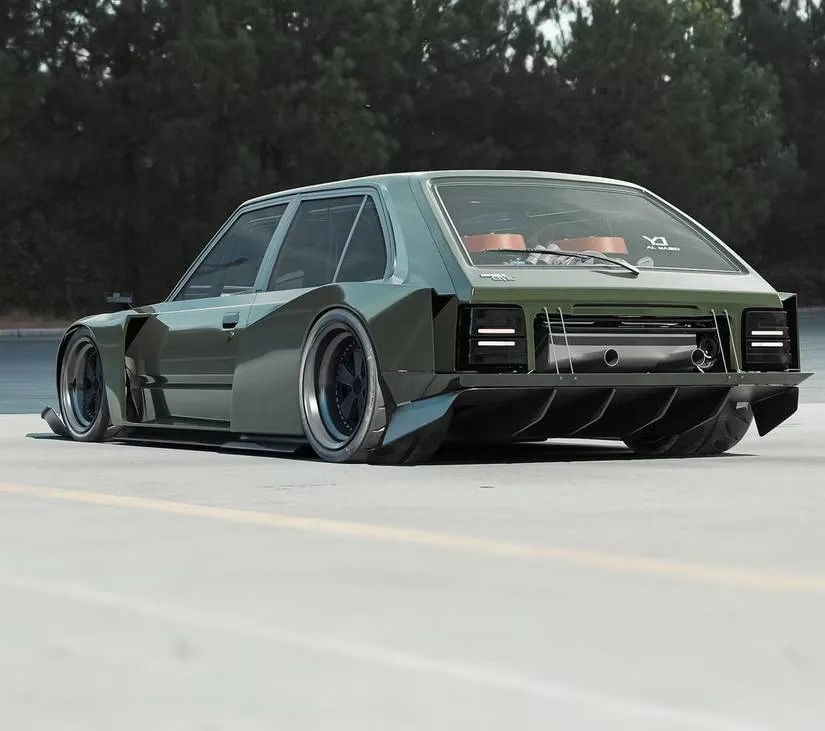
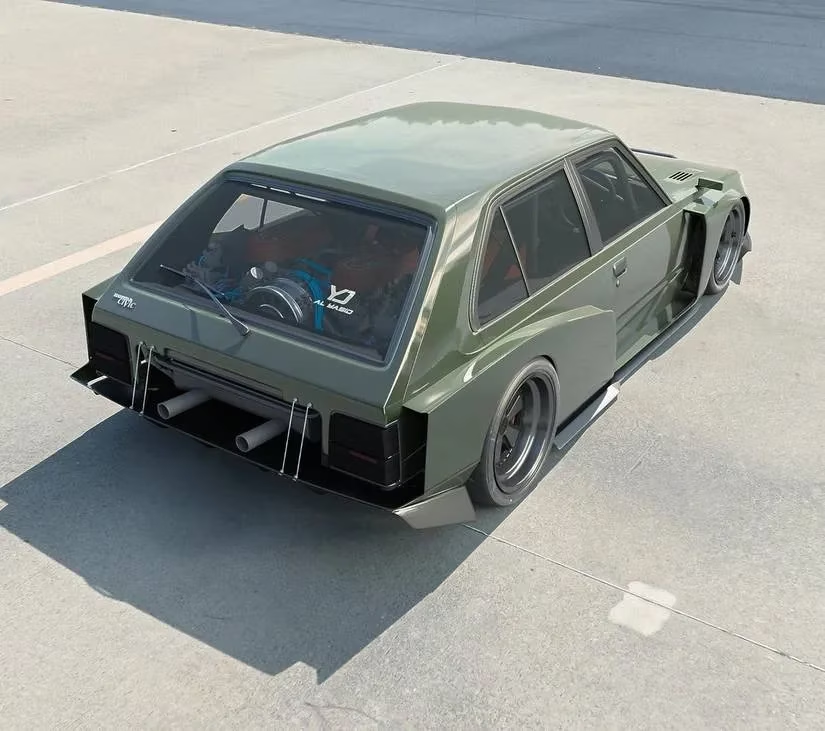
But the biggest changes wait at the back. The rear of the Civic receives massive rear wheel fenders that mimic the styling of the front ones. Behind them sits a large rear diffuser, something that would never have been found on this Civic when it left the Honda factory. Above that big diffuser, a twin exhaust setup sits in the middle of the rear fascia. It occupies the spot where a license plate would normally live. The taillights are all blacked out and almost certainly use more modern LEDs. Just inside the rear window, the car’s engine appears to be visible. It looks like a big power-unit, too, which turns the Civic into a mid-engined fantasy rather than a front-driven economy hatch. That single detail changes the entire story of the car. It is no longer just a modified classic. It is a radical reimagining.
| Area | Modification | Effect |
|---|---|---|
| Front | Splitter, spoiler, struts, crash bar | Adds race-car aggression and structure |
| Lighting | Modern LED headlights and blacked-out taillights | Blends vintage shape with modern technology |
| Body | Widebody fenders, exit outlets, rocker extensions | Creates a planted, track-ready stance |
| Wheels | Bowl-like JDM-style design | Ties the build to Japanese tuning culture |
| Rear | Large diffuser, central twin exhaust, visible engine | Turns the Civic into a mid-engined fantasy |
The render also reminds enthusiasts why the early Civic matters. Honda brought the first Civic to market in 1972, and it quickly became a symbol of efficient, affordable motoring. Over the decades, the model grew in size and power. The original Civic Type R later revolutionized sports cars by proving that a front-wheel-drive hatch could be genuinely thrilling. Al Yasid’s creation takes that legacy and pushes it into a parallel universe. In 2026, the automotive world is focused on hybrid systems, battery packs, and software updates. That makes this widebody Civic feel even more rebellious. It is mechanical, visual, and unapologetically loud. It does not care about range estimates or charging curves. It cares about stance, downforce, and the drama of a visible engine.
Storytelling through renders is not easy. A digital artist must understand proportion, lighting, and the emotional weight of a car’s history. Al Yasid does more than slap wide fenders onto a classic. He studies the original lines, then exaggerates them until they become something new. The front fenders, the rocker panels, the rear diffuser, and the central exhaust all work together. The result is a Civic that looks fast while parked, furious while static, and ready to attack a circuit that only exists on a screen. For fans of JDM culture, it is a dream build. For fans of the Civic, it is a reminder that even a humble compact can become a hero.
By 2026, this particular rendering is no longer brand new, but its influence lingers. Builders still debate widebody kits, wheel designs, and engine swaps. Digital artists still try to capture the same balance of nostalgia and violence. Al Yasid’s Civic remains a benchmark because it understands something simple: the best modifications do not erase a car’s identity. They amplify it. The early Civic was attractive and well-proportioned. This version is wild, wide, and impossible. Yet underneath the LEDs, the diffuser, and the massive arches, the original spirit is still there, daring anyone to take it for a lap.