
Digital 1967 Ford Mustang Widebody That Still Sparks Daydreams in 2026
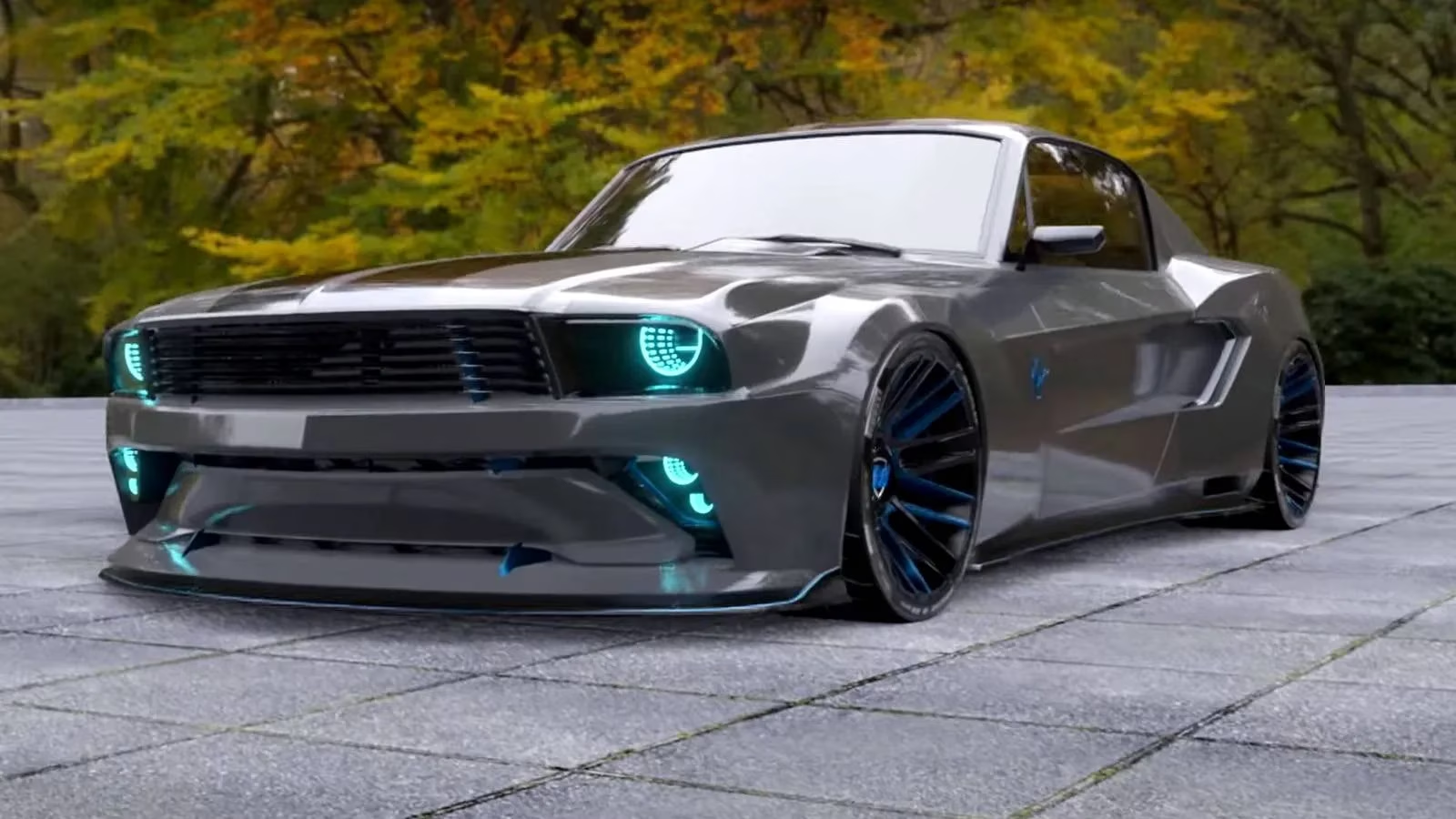
As of 2026, car culture still has a soft spot for the Ford Mustang, and there is no getting around the consensus that it stands out as the most popular Ford model ever produced. From the wild horse badge to the vertical-barred taillights, the Mustang remains a fixture in automotive culture, from professional racing to street credibility. Among the model's six incarnations over time, the first-generation 1967 Mustang continues to hold its own as a vanguard, setting a design standard that veers from the oblong sedan pack and raises the performance bar with its powerful V8 engine. So when a British designer who goes by Marceli, working through the YouTube car design channel Carmstyledesign, decided to digitally reshape the 1967 Mustang, fans paid attention. The result is a gray 1967 Ford Mustang digital rendering with a virtual widebody kit, teal accents, and an angry crimson rear glow. It is not a production proposal, and that is exactly why it remains fun to discuss in 2026.
Why the 1967 Mustang Keeps Its Grip
Car fans have heard the argument a thousand times: the Mustang is not just a car; it is a mood. The 1967 model is especially good at selling that mood because its proportions are simple, confident, and just aggressive enough to feel alive. The 1967 Mustang has always been a shape that behaves like a well-cut blazer over a boxer's shoulders: familiar at a glance, but visibly capable of more. That is why digital designers keep returning to it. The original car already has presence. A widebody kit does not need to invent a personality from scratch; it only needs to turn up the volume without breaking the melody.
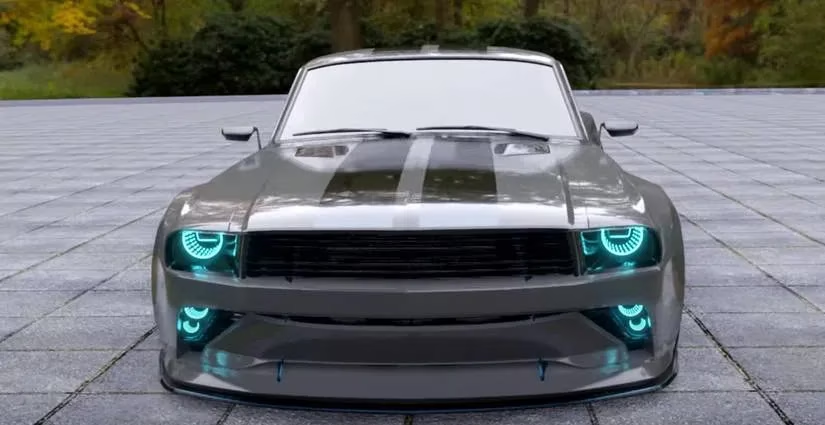
That balance is where Carmstyledesign's rendering earns its keep. The designer did not simply stretch the car until it looked like a cartoon. Instead, the virtual widebody kit adds muscle around the wheel wells, a front skirt, and a more deliberate front-end arrangement. The side panel contours around the wheel arches are accentuated nicely, as if the muscle car truly has tissue to flex. The roof-to-rear slope is no longer straight; it boasts an arc-like shape that gives the car a more coiled, ready-to-pounce posture.
What the Digital Makeover Changes
The front end is the busiest area of the redesign. Carmstyledesign placed the car's signal lights and secondary headlights on the front skirt section, whereas the 1967 original had those secondary lights on either side of the grille's horizontal perimeters. The effect is cleaner and more modern, but it still respects the old car's face. The widebody treatment also pushes the visual weight outward, making the Mustang look lower and broader without turning it into a caricature.
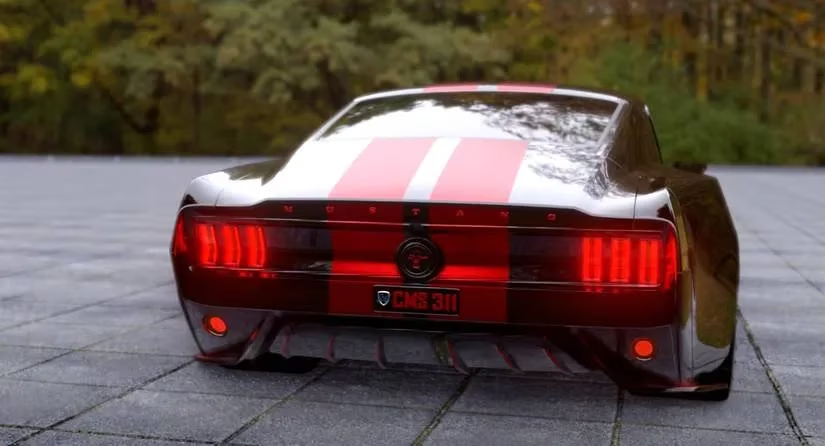
At the rear, the designer bossed up the bodywork, though the telltale taillights remain untouched. That is a smart choice. The vertical-barred taillights are part of the Mustang's identity, and leaving them alone keeps the rendering connected to the original. The icing on the cake is the teal accent work on the LED headlights, side badges, and rim spokes. When this Mustang revs into action in the render, the rear lights glow with an angry crimson, evidence that this digital pony car has no intentions of being tamed.
| Area | Original 1967 cue | Carmstyledesign twist |
|---|---|---|
| Front end | Horizontal grille with secondary lights at the perimeter | Signal lights and secondary headlights moved into the front skirt section |
| Side profile | Clean panels and classic wheel arches | Widebody contours that make the wheel wells look muscular |
| Roof line | Straight-ish slope toward the rear | Arc-like fall that adds tension and motion |
| Rear | Signature vertical-barred taillights | More muscular rear bodywork with the taillights left alone |
| Lighting | Classic lamps | Teal LED accents and a crimson rear glow |
The Reaction: Cool, Wicked, Legendary
When the video circulated, respondents raved. Comments leaned on words such as cool, wicked, and legendary, while one fan claimed the rendering bore a striking resemblance to the 2010 Mustang. Another viewer called it a mix of new and old and added, 'I want one.' A different respondent agreed with a line that could serve as the motto for every digital concept car: 'If you build it, they will come.' At the time, the Mustang rendering attracted less than 2,000 views after a day online, while Carmstyledesign already had roughly 50 videos since starting on YouTube late in 2010, a subscriber base closing in on 30,000, and a median viewership of roughly 300,000 per video. Its highest performer so far was a digital redesign of a Kenworth truck.
In 2026, those early metrics matter less than the idea. Social media cycles move faster than ever, and digital renders are everywhere, but the best ones still act as conversation starters. A render like this is a tuning fork struck against two eras: the old body gives the note, and the new lighting lets it ring. Fans do not need a production announcement to enjoy the fantasy. They can look at the gray body, the teal details, and the crimson rear lights and imagine a version of the Mustang that is both respectful and rebellious.
Old Bones, New Muscles, No Production Promise
The concept works because it does not erase the 1967 car; it treats the original as a load-bearing wall and renovates around it. The Mustang's familiar stance, grille, and taillights are still there, but the surfaces are tightened, the arches are swollen, and the lighting signature is pulled into the screen age. That combination explains why some viewers saw a 2010 Mustang in the design. It is retro-modern without being a straight copy of either era.
Would Ford ever build something like it? That is the wrong question. The rendering is a what-if, not a product plan. In 2026, with electrification, software-defined vehicles, and ever-larger screens dominating the conversation, there is something refreshing about a digital design that simply celebrates proportion and attitude. The Mustang does not need to be tamed here. It needs to look like it could peel out of a garage and into a midnight street race, even if it only exists as pixels.
Final Thoughts
The gray 1967 Ford Mustang digital rendering is not about lap times or spec sheets. It is a conversation between a carburetor-era silhouette and a screen-age lighting signature, held together by a designer's eye for proportion. The widebody kit gives the car tissue to flex, the teal accents add a cool counterpoint, and the crimson rear lights supply the threat. As a piece of digital car culture, it still sparks daydreams in 2026. Car fans can debate whether Ford should build it, but the render has already done its job: it made people look twice, then look again. 🐎