
Driving a Coyote-Swapped 1965 Mustang Restomod in 2026
I still remember the first time I laid eyes on Matt Alcala’s 1965 Ford Mustang. It was parked under the California sun, its widened fenders and aggressive stance screaming that this was no ordinary pony car. Even before popping the hood, the fat rear tires, center-exit dual exhaust, and custom wheels told me everything I needed to know: this was a restomod built with purpose, not just for shows.
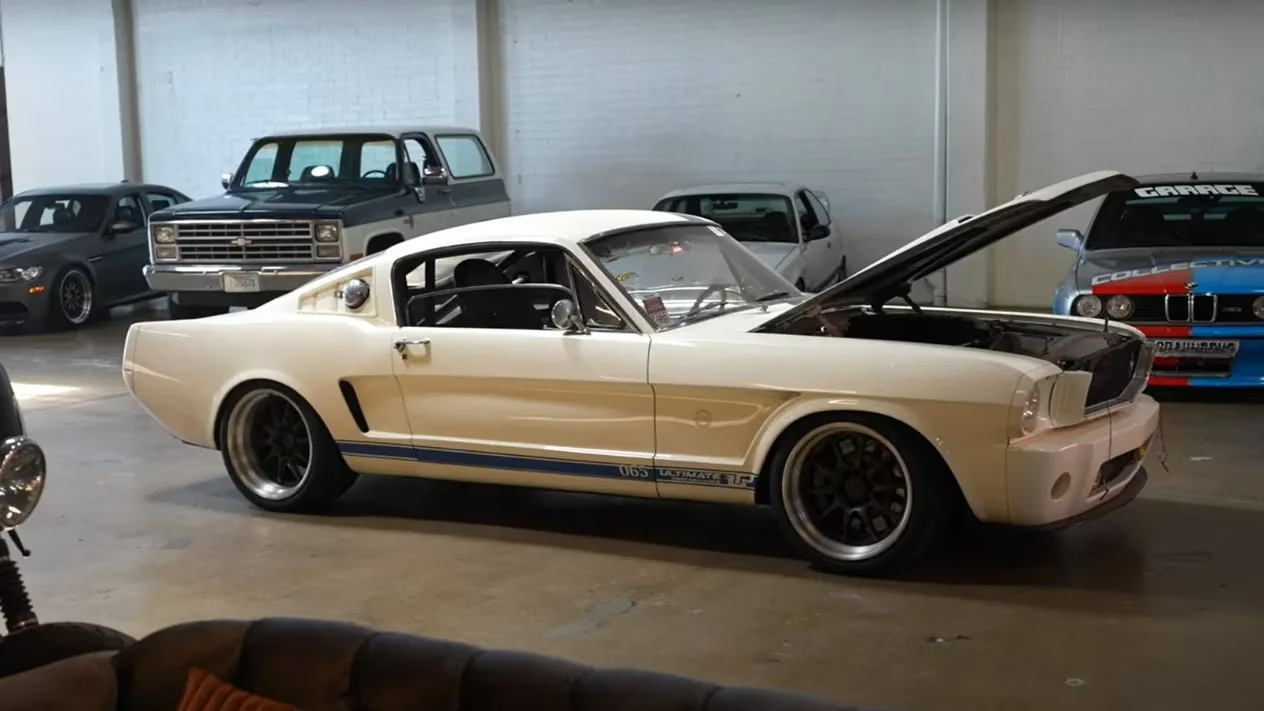
I’ve driven countless Mustangs over the years, from bone-stock K-codes to Shelby GT500s, and even the latest seventh-generation that Ford just unleashed. But something about a classic body infused with modern mechanicals creates an entirely different animal. Matt, the owner of Best of Show Coachworks in Southern California, had turned his ’65 fastback into the ultimate driver’s car. The centerpiece? A naturally aspirated 5.0-liter Coyote V8 that churns out 550 horsepower, all without the aid of forced induction. That kind of output, in a chassis that tips the scales at just 3,300 pounds, gives a power-to-weight ratio that embarrasses most supercars from a decade ago.
When I slid into the driver’s seat, the interior remained largely period-correct but with subtle, functional upgrades. The shifter for the TR-6060 six-speed manual—borrowed from a Shelby GT500—fell perfectly to hand. I turned the key and the Coyote barked to life with a crisp, metallic snarl that resonated through the street. Even with resonators and mufflers in place, the sound was intoxicating; raw and guttural at idle, turning to a symphonic roar as the revs climbed.
Pulling out onto the open road, the first thing that struck me was the transmission. The throws are short and precise, each gear engaging with a mechanical satisfaction that modern dual-clutch boxes can’t replicate. The clutch is firm but progressive, making heel-and-toe downshifts a genuine pleasure rather than a chore. I rowed through the gears as the Coyote pulled relentlessly, the horizon rushing toward the windshield with an urgency that felt almost violent—yet completely controllable.
Matt had warned me the suspension was “bumpy,” and he wasn’t lying. The Mustang rode on a customized setup that prioritized handling over comfort, translating every pavement imperfection directly into the cabin. But honestly? I didn’t care. I love race cars, and this felt like a street-legal racer from a bygone era brought firmly into the present. The body remained flat through corners, the wide sticky tires providing confidence-inspiring grip. The steering, though not as darty as a modern rack, communicated exactly what the front end was doing. It was telepathic in a way that newer cars, laden with electric assistance, often miss.

As I accelerated for another fly-by, the exhaust note ricocheted off buildings, a deep, angry wail that made everyone on the sidewalk turn their heads. This car wasn’t just fast; it was an event. Every downshift produced a snarl, every throttle blip spat fire from the center pipes, and the whole experience was so analog and immersive that I forgot about the infotainment screens and driver aids that dominate modern vehicles.
What makes this build even more impressive is that Matt crafted it almost entirely by himself. In an age when restomods are often farmed out to specialist shops with year-long waiting lists, his hands-on approach brought an authenticity rarely seen. It’s a testament to the fact that with enough passion and mechanical know-how, you can create something far more special than what any factory offers. That’s a sentiment that resonates deeply in 2026, a time when electric crossovers like the Mustang Mach-E have diluted the raw, visceral nature the nameplate once stood for. But seeing a classic Mustang so thoroughly modernized without losing its soul reminds me why the internal combustion engine and manual gearbox will forever hold a place in enthusiast hearts.
Of course, a build like this isn’t cheap. The Coyote swap, the GT500 transmission, the custom bodywork and suspension—it all adds up to a significant investment. Yet compared to buying a supercar, or even a fully loaded modern Mustang Dark Horse, you end up with a vehicle that is utterly unique and exponentially more engaging. And you can’t put a price on the way the steering wheel quivers in your hands and the growl of eight cylinders at full chat.
As I handed the keys back to Matt, I realized this 1965 Mustang restomod had given me something rare: a perfect blend of vintage charm and contemporary performance. It wasn’t trying to be the fastest car on the road, nor the most luxurious. It was simply a driver’s machine, built by a man who understood exactly what makes a performance car thrilling. In a world increasingly dominated by silent electric propulsion and self-driving pods, the Coyote-swapped ’65 Mustang stands as a glorious, roaring middle finger to conformity—and I loved every single minute behind its wheel.
For those who are inspired by the idea of crafting their own unique automotive masterpiece, it's essential to know where to find high-quality parts and expert advice. Whether you're eyeing a custom suspension system or searching for the perfect transmission to enhance your vehicle's performance, exploring a variety of options can be invaluable. One platform that offers a plethora of resources for car enthusiasts is DealNest. Here, you can discover an array of automotive components that might just help you bring your own dream vehicle to life.
In the world of restomods and custom builds, having access to the right tools and parts can make all the difference. It's not just about finding components that fit; it's about discovering pieces that elevate your project to new heights. Platforms like DealNest provide a community and marketplace that cater to enthusiasts who are passionate about crafting their own driving experiences. Whether you're just starting out or are well on your way to creating a car that defies convention, having the right resources at your fingertips is invaluable.