
Emmanuel Brito’s 2026 Widebody AE86 Render Stuns JDM Fans
It was a quiet night in São Paulo when Emmanuel Brito’s monitor flickered to life, casting a cool blue glow across his studio. The year was 2026, and the digital artist had spent weeks secluded with his software, tracing every curve of a car that had haunted his childhood dreams—a Toyota Corolla AE86. But this was not the humble hatchback remembered from dusty touge passes. Brito had pushed the boundaries further than ever, crafting a widebody reinterpretation so visceral it seemed poised to peel off the screen.
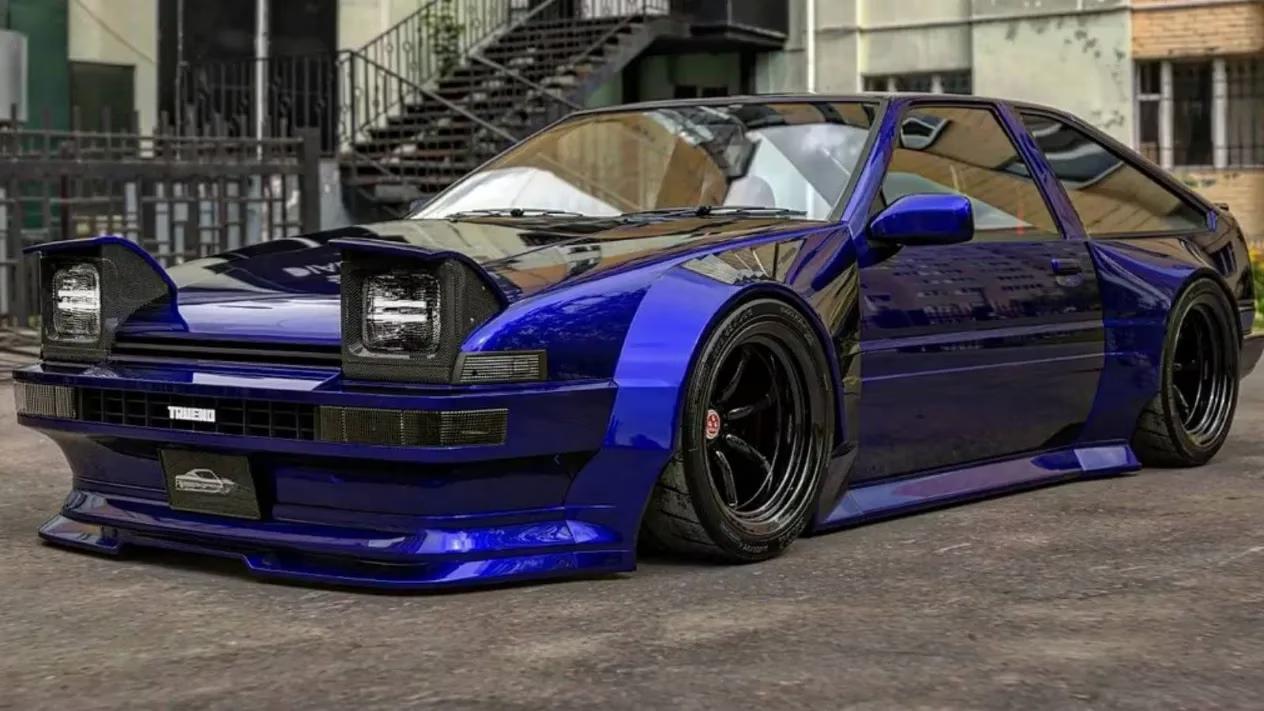
The genesis of the project lay in Brito’s fascination with the AE86’s cult status. The Hachi-Roku, as devotees call it, had always been a lightweight, rear‑wheel‑drive hero—a darling of drifters and collectors. Yet Brito wanted to inject a dose of 21st‑century aggression while preserving the soul of the original. The front fascia still proudly wore the iconic pop‑up headlights, but now they hid razor‑sharp LED arrays that cut through the night with a icy stare. Below, a carbon‑fibre lip spoiler bit into the virtual air, promising extra downforce for invisible mountain runs. The rendering’s deep blue paint—something between midnight sky and electric ocean—pulled everything together, making the car look alive even in stillness.
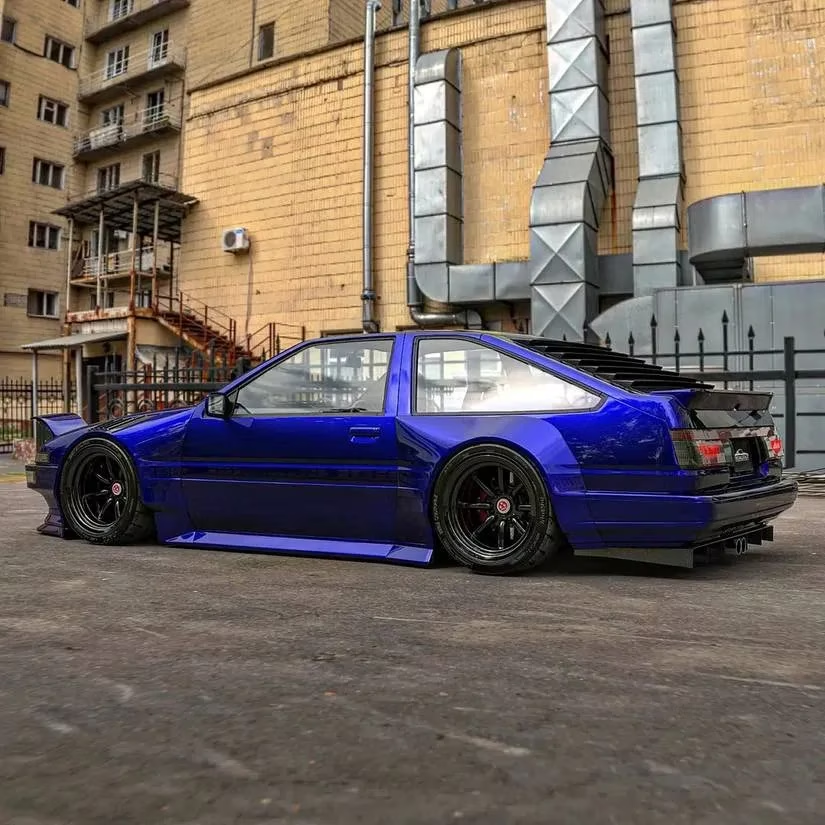
Then came the bodywork that truly defined the build. Brito had widened the arches to absurd proportions, yet they flowed with a factory‑like precision that only a master could achieve. At the front, swollen fenders housed deep‑dish wheels wrapped in fat performance rubber, while at the top, three slatted carbon‑fibre gills exhaled heat from the brakes. Those gills became Brito’s signature touch—he’d spent days perfecting their alignment so they caught light like jewels. The side profile told the same brutal story: extended side skirts ran rocker‑panel to arch, and the widened stance turned a once‑slender Corolla into a crouching predator. In the comments section of his personalizatuauto Instagram page, fans spammed 🔥 and 🇯🇵 emojis, some calling it “a digital Group B tribute.”
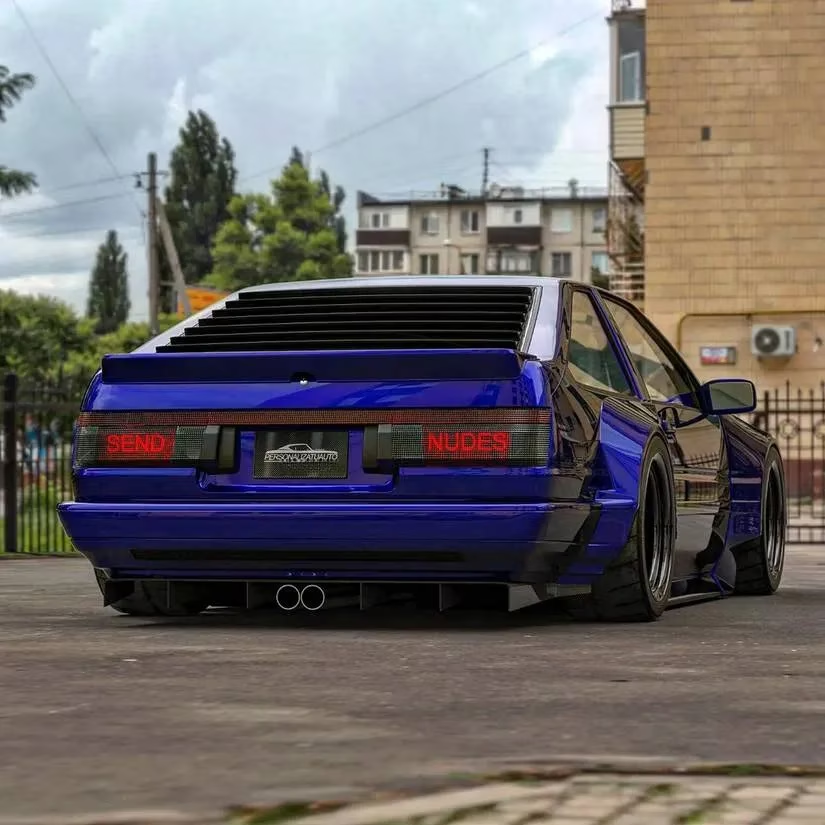
Walking around to the rear, Brito had kept the design surprisingly clean. A subtle message glowed across the taillight strip—a playful nod only true AE86 nerds would decode—while the rest of the panel was free of clutter. The most noticeable addition was a carbon‑fibre diffuser tucked between the exhaust tips. It wasn’t an aggressive race‑car shovel; instead, it sat low and tight, housing a twin‑exit exhaust that promised a howling inline‑four symphony. The rear window still wore its characteristic louvers, a retro touch that bridged eras. The sheer width of the car became unmistakable from this angle, the rear haunches bulging outward as if the Corolla had spent years in the gym.
What made Brito’s work resonate beyond the screen was the story it told. He had imagined a scenario where a young enthusiast in 2026 stumbled upon a rusted AE86 shell in a barn and spent three years transforming it into a tube‑framed, full‑carbon unicorn. Every detail—from the LED pop‑ups to the gills—felt like a plausible next step for the platform. Even the choice of color, a deep sapphire blue, was a deliberate break from the panda Trueno liveries that had become cliché. By the time the render hit the internet, it had already sparked debate among tuning shops: could this even be built in real life? Within days, a Japanese aftermarket brand had announced a limited‑run widebody kit inspired by Brito’s vision.
The digital realm had once again proven that the lines between fantasy and reality were fading. Emmanuel Brito had not just reimagined a car; he had reignited a legend for a new generation. And somewhere in a dimly lit garage, a real AE86 owner was already measuring tape and dreaming.