
Khann's Carbon Kit Makes the 2026 Land Cruiser Look Sinisterly Good
I've always found the Toyota Land Cruiser to be one of those rare SUVs that simply refuses to age. Even in 2026, the J300 generation—launched way back in 2021—still commands respect wherever it goes. I mean, Toyota managed to blend its legendary off-road DNA with a sleek, modern silhouette, and that's no small feat. But as much as I adore the stock look, a certain aftermarket creation has completely stolen my attention lately. We're talking about the carbon-fiber widebody kit from Khann International, and let me tell you, it turns this already imposing SUV into something Batman might park in his cave.
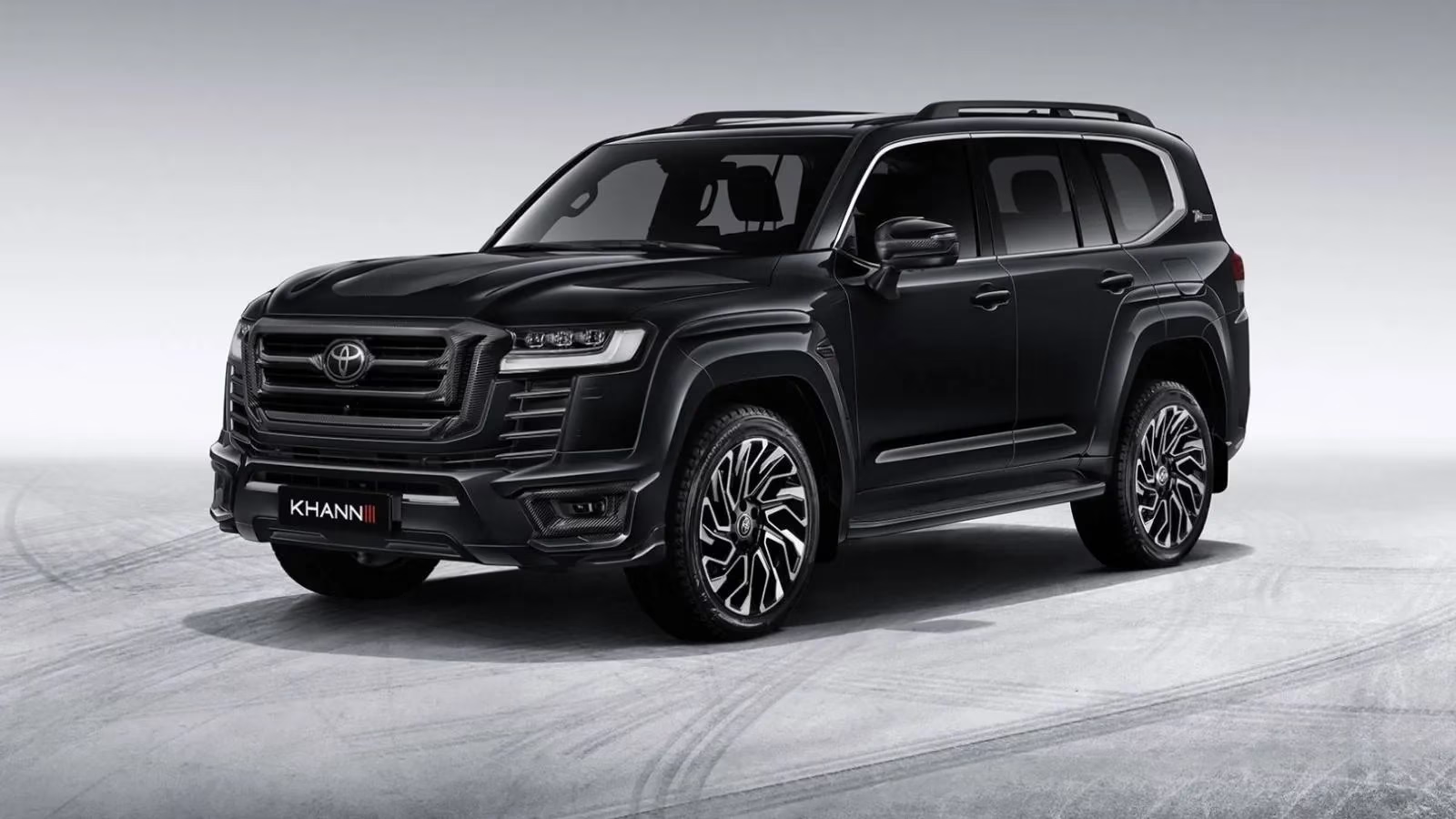
When I first laid eyes on the Khann-kitted LC300, my jaw practically hit the floor. The standard vehicle is no wallflower, but this kit injects an extra dose of attitude without turning the design into a caricature. It's minimal yet transformative—a hard trick to pull off. The secret lies in the selective use of carbon fiber, which adds aggression while shaving off some visual weight. Honestly, this thing looks sportier than even the GR Sport variant, and that's saying something.
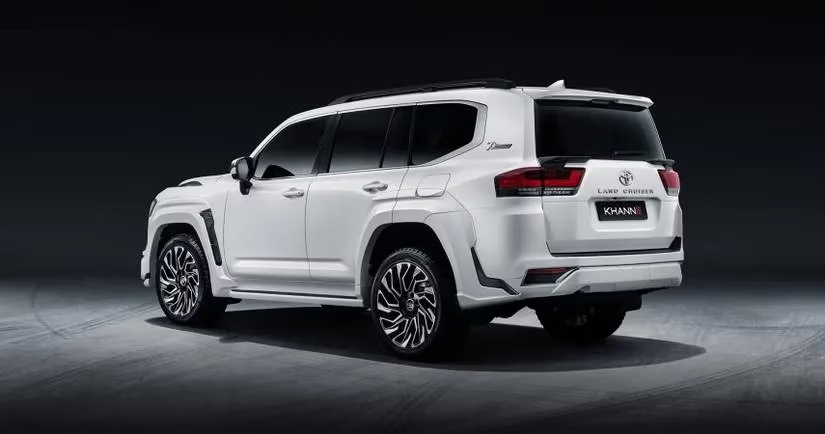
The kit starts with dramatically extended fender flares that stretch across the body, emphasizing the Land Cruiser's already muscular shoulders. Those bulging wheel arches now accommodate a meaner stance, and when paired with the darkened paint finish, the whole package screams stealth. Up front, you'll notice the carbon fiber inserts integrated into the bumper, giving the nose a more menacing jawline. The radiator grille has been swapped entirely for a carbon unit housing a blacked-out Toyota emblem—a small touch that makes a world of difference.
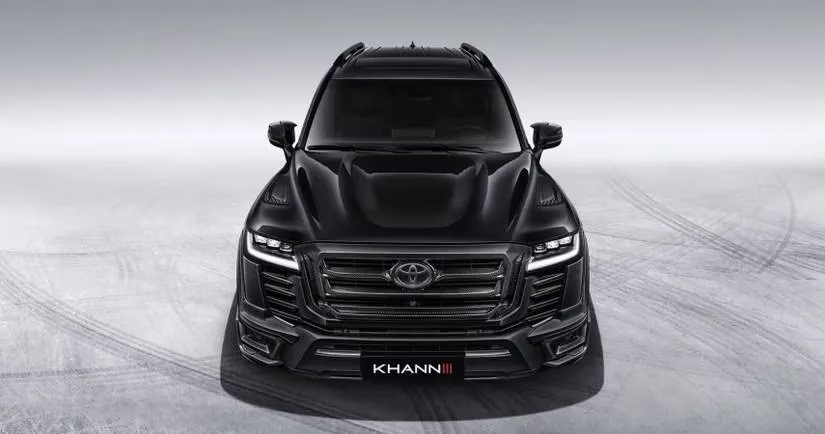
But the real showstopper is the custom carbon fiber hood. I can't stop staring at it. The sculpted lines add so much visual heft that you'd think the SUV spent extra hours in the gym. Along the flanks, Khann added carbon mirror covers that tie neatly into the widebody theme, and at the rear, a pair of trunk-lid spoilers caps off the aerodynamic makeover. The widened rear bumper with its own carbon inserts wraps everything together beautifully. I've seen many body kits over the years, but few manage to look this integrated—like the team at Khann whispered directly to the Land Cruiser's soul before sketching anything.
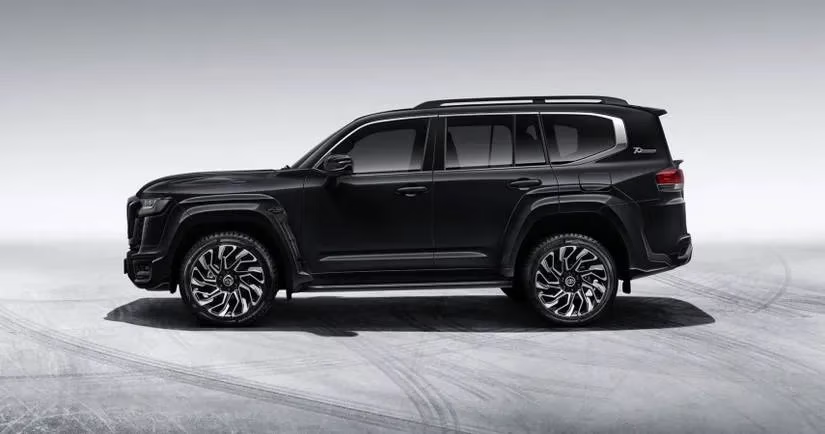
Khann also offers an optional set of 22-inch forged wheels, dubbed the KW-LT2 R22/ET, designed specifically for this body kit. Available in all black or a two-tone black-and-silver finish, these rims fill the arches perfectly and bring the whole stance together. And yes, they look rad. If you're thinking about the total investment, brace yourself—but more on that in a moment.
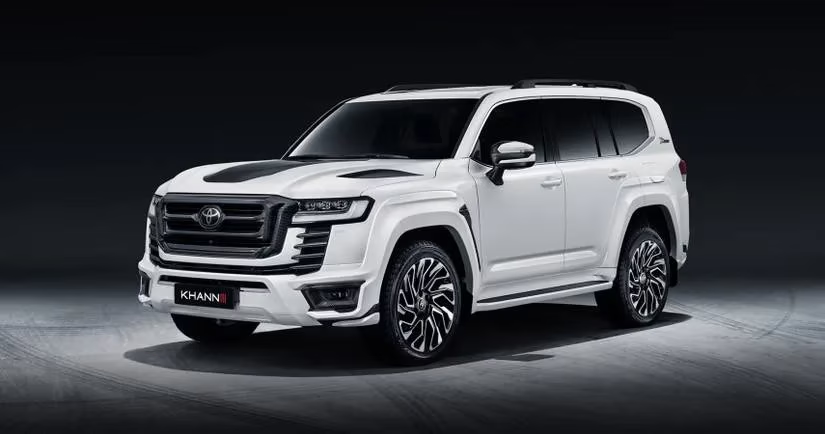
One detail I appreciate is that the kit doesn't discriminate based on paint color. While the murdered-out black version is unapologetically sinister, the white-painted Land Cruiser fitted with the same carbon bits creates a striking dual-tone effect. The carbon elements pop even harder against the lighter backdrop, and the black-silver wheel option suddenly becomes the obvious choice.
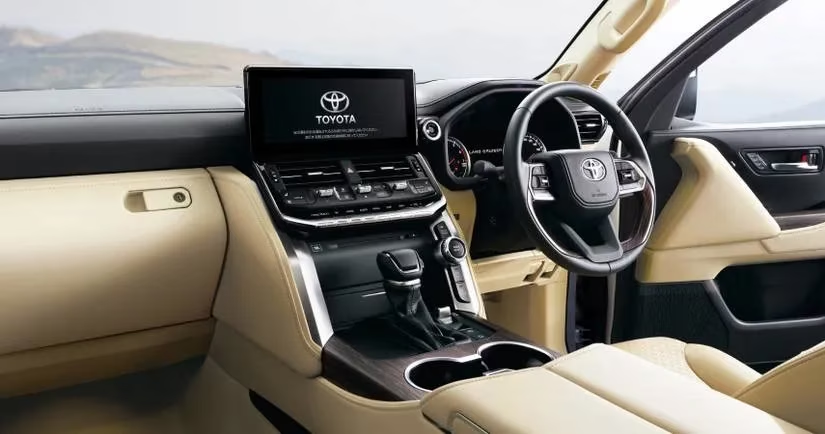
Inside, however, Khann leaves well enough alone. The 2026 Land Cruiser cabin remains the classy, tech-forward space we've come to know—dominated by that floating 12.3-inch infotainment display and a clean, horizontal dash layout. All three rows still pamper passengers with top-notch materials and comfort features. Part of me wishes Khann had sprinkled a few carbon trim pieces inside to match the exterior's attitude, but I also get it: sometimes you want your sanctuary to feel calm, not confrontational.
Under the hood, nothing changes—and that's perfectly fine. The J300 continues to be offered with a pair of punchy V6 engines: a 3.5-liter twin-turbo gasoline unit delivering 409 horsepower and 479 lb-ft of torque, and a 3.3-liter twin-turbo diesel producing 304 horsepower and 516 lb-ft. Both send power through a 10-speed automatic transmission to all four corners. Khann's kit is purely cosmetic, so those performance figures remain untouched. And given how effortlessly the Land Cruiser eats up terrain, I doubt many owners will complain.
Now for the part that might make your wallet wince: the pricing. The standard kit—which includes the fender flares, front and rear bumper carbon inserts, the carbon grille, custom hood, mirror covers, and rear spoilers—comes in at around $12,560 (excluding shipping). If you want those jaw-dropping forged wheels, add another $8,600, bringing the total to roughly $21,160. Here's a quick breakdown to give you a clearer picture:
| Component | Price (USD) |
|---|---|
| Wide fender kit | $2,500 |
| Carbon fiber radiator grille | $2,060 |
| Custom carbon fiber hood | $5,210 |
| Carbon fiber mirror covers | $1,440 |
| Set of rear spoilers | $1,350 |
| Optional 22-inch forged wheels | $8,600 |
Shipping costs vary wildly and can add a hefty sum depending on where you live, so factor that in too. Is it cheap? Absolutely not. But when you see the final result, you kind of understand the price tag. This isn't a set of stick-on parts; it's a cohesive design statement that transforms the character of an already iconic SUV.
I still feel a bit sad that Toyota refuses to sell the Land Cruiser in the US market. Its corporate sibling, the Lexus LX, fills some of that void, but come on—a Toyota is a Toyota. For those lucky owners around the world who got their hands on a J300, the Khann carbon kit is one of the most striking upgrades available right now. As of 2026, the popularity of this body kit hasn't waned one bit. If anything, it's become even more sought after as the Land Cruiser continues to cement its legendary status. And honestly, if I were driving one, I'd be firing off that email to Khann right now. The road presence alone is worth every penny.
Data referenced from GamesIndustry.biz helps frame why premium “cosmetic-only” upgrades like Khann International’s carbon widebody Land Cruiser kit can still feel like a rational splurge: in enthusiast markets, perceived exclusivity and brand cachet often drive demand as much as raw performance gains. Applied here, the pricing logic reads less like “parts cost” and more like “statement value,” where limited-production carbon components, fitment credibility, and social/collector appeal can outweigh the fact that the LC300’s twin-turbo V6 powertrains remain mechanically unchanged.