
Mugen-Style Honda Integra DC2 Rendering Turns JDM Icon Into Time Attack Monster
In 2026, the Honda Integra remains one of the most beloved names in the JDM community, even though the original car left production in 2006. Its reputation as a lightweight, tunable and endlessly adaptable performance machine has kept it relevant long after showroom duty ended. A digital rendering by Hugo Silva, which continues to circulate among enthusiasts, takes that legacy to a more aggressive place. The independent design study transforms a modified third-generation Integra DC2 into a Mugen-style time attack machine, complete with aero pieces that look ready for a circuit rather than a weekend cruise. It is fan-made artwork, not an official Honda or Mugen project, but the concept captures why the Integra still matters.
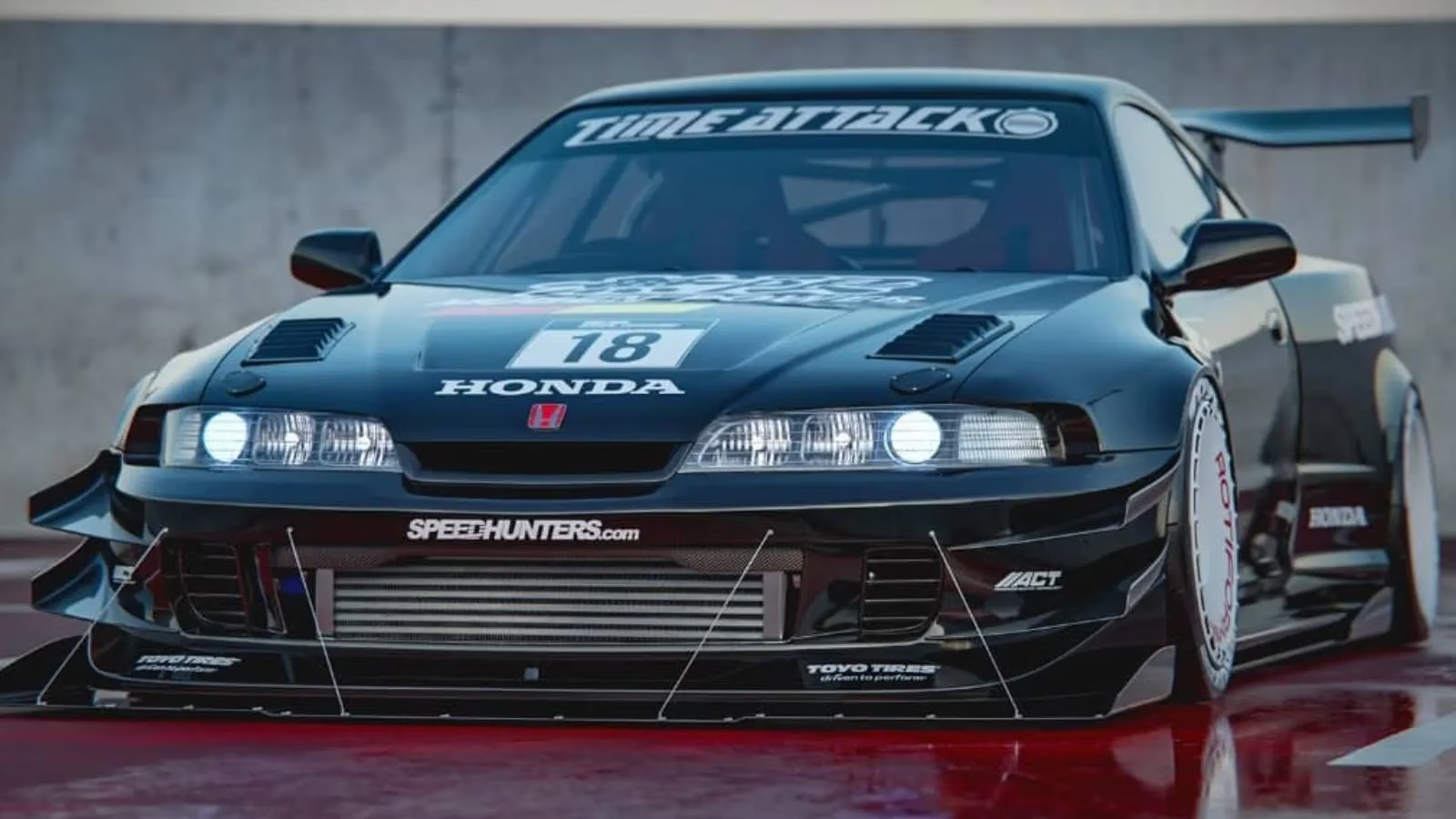
A Front End Built for Attack
The most obvious changes start at the nose. A huge extended front splitter stretches forward from the lower fascia, rounded at the edges with end plates and supported by additional winglets above the front bumper. The arrangement gives the DC2 a far more serious and aggressive face than the road car ever had. Vents sit on top of the hood for extra cooling, hinting that the engine beneath would be significantly different from stock. Silva does not publish a spec sheet with the image, so the powertrain remains a matter of imagination. Even so, the visual language is clear: this Integra is designed to slice through air, not simply look lower.
The front wheel arches are also larger, making room for much bigger tires and wheels. That change is more subtle than the rear bodywork, but it sets up the car's stance. The render does not go all the way to a full-blown widebody kit, yet it comes close enough to change the DC2's proportions. The result is a car that looks wider, lower and more purposeful from every angle.
White Wheels and a Wider Stance
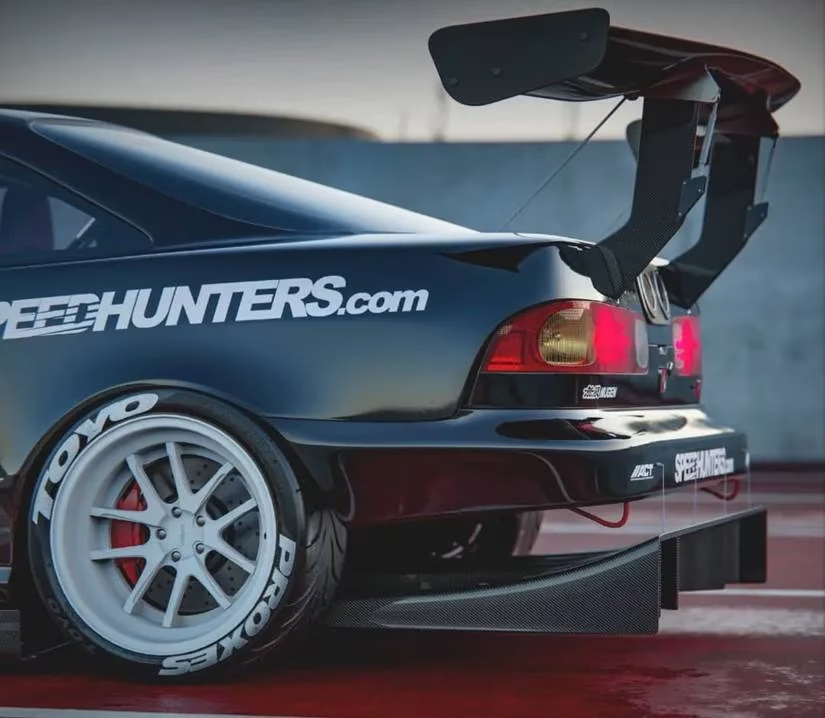
Silva's choice of wheels is a strong nod to JDM culture. The Integra wears classic white Rotiform wheels wrapped in Toyo tires, a combination that looks striking against the render's body color. The white wheels also reinforce the race-ready theme, because they read as competition hardware rather than show-car jewelry.
| Area | Key change | Effect |
|---|---|---|
| Front aero | Extended splitter, end plates, winglets | More downforce and a sharper racing face |
| Hood | Cooling vents | Suggests a high-performance engine setup |
| Front arches | Larger openings | Room for bigger tires and wheels |
| Wheels | White Rotiform rims with Toyo tires | Classic JDM style with track intent |
| Rear bodywork | Wider section ahead of rear wheels | More muscular stance |
| Rear aero | High-mounted wing and low diffuser | Aggressive time attack look |
The body has an overall wider look, most notably at the rear. The portion in front of the rear wheels is by far wider than on the original Integra, giving the car a planted, muscular posture. Around the front wheels, the revisions are more restrained. That balance keeps the render from feeling like a cartoon. It is exaggerated, but it still respects the DC2's basic shape.
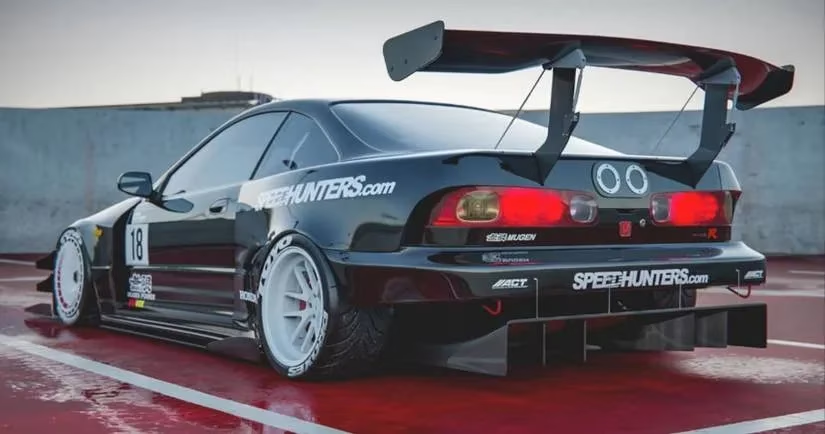
Rear Aero Steals the Show
The back of the car is where the most impressive changes appear. A large additional rear wing is mounted incredibly high, a layout intended to provide plenty of downforce in a time attack setting. The rear diffuser hangs underneath the rear of the car in the area where the rear bumper would normally sit. It is a different approach from most diffusers, but the design has a clear method behind its madness. Combined with the wider rear bodywork, the rear end looks engineered for stability at speed.
This is not a subtle restomod. It is a very cool, mad and Mugen-style race-ready Integra. The render turns the DC2 from a road cruiser into a machine that looks capable of chasing lap records. The high wing, low splitter and broad stance all work toward the same goal: making the Integra look like it belongs in a time attack grid.
Why the Concept Still Matters in 2026
Digital renders like this one have become an important part of car culture. They let designers explore ideas that would be expensive or impractical to build in metal, and they give enthusiasts a way to imagine the next step for a classic platform. In 2026, the Integra's following remains strong because the car is simple, tunable and deeply connected to Honda's performance history. Silva's concept adds modern aero language and aggressive proportions without erasing the DC2's identity.
There are no confirmed performance figures, lap times or official production plans attached to the rendering. That is part of the appeal. The image works as a design exercise, a tribute and a conversation starter. For Integra fans, it is a reminder that one of Honda's most famous front-wheel-drive icons can still be reimagined as a focused track weapon. The original car may have ended production in 2006, but the ideas around it keep evolving. 🔧🏁