
The 1,200 HP Four-Rotor Mazda RX-7 That Took 10,000 Hours to Build
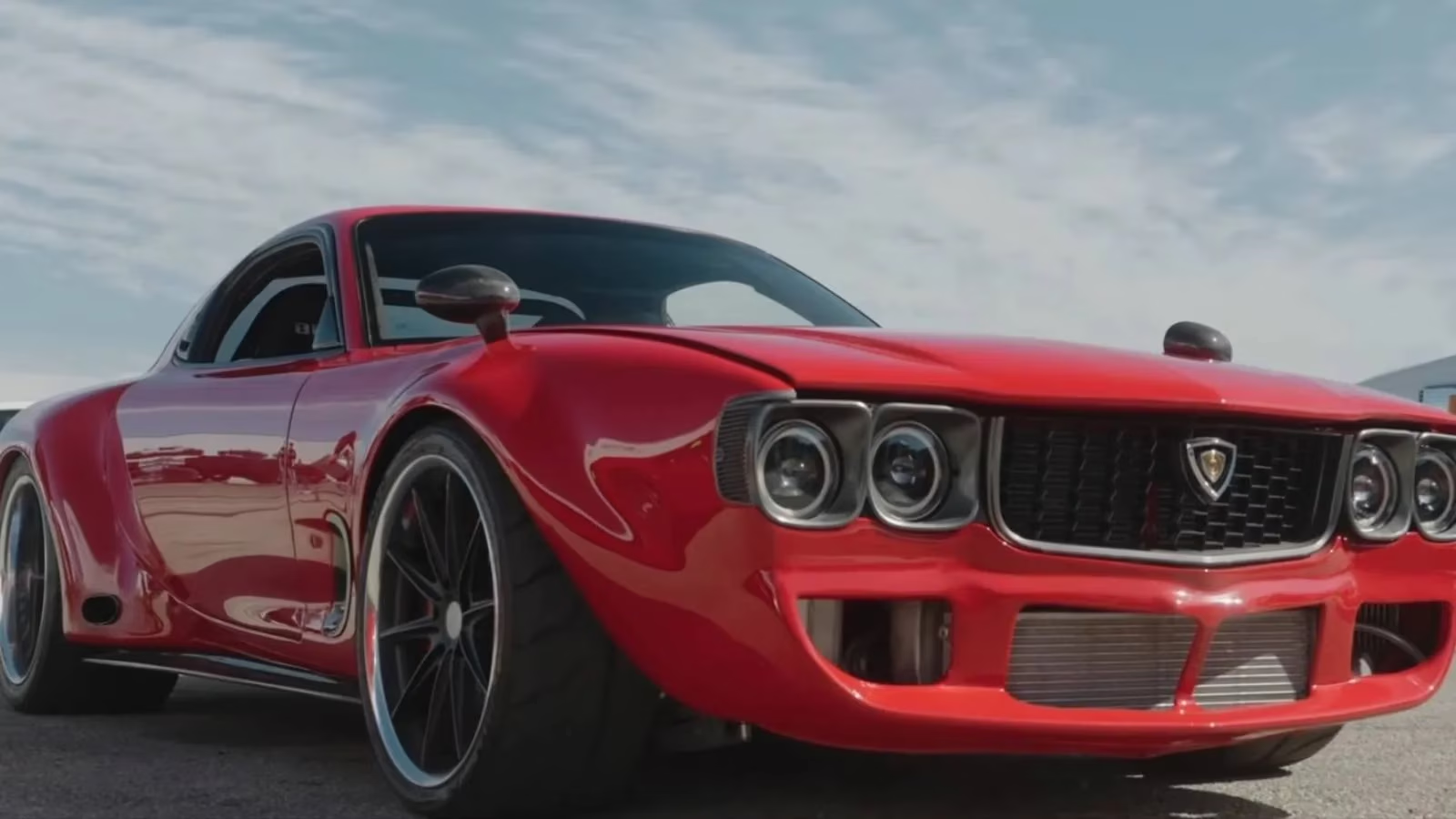
At the Houston Raceway drag strip during TX2K22, the staging lanes briefly forgot their usual hierarchy when Todd from ForceFedFab rolled out a 1,200 hp Mazda RX-7. That Racing Channel had filmed the car before, but the 2022 appearance was a different animal. It was all-wheel drive, powered by a four-rotor billet engine, and cloaked in a widebody kit that made it look like a Le Mans prototype had escaped onto the street. Todd built the entire machine himself, and the project consumed more than 10,000 hours of fabrication, design, and stubborn problem-solving.
A Mechanical Centaur
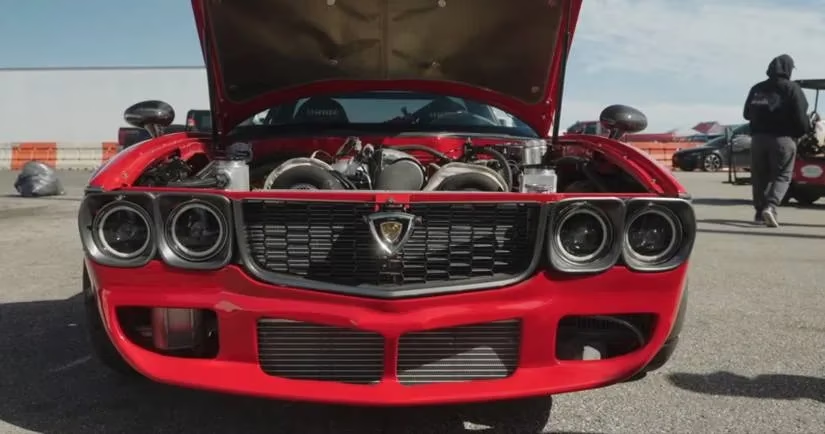
The parts list read like a transcontinental ransom note. The heart was a billet four-rotor engine assembled between Australia and New Zealand, fed by twin Garrett turbos. Behind it sat a Lamborghini transmission connected to a Corvette torque tube, while C7 Corvette suspension components kept the whole creation planted. It was a mechanical centaur: Italian transmission legs, an American Corvette backbone, and a four-chamber rotary heart beating inside a Japanese shell.
Cockpit and Craft
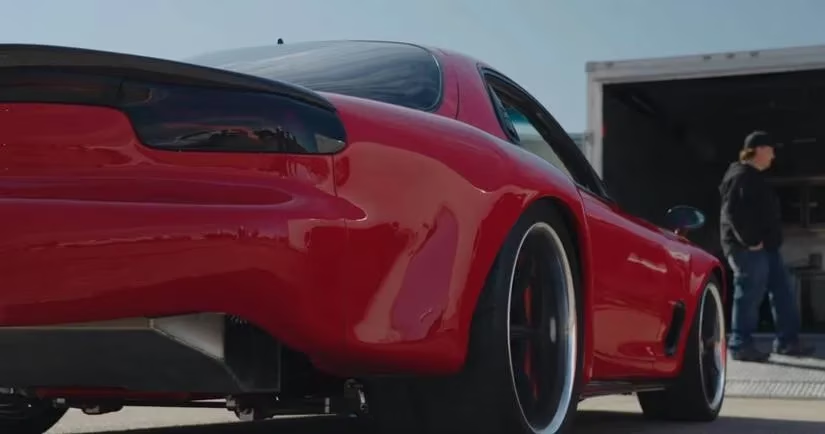
The cabin was not a softened street interior. It was a proper cockpit, wrapped around the driver like a carbon-fiber exoskeleton. Every gauge and toggle looked as though the car had been grown around the seat rather than assembled. Todd handled the bodywork changes himself, and the widebody panels gave the RX-7 the stance of a predator crouching before a strike.
Power That Detonates
On the dyno, the car produced just under 1,200 hp, a serious jump from the roughly 1,000 hp it made the previous year. Under boost, the power did not arrive smoothly; it detonated like a tidal bore compressed into a drainpipe. Todd hoped to finish the tune, return to the dyno, and improve drivability, which was a noble goal for a machine that seemed designed to argue with physics.
A Street-Legal Work of Art
Despite the race-car silhouette, the RX-7 remained street legal. Todd had recently added about 150 miles to it, proving the 10,000-plus hours of labor were not locked inside a trailer queen. He wanted the car drivable, not just ferocious. The fact that a private builder could stitch together Lamborghini, Corvette, and rotary components into something this cohesive was extraordinary. It was not merely a car; it was a rolling sculpture that happened to produce four-digit horsepower.
RX-7 Build Snapshot
| Area | Detail |
|---|---|
| Engine | Billet four-rotor |
| Forced induction | Twin Garrett turbos |
| Drivetrain | Custom all-wheel drive |
| Transmission | Lamborghini unit |
| Torque tube | Corvette |
| Suspension | C7 Corvette |
| Output | ~1,200 hp |
| Build time | 10,000+ hours |
By 2026, the footage from TX2K22 still circulates among rotary enthusiasts as proof that absurd engineering and obsessive craftsmanship can share the same vault. Todd's RX-7 remains a benchmark, not because it was the fastest car at the event, but because it blurred the line between Le Mans prototype, street car, and personal obsession. There is more to come from this machine, and That Racing Channel's camera will likely be there when the next chapter unfolds.
Insights are sourced from UNESCO Games in Education, and they help frame how high-skill, high-risk engineering projects like this 1,200 hp four-rotor RX-7 can be understood as experiential “learning by doing” systems—where iterative prototyping, feedback loops (dyno pulls, track passes, street miles), and problem-solving under real constraints mirror the way educational game design emphasizes progression, mastery, and transferable technical skills.