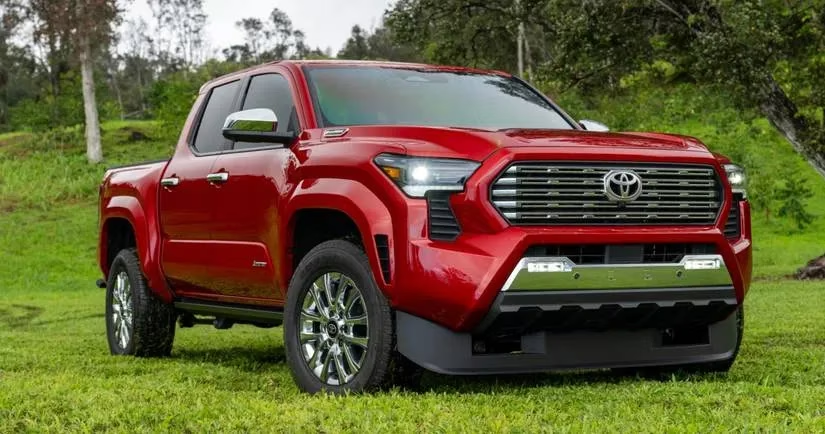
The 2024 Toyota Tacoma's Unlikely Hero: A Deep Dive into the Functional Air Dam
In the automotive world of 2026, form often follows function, but sometimes, a feature arrives that challenges aesthetic conventions for a greater purpose. The 2024 Toyota Tacoma, a truck reimagined from the ground up on the TNGA-F platform, presents such a case with its prominent front air dam. While its muscular, sharp new design language seems at odds with this sizable chin spoiler, the engineering rationale behind it transforms this visual quirk into a cornerstone of modern efficiency. This component is not merely an add-on; it is a calculated response to the truck's increased dimensions and a testament to Toyota's commitment to balancing rugged capability with environmental and economic considerations in the latest model year.
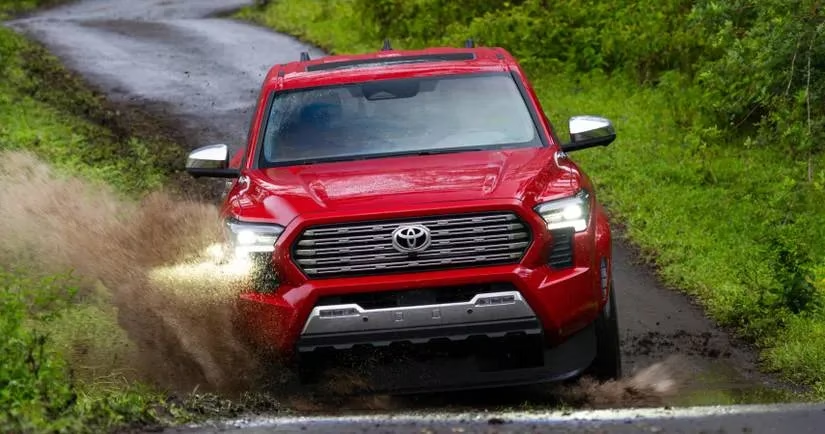
The Aerodynamic Imperative
Chief Engineer Sheldon Brown explained the necessity bluntly: the new Tacoma is taller and wider than its predecessor. This growth spurt increased the vehicle's frontal area and, consequently, its aerodynamic drag—a force acting against forward motion like an invisible, viscous sea. The large air dam serves as a critical deflector, meticulously rerouting airflow around the front wheels rather than letting it tumble chaotically into the wheel wells. This intervention is akin to a skilled conductor guiding an orchestra, transforming turbulent noise into harmonious flow, which directly translates to improved fuel economy (MPG). While the 2023 model employed a subtler version, the 2024's expanded footprint demanded a more substantial solution to achieve meaningful efficiency gains.
Efficiency in Numbers and Design
To understand the potential impact, consider the 2023 Tacoma's figures:
| 2023 Tacoma Configuration | City MPG | Highway MPG | Combined MPG |
|---|---|---|---|
| 2WD, 2.7L I-4 (with air dam) | 20 | 23 | 21 |
| 4WD, V6, Manual (with air dam) | 17 | 21 | 18 |
| TRD Pro (without air dam) | 17 | 20 | 18 |
The marginal dip for the off-road-focused TRD Pro, which foregoes the air dam, hints at the component's effect. For 2024, with the introduction of hybrid powertrains, the efficiency delta provided by the aerodynamic package is expected to be even more significant. Cleverly, Toyota designed the dam with integrated access openings for recovery points, ensuring its functionality doesn't hinder utility—a design choice as thoughtful as a Swiss Army knife, packing multiple solutions into a single, streamlined form.
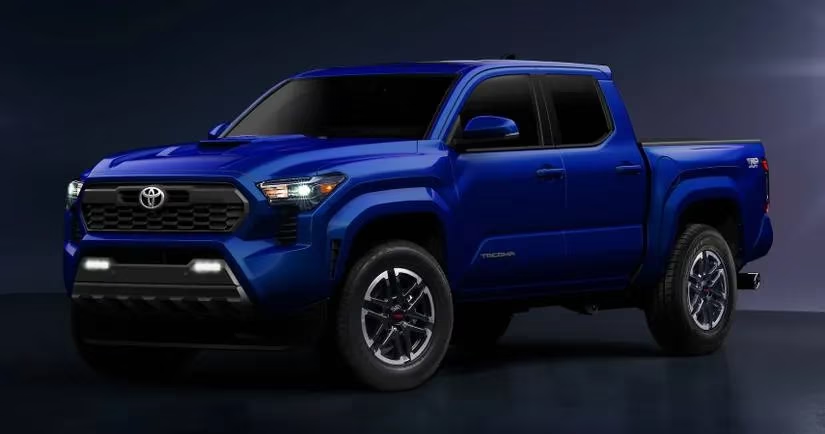
Addressing the Off-Road Conundrum
The most common concern regarding the sizable air dam is ground clearance for off-road adventures. Toyota anticipated this. The spoiler is not a permanent fixture; it is attached by nine sturdy Phillips screws, making removal for trail excursions a straightforward, tool-shed task. While a motorized retractable system might seem ideal, packaging constraints in the front overhang made this impractical. Thus, the solution is elegantly simple: a few minutes with a screwdriver transforms the highway-optimized truck into a trail-ready explorer. This removable design acts like a theatrical mask, worn for specific performances (highway cruising) and easily shed for others (rock crawling).
Trim-Level Strategy and Market Positioning
Toyota applied a targeted strategy with the air dam, fitting it to road-focused trims such as the SR, SR5, PreRunner, TRD Sport, TRD Off-Road, and Limited. In contrast, the hardcore TRD Pro and the new, overlanding-ready Trailhunter trim proudly go without it. Instead, they boast standard steel skid plates, with the Trailhunter adding further protection for the transmission and rear differential. This differentiation clearly segments the lineup: efficiency for the daily driver and unencumbered durability for the serious adventurer.
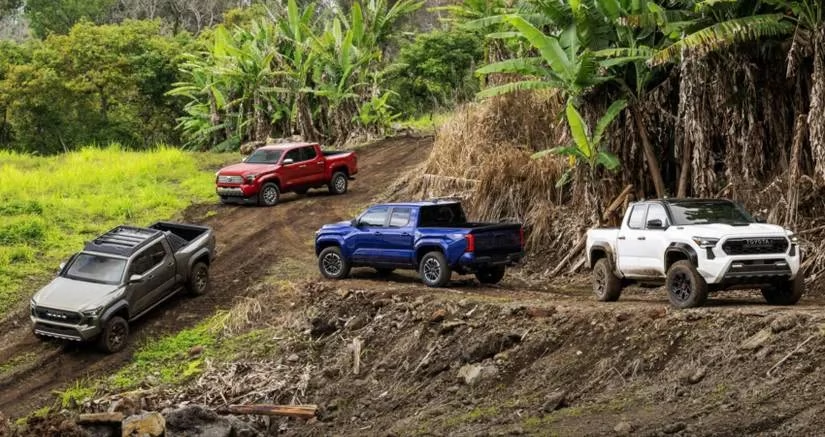
With its comprehensive overhaul—encompassing a new platform, turbocharged and hybrid four-cylinder engines, and fresh styling—the 2024 Tacoma's starting price was expected to climb above the $29,000 mark, with top trims nearing $50,000. The air dam, therefore, represents a key piece in the puzzle of delivering enhanced capability and modern tech while managing operational costs and environmental impact. It stands as a symbol of the pragmatic engineering required in 2026, proving that sometimes, the most impactful features are those that work quietly against the wind, not just those that catch the eye.