
The Art of Rebellion: How Liberty Walk Redefined Supercar Culture
Love them or hate them, there's simply no ignoring them. In the world of high-octane automotive passion, Liberty Walk has done more than just sell body kits; they've sparked a revolution. What began as a rebellious act of modifying the untouchable has blossomed into a global trend, turning every supercar into a potential blank canvas. The brainchild of famed Japanese tuner Kato Wataru, Liberty Walk emerged from the vibrant and often chaotic Japanese car modification scene, taking inspiration from cultures like Bosozoku but applying a level of sophistication that the exotic car world had never seen before. It's a story of vision, controversy, and ultimately, undeniable influence that continues to shape how we view automotive art in 2026.
From Kei Cars to Exotic Icons: The Liberty Walk Evolution
Kato-San's journey started not with Lamborghinis, but with humble Kei cars—those tiny, economical Japanese vehicles often seen as devoid of personality. His philosophy, embodied in the name 'Liberty Walk', was all about the freedom to modify. This wasn't just about aesthetics; it was a statement. Starting his business in 1993, he transformed these everyday cars into something unexpected, building a reputation that would soon allow him to aim much, much higher. The move to American models and, ultimately, supercars was a bold leap that set Liberty Walk apart from every other tuner shop in Japan at the time.
The Moment That Changed Everything: The Ferrari F40
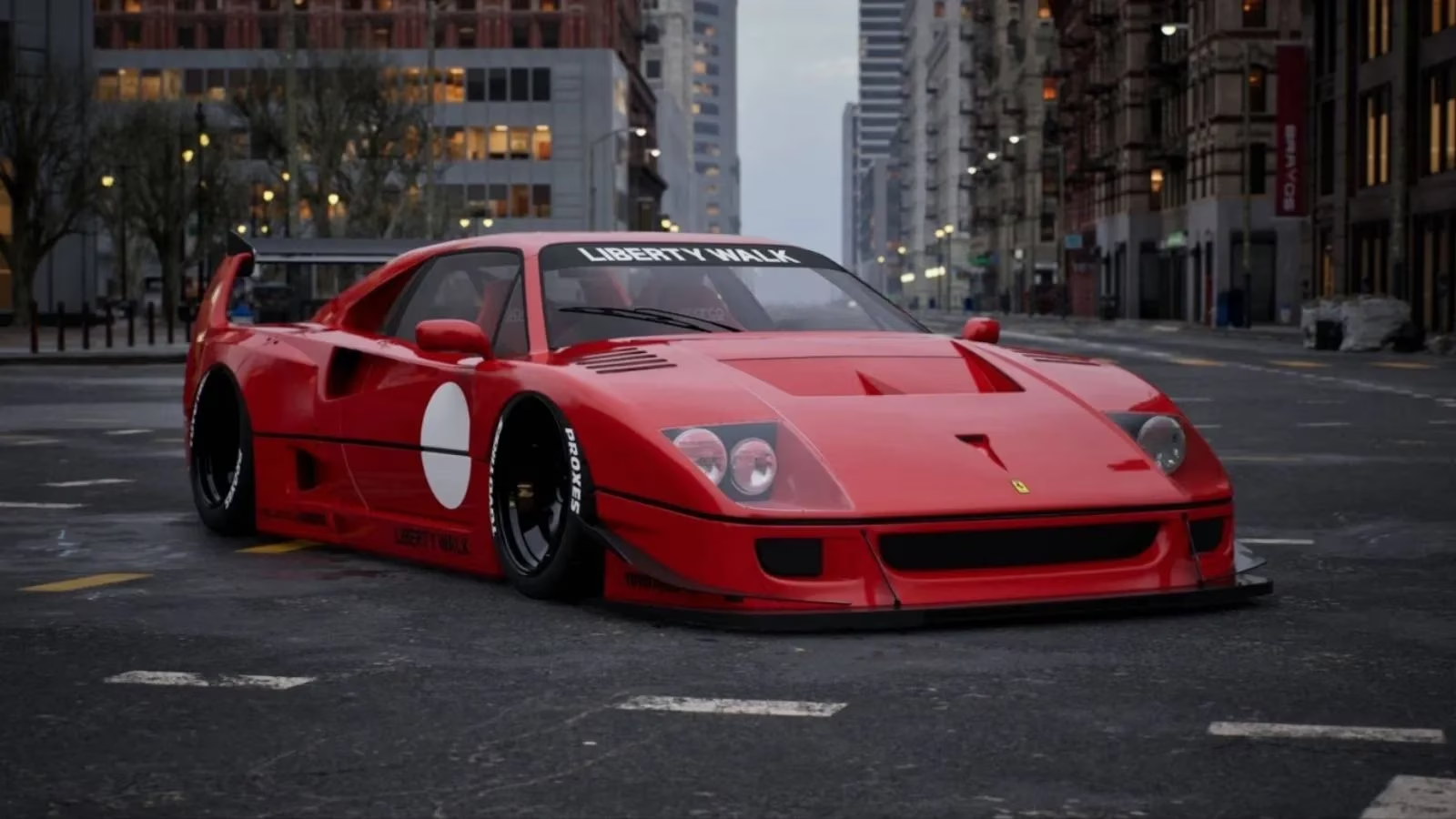
If there's one car that symbolizes automotive purity, it's the Ferrari F40, the last model commissioned by Enzo Ferrari himself. To modify it was considered sacrilege, an unthinkable act... until Kato-San did it. This was the pivotal moment that truly birthed the supercar widebody trend. It wasn't a reckless hack job; it was a calculated, artistic reinterpretation. The modifications were respectful to the original design while being undeniably functional. The world watched in a mix of horror and fascination. This move proved that Liberty Walk wasn't just modifying cars; they were re-contextualizing legends. People had to get used to the idea, and once they did, there was no going back.
The SEMA Shockwave & The Rise of an Icon
Liberty Walk's global breakout moment came in 2009 at the SEMA show in Las Vegas with a modified Lamborghini Murcielago. The reaction? Let's just say it was mixed. There was hesitation, there was hate, but most importantly, there was attention. Business may have slowed temporarily as the car community processed this new paradigm, but a funny thing happened: mainstream exotic car designs started to feel... safe. Boring, even. This created the perfect vacuum for Liberty Walk's radical aesthetics to surge back into the spotlight. By 2013, it was no longer just a car model; it was a Liberty Walk model. The brand had become a prefix that signified a complete transformation.
Why Liberty Walk Kits Are The Choice in 2026
So, what makes a Liberty Walk kit the go-to for supercar owners today, over a decade after that first F40 cut? It boils down to a few key factors that others have tried to copy but never quite replicate:
-
Unmistakable Identity & Sophistication: Every kit has a recognizable quality. It's aggressive, wide, and low, but never sloppy or juvenile. There's a refined artistry in the lines.
-
More Than Just Looks: These widebody kits are functional. They improve aerodynamics, provide space for wider tires for better traction, and enhance the car's overall stance and performance potential.
-
The Ultimate Personal Touch: In an era where personalization is king, a Liberty Walk kit is the ultimate statement. It takes a mass-produced exotic and turns it into a one-of-a-kind masterpiece.
The Man Behind the Madness: Kato Wataru's Philosophy
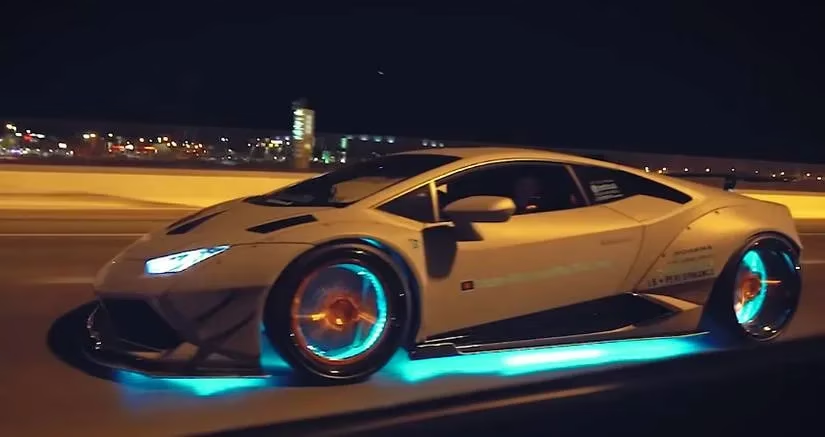
At the heart of it all is Kato-San himself, a man who has become a legend in Japanese car culture. His talent is matched only by his refusal to adhere to the norm. In a famous 2013 interview, he summed up his approach perfectly: "The cars should be the heroes." For him, it's not about personal fame; it's about elevating the machine, about performing and entertaining through automotive art. This genuine love for what he does is palpable. You can see it in his smile when he's surrounded by his creations—each one a rolling sculpture. He took supercars to a new level without asking for permission, breaking barriers and in the process, building an empire.
The Legacy: A Permanent Fixture in Car Culture
Fast forward to today's SEMA shows and global car events, and Liberty Walk's presence is stronger than ever. Their kits grace everything from the latest Lamborghini Revuelto and Ferrari SF90 Stradale to American icons like the C8 Corvette and the Toyota GR Supra. The trend they started is now the standard for those wanting to stand out. While other companies like Rocket Bunny and RWB have found their own successful niches, Liberty Walk carries a unique reputation as the pioneer who dared to cut up the sacred cows and, in doing so, made them even more desirable. They proved that modification isn't spoilage; it's the next level of appreciation. For every purist who cringes, there's a crowd who thinks these builds are the sickest thing they've ever seen. And that, in the end, is the true mark of a revolution—it makes you feel something, whether you're in love or in hate. The Liberty Walk story is far from over; it's just hitting its stride.