
The Ghost of GLH-S: A Digital Artist's Aggressive Dodge Hornet Widebody Resurrection
In the pixel-lit workshops of 2026, where algorithms carve metal that will never rust and wind tunnels exist only as lines of code, digital alchemy has become the purest form of automotive fantasy. No spray booth, no welding torch—only a vision and the unshakable belief that a factory-stamped machine can be melted down and reborn as something with a pulse. This is where Abimelec Arellano thrives, a name that floats through the render community like a ghost note in a blues riff. When Dodge first pulled the sheet off the Hornet four years ago, the world saw a compact crossover with a sting. Arellano saw a canvas too timid for its own potential, and within hours, he had already performed surgery. His creation, the Dodge Hornet GLH-S widebody, did not just widen a fender—it injected a dose of 1980s Shelby fury into a modern-day bee, and in doing so, carved a new archetype that still haunts the tuning circuits of 2026.
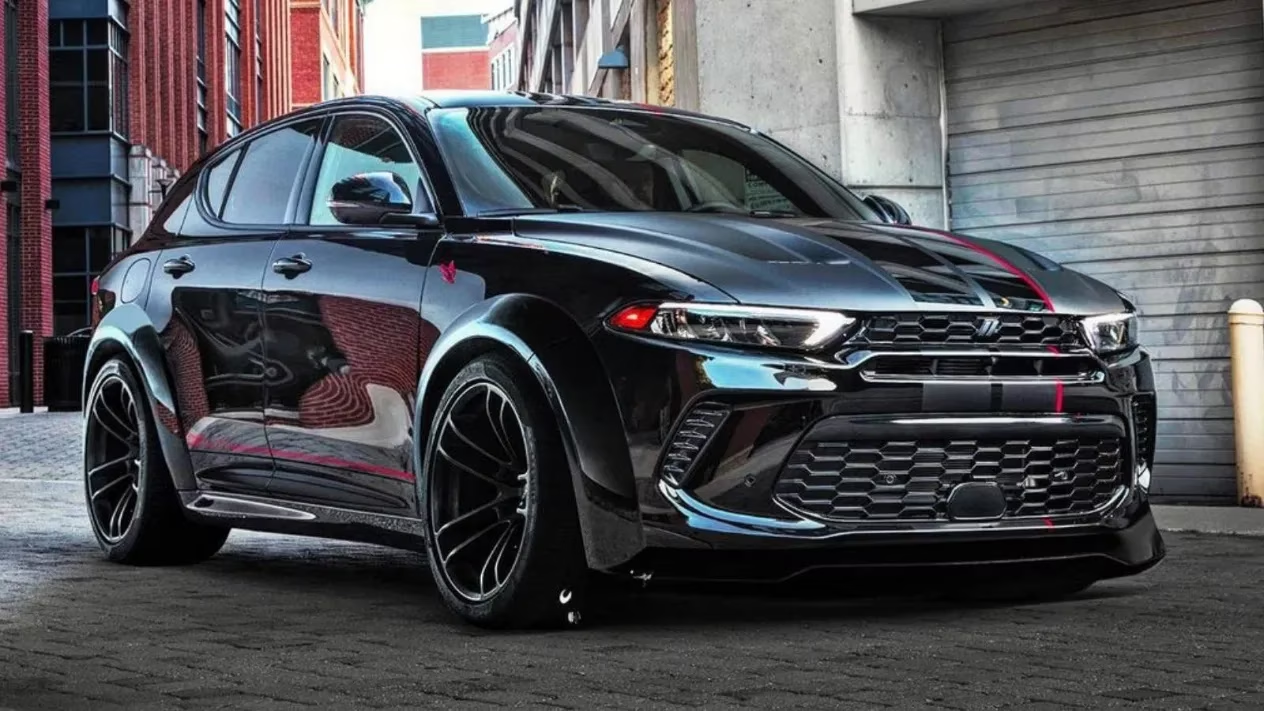
At first glance, the transformation reads like a factory SRT program that escaped the beige walls of a boardroom. The real Hornet wears a respectable face, but its lower fascia always seemed to whisper rather than shout—a gaping air dam with too much idle space, like an unfinished sentence. Arellano silenced that hesitation with a front lip that skims the tarmac, a chin spoiler so surgically sharp it could slice the morning fog. This single piece rewired the entire posture of the car, dragging its nose downward into a predator’s crouch. From that lip, the bodywork swells outward in a pair of muscular fender flares that grip the wheel arches like a bear trap on a sapling. They don't merely bolt on; they seem to push out from inside, as if the Hornet had been holding its breath for years and finally exhaled carbon fiber and steel.
The wheel setup becomes the focal point of this aggressive ballet. Gone are the polite, flat-faced rollers of the production model. In their place sits a deep-dish set of spokes painted in a void-black finish, a design that resembles a gyroscope frozen mid-spin. These wheels tuck into tires that bulge with intent, the rubber stretching tightly over the rims like the skin of a drum. The collaboration between the wider track and the swollen fenders creates a visual tension—a restrained violence—that makes the standard Hornet look like it was sketched by a committee holding a safety manual. It’s the automotive equivalent of a tailored suit swapped for a suit of plate armor, every seam reinforced for a duel at a stoplight.
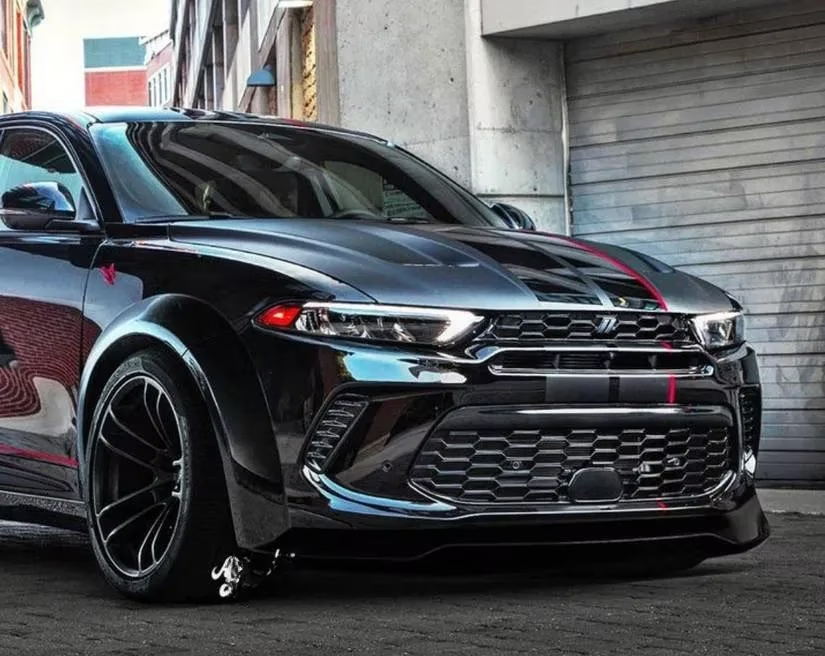
Color, in Arellano’s world, is never an afterthought. He stripped the reveal-day paint like old varnish and laid down a livery that whispers both elegance and menace. High-gloss black drowns the body, so deep it absorbs the surroundings and returns only the faint outline of a streetlight’s curve. The hood becomes a battlefield of contrast: a satin gray stripe runs from the leading edge all the way back, cradled by the black like a river of graphite through obsidian. This two-tone treatment hints at the roof echoing the same dark palette, making the cabin appear to float above the aggression below. But the signature stroke is the red pin-stripe—a single filament of crimson that traces the right border of the black hood graphic, starting beneath the grille and flowing up over the roofline. It reappears on the flank like a scar left by a lightning strike, a callback to the GLH (Goes Like Hell) lineage that once made Omnis and Chargers legends on twisty backroads.
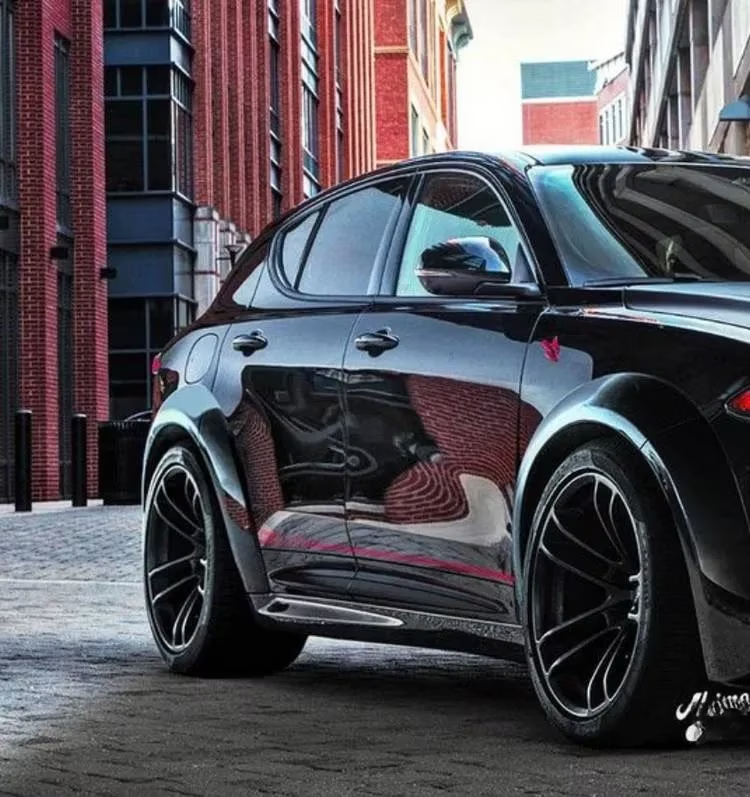
The rear continues this narrative of controlled chaos. Arellano kept the changes subtle here, letting the wider hips do the talking. The tail lights still scream Hornet, but the expanded track gives the view a planted, spaceship-on-asphalt quality. The blacked-out badges and the absence of chrome suggest this Hornet has been forged in a cave, away from marketing glossaries. It’s a design that, even in 2026, feels prophetic. As Dodge navigates its electric eMuscle era with brash concepts like the Daytona SRT, the GLH-S rendering serves as a relic of a parallel timeline—one where internal combustion still hisses and spits, and a small crossover can wear the clothes of a muscle car without apology. Yet the beauty of digital rendering is that it never ages. It sits in the cloud like a fossil preserved in amber, ready to inspire the next wave of tuners, 3D-printed body kit builders, and dreamers who see a Hornet in a parking lot and imagine it transformed by nothing more than a few bold strokes of ones and zeros.
As automotive enthusiasts continue to explore the intricate designs and bold innovations captured in digital renderings, the landscape of creativity extends beyond vehicles. Just like the transformation of the Hornet, the world of gaming experiences its own evolution, where imagination meets technology to create immersive stories and thrilling adventures. The parallels between these industries highlight a shared appreciation for creativity and innovation, driving enthusiasts to seek the latest and greatest experiences.
Whether you're passionate about cars or gaming, staying informed about the latest trends and prices can enhance your experience. For those interested in expanding their gaming collection, you can check game prices on DealNest, a comprehensive resource for finding the best deals and staying updated on your favorite titles. Just as the Hornet captures the essence of a bold future in automotive design, DealNest provides a gateway to discovering new worlds and adventures in the realm of gaming.