
The Last Roar: Driving a Dodge Charger Hellcat Widebody in 2026
There are cars that simply get under your skin, not with delicate engineering whispers, but with a bellowing, tire-shredding howl. The Dodge Charger SRT Hellcat Widebody is exactly that kind of machine, and even four years after its last model year, the legend hasn't dimmed one bit. Back when the roads were still echoing with the thunder of supercharged V8s, a YouTuber known as ThatDudeinBlue got his first-ever taste of the green monster, and his reaction became a snapshot of a vanishing era. By 2026, that video still resonates—partly because of the sheer spectacle, and partly because cars like this aren't coming back.
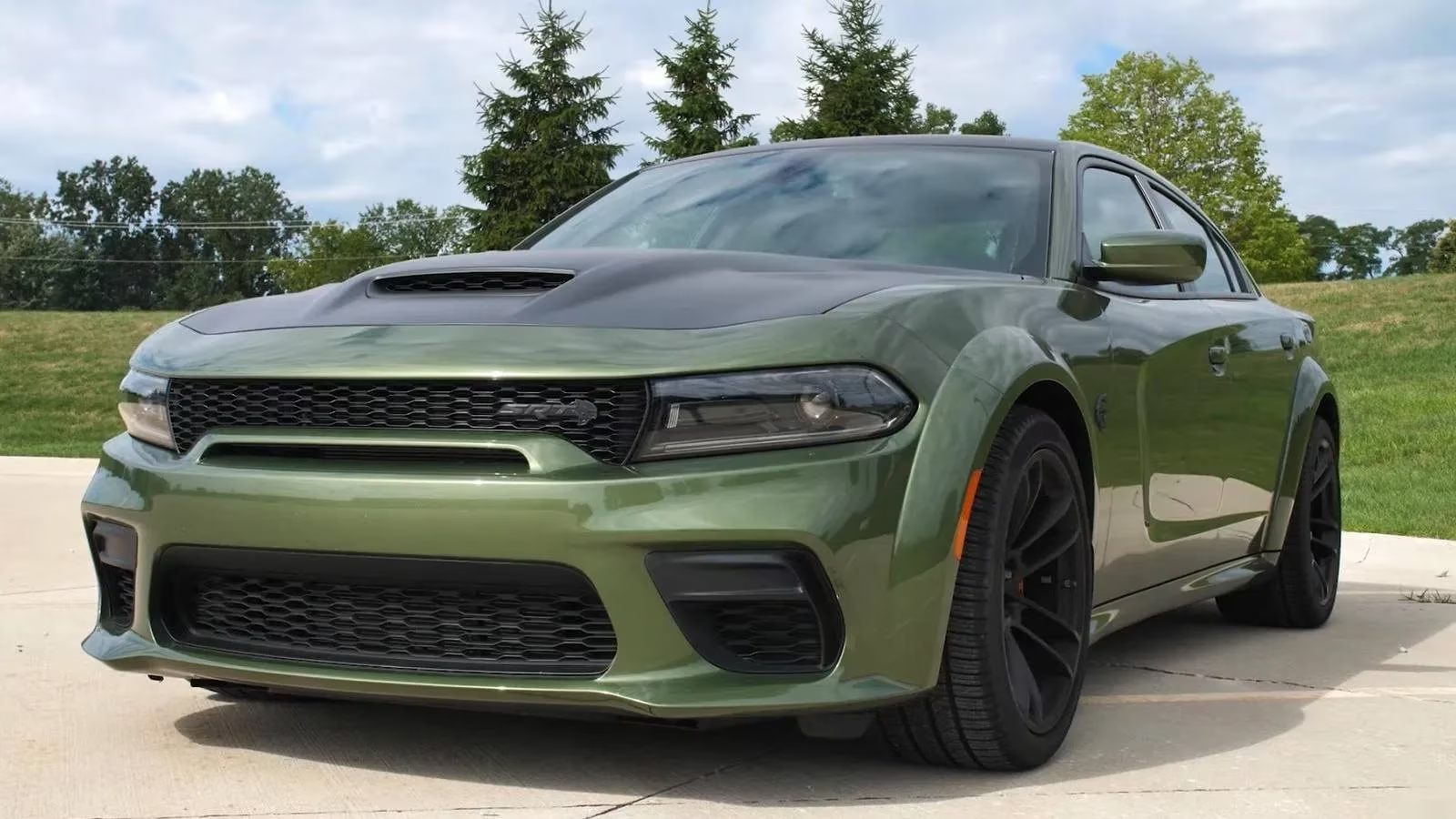
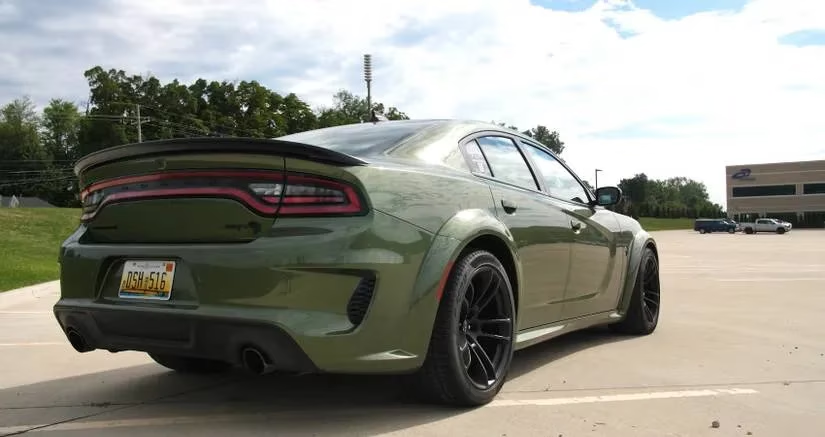
From the moment ThatDudeinBlue slides into the driver's seat, the Charger makes its presence known. It’s not just a sedan; it’s a prowling animal that happens to have four doors. The widebody fenders bulge like shoulders of a linebacker, and the splitter up front seems to whisper, “Go ahead, try me.” He admits he has always leaned toward the two-door Challenger, but this time, the Charger changes his mind. The four-door layout adds an unexpected layer of brutality—a family car that could outrun most supercars while carrying a full week’s groceries. The HEMI orange on the valve covers and the faint whine of the supercharger at idle are promises of the chaos to come.
The Heart of a Dying Breed
Under that massive hood sits the 6.2-liter supercharged V8, a powerplant that Dodge stuffed into everything from the Durango SUV to the Jeep Grand Cherokee Trackhawk. In standard Hellcat tune it pushes 707 horsepower, sent exclusively to the rear wheels through an 8-speed automatic gearbox. The numbers are still staggering in 2026: 0 to 60 mph in under 4 seconds and a top end close to 200 mph. ThatDudeinBlue can’t help but laugh at the absurdity. “Does this even make sense anymore?” he wonders aloud, and the answer is a thunderous no—and that’s precisely why we love it. The engine doesn't just rev; it bellows with a deep-chested roar that feels almost alive, a dinosaur refusing to accept the meteor of electrification.
Behind the wheel, the first lesson arrives fast. Applying the throttle is less of a pedal push and more of a negotiation with a trained predator. He finds himself being extra cautious, tickling the accelerator because the rear tires will break loose without a moment's hesitation. Pull out of a corner with too much enthusiasm and the Charger will bite—hard. “You’d better stay sharp,” he notes, “this thing can get squirrelly before you even realize you’ve asked for trouble.” It’s that hair-trigger temperament that turns every drive into an event. And when he activates track mode, the whole demeanor shifts. The suspension firms up, the steering gains a telepathic edge, and the car becomes what he calls “gnarly”—a perfect word for the raw, unfiltered connection between man and machine.
A Cabin That Finally Matches the Performance
For an automaker once criticized for plasticky interiors, the Charger Hellcat’s cockpit feels like a sincere apology. ThatDudeinBlue points out the genuine carbon-fiber trim on the dashboard, the soft-touch materials where you actually rest your elbows, and the hybrid analog-digital gauge cluster that blends nostalgia with clarity. There are physical knobs for climate control and volume—a small mercy in a world obsessed with screens. Everything is logically laid out, making it easy to settle in and just drive. It’s not a luxury cocoon, but it’s certainly no penalty box. The seats hug you tight enough for a track day without making daily commutes a chore, and the car gives you the sense that it wants to be your partner in crime, not just a tool to get from A to B.
The Emotional Value in 2026
Zooming out from the video, the year 2026 paints a bittersweet picture. The Hellcat era officially ended a couple of years back, and now every surviving Charger Widebody is a rolling piece of history. Seeing ThatDudeinBlue’s first encounter is like watching someone unwrap a time capsule. The market has moved on to silent speed, instant torque from electric motors, and driver-assist systems that can practically steer you home. Yet none of that can replicate the theatrical violence of a supercharged V8. The Charger Hellcat doesn’t just get you places—it terrifies, thrills, and leaves you shaking with adrenaline. It’s a flawed, ridiculous, and utterly magnificent machine. As he wraps up his drive, there’s a pause—almost like he’s already mourning a future where such experiences are just memories. For those lucky enough to own one in 2026, every cold start is a celebration, every highway merge a tiny rebellion against silence.
In the end, the Dodge Charger SRT Hellcat Widebody is more than a performance sedan; it’s the loudest possible full stop at the end of an incredible chapter. And if you ever find the keys to one, don’t overthink it. Just buckle up, respect the throttle, and let the big green beast sing its last, glorious song.