
This Widebody Chevelle Rendering Is a Green Menace With Ground-Clearing Ambitions
In 2026, the classic-car world still cannot resist taking a Chevrolet Chevelle and asking, “What if we made it look like it bench-presses its own engine?” A digital rendering by Emmanuel Brito answers that question with a deep-green widebody Chevelle that has been slammed so close to the pavement it appears to be trying to eavesdrop on the asphalt. It is not a subtle restomod. It is a visual threat delivered in familiar sheet metal, and somehow it works. 🚗💚
The Widebody Kit Does Most of the Talking
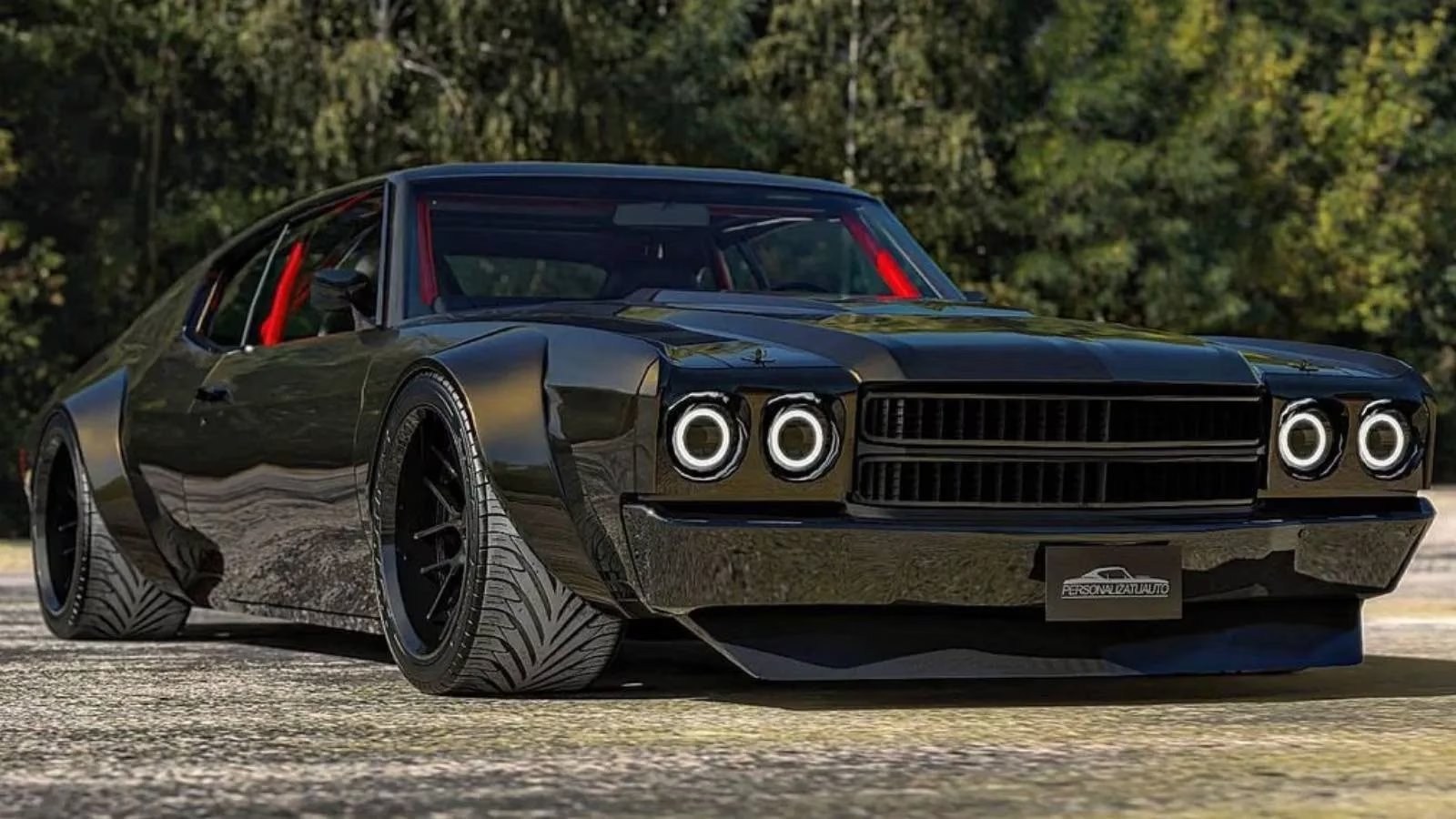
The first thing anyone notices is the widebody kit, which gives this Chevelle the posture of a classic muscle car that has been quietly attending midnight gym sessions. The front end gains a large splitter-style lip that protrudes from beneath the bumper with almost no ground clearance. It is the kind of detail that looks fantastic in a render and absolutely terrifying in a parking garage. One poorly placed speed bump, and the front lip would file an official complaint.
The front wheel arches are much larger than stock, and they wrap around tires that are clearly a serious step up from what the original car would have carried. This is not a subtle “plus-one” wheel upgrade. It is a full commitment to width, presence, and the kind of stance that makes ordinary sedans scoot over in the digital car park. 🔧
Side Profile: Low, Wide, and Fully Committed
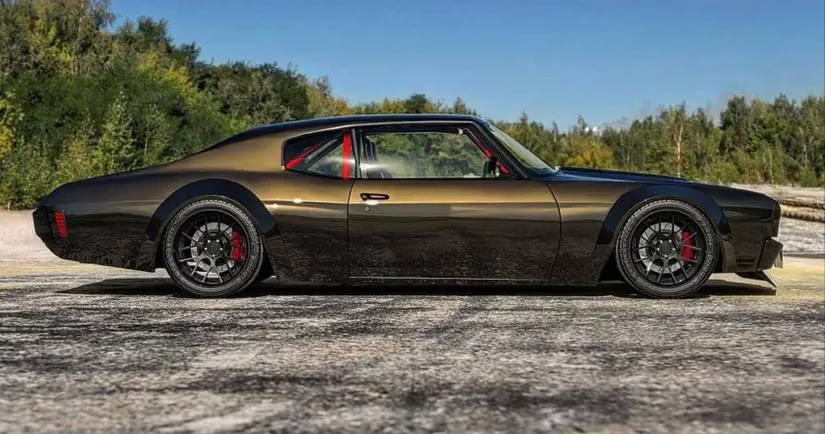
The side view is where the Chevelle’s transformation becomes almost theatrical. Between the front and rear wheels, the car sits with virtually no ground clearance at all. The profile is so low that it looks less like a road car and more like a four-wheeled limbo champion. Speed bumps would need to be negotiated with the delicate confidence of a giraffe in a low-ceilinged library. 🦒📏
The cabin adds another clue to the car’s imagined purpose: a roll cage. In a digital build like this, a roll cage is not just decoration. It hints at a high-performance engine and drag-strip intentions, even if the renderer has not handed over a spec sheet. The message is clear enough: this Chevelle is not dressed for a quiet Sunday cruise to the bakery. It is dressed for making an entrance and then possibly making a very loud exit.
The Rear End Keeps Things Surprisingly Tasteful
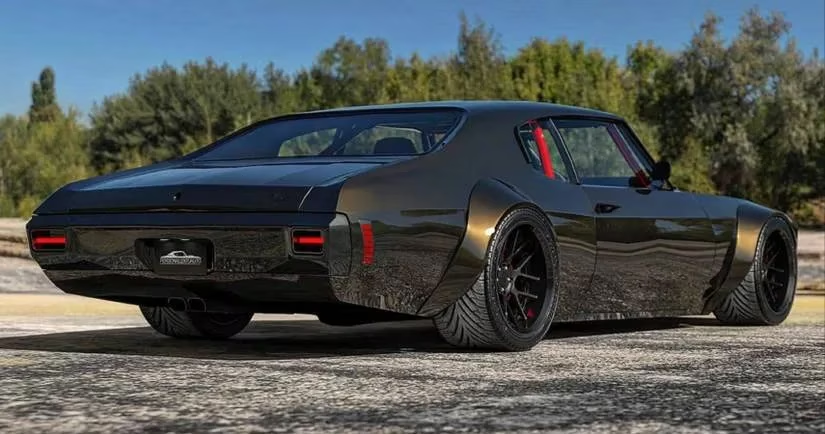
Turn the virtual car around, and the rear is more restrained than the front and sides might suggest. The enlarged rear arches and bigger tires are impossible to miss, and they give the back of the car a much more aggressive footprint. But the rest of the changes are subtler. The bumpers are no longer chrome and instead wear the same deep green as the body, which gives the rear a cleaner, more modern look.
The taillights appear as though they could be modern LEDs, though the render does not shout about it. There is also no outrageous diffuser upgrade fighting for attention. That restraint is smart. After all, a car this low and this wide does not need to scream from every angle. Sometimes the best visual menace is the one that lets the proportions do the threatening. 😈
What Changed, at a Glance
| Area | Visual change | Effect |
|---|---|---|
| Front | Large splitter-style lip, bigger arches, larger tires | Adds aggression and almost zero ground clearance |
| Side | Slammed stance, widebody proportions | Makes the Chevelle look planted and theatrical |
| Cabin | Roll cage | Suggests drag-strip or high-performance intent |
| Rear | Enlarged arches, body-color bumpers, modern-looking taillights | Keeps the tail clean but still muscular |
Why This Rendering Works
The Chevelle is already a beloved classic, so the risk with any digital transformation is overdoing it. This build avoids that trap by keeping the changes focused. The widebody kit is dramatic, the ride height is absurd, and the tires are enormous, but the deep green paint and the body-color rear bumpers keep the car from turning into a cartoon. It is as subtle as a tuxedo at a tractor pull, which is to say it is not subtle at all, but it is still wearing the right outfit.
It also respects the original car’s silhouette enough to remain recognizable. The Chevelle’s long hood, broad shoulders, and classic proportions are still there, just exaggerated. The renderer has not buried the car under a mountain of wings, vents, and neon accents. Instead, the upgrades read like a coherent fantasy build: a vintage muscle car reimagined for a world where every highway is a photo shoot and every fuel stop is a chance to answer questions.
Final Thoughts
This widebody Chevelle is the kind of digital build that makes real-world car fans both delighted and slightly impractical. It looks superb, it sits impossibly low, and it would probably require a personal assistant to scout every driveway before moving. But as a piece of automotive imagination, it is a winner. In 2026, when classic cars are increasingly being reimagined in pixels before metal, this deep-green Chevelle proves that a familiar shape can still feel fresh, fierce, and just ridiculous enough to be fun. 🏁