
Toyota GR Supra Widebody Render Imagines a More Aggressive Mk5 Sports Car
The Toyota Supra has always carried an aura of performance and rebellion. What began in the 1970s as an upper‑level trim for the Celica gradually evolved into a standalone rear‑wheel‑drive icon that became Toyota’s flagship sports car. By the time the fourth‑generation Mk4 Supra arrived in the 1990s, it had transformed into a twin‑turbocharged monster capable of supercar‑slaying acceleration, a legend cemented in pop culture by the Fast and Furious franchise. When the fifth‑generation A90 Supra finally broke cover for the 2020 model year after a seventeen‑year hiatus, the anticipation was immense. Yet the new GR Supra, born from a collaboration with BMW, divided enthusiasts. Some lamented the shared architecture with the Z4, while others took issue with its curvaceous yet controversial styling. Could an aggressive widebody kit be what the Mk5 Supra needs to silence its critics? Digital artist Rostislav Prokop set out to answer that question with a render that pushes the Supra’s presence to extreme levels.
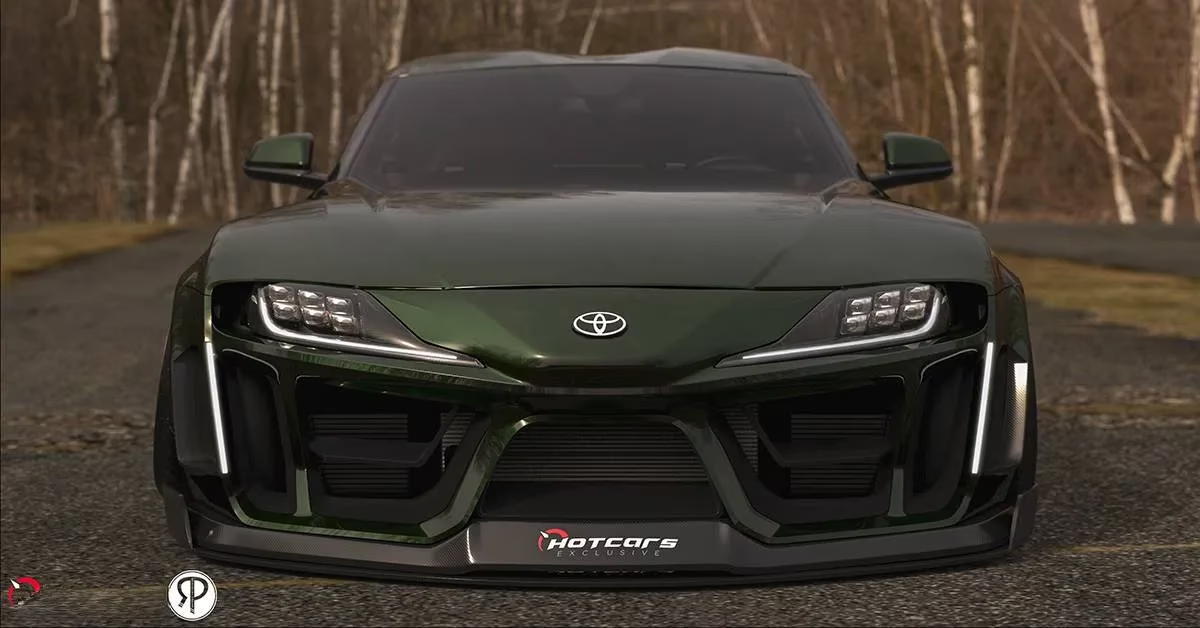
Prokop’s reinterpretation is undeniably menacing. The front fascia trades the stock GR Supra’s pointed nose for a far more combative arrangement. Massive air intakes dominate the lower bumper, funneling cooling air toward an engine that, in the real world, can be either a 255‑horsepower turbocharged 2.0‑liter four‑cylinder or a 382‑horsepower 3.0‑liter twin‑turbo straight‑six. A deep, carbon‑fiber front splitter stretches across the chin, ready to scrape the asphalt. LED accent lights integrated into the extended front fender flares give the nose a futuristic signature. Those flares themselves swell dramatically outward, housing broad wheels and sticky performance tires that fill every millimeter of the wheel wells. The overall effect is one of a car that is low, wide, and threatening—a machine that demands respect even when standing still.
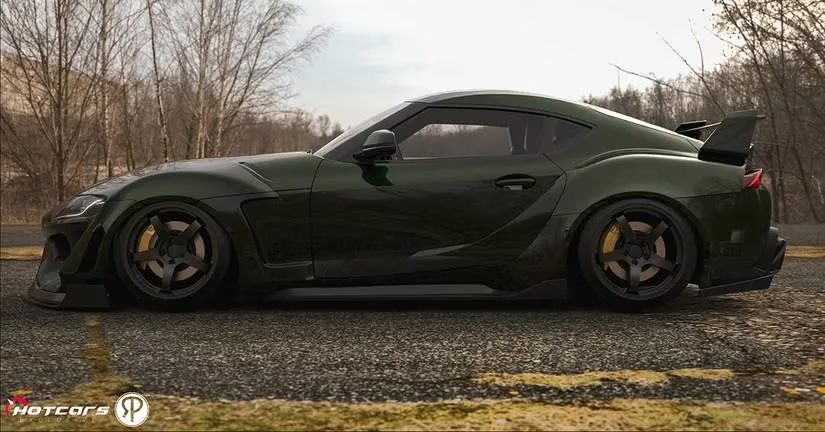
Moving along the side, the widebody transformation becomes even more apparent. The render incorporates deeply sculpted carbon‑fiber side skirts that hug the ground with barely any daylight beneath them, reminiscent of luxury VIP builds that prioritize presence above all else. The door panels are pinched inward relative to the fat fenders, creating a wasp‑waisted silhouette that emphasizes the car’s rear‑drive proportions. Oversized wheels with a deep concave profile help push the track wide, and the tires appear barely contained by the stretched bodywork. It’s a look that channels the spirit of the classic Mk4 Supra while injecting a modern, almost cyberpunk aesthetic. After all, the popularity of widebody versions of the Dodge Challenger and Charger has proven that a hefty dose of visual aggression can only boost a sports car’s appeal. If the American muscle car crowd can embrace bolt‑on flares, why not the Japanese tuner faithful?
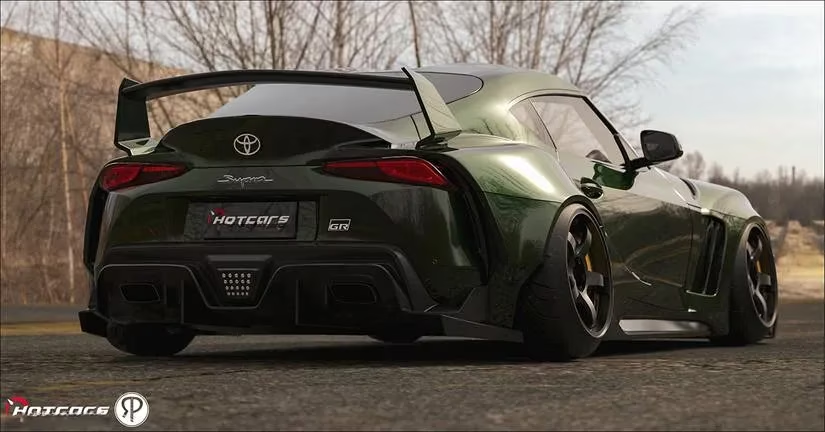
At the rear, the render pays direct homage to the Mk4 Supra’s most iconic feature: a towering, adjustable rear wing that seems to reach for the sky. While the stock A90 Supra already wears a subtle ducktail spoiler, this digital creation goes fully aftermarket, attaching a wing that would not look out of place at a time‑attack event. Below it, an aggressive diffuser integrates a succession of fins and chunky rectangular exhaust outlets. The taillights retain the GR Supra’s distinctive boomerang‑shaped graphics, but the widened hips make the rear look significantly more planted and stable. Every line draws the eye outward, reinforcing the sensation of a car that has been stretched and hammered into a brawler.
The render is purely a flight of digital fancy, but it raises an intriguing question: could Toyota ever produce an official widebody package for the Supra? The company initially refused to offer a manual transmission, only to introduce a stick‑shift option in 2023—perhaps in response to Nissan giving the Z a traditional manual. If Nissan were to launch a factory‑widebody Z, would Toyota follow suit? In the meantime, the aftermarket has stepped up in a big way. A dizzying array of widebody kits for the A90 Supra exists today, enabling owners to transform their cars into everything from elegant street sweepers to full‑on Paul Walker Fast and Furious replicas. Some kits even emulate the iconic orange Toyota Supra from the silver screen, complete with the massive rear wing and the unmistakable Robocar livery. The customisation culture surrounding this car is so rich that a stock‑looking Supra is becoming a rare sight.
Underneath its bodywork, the Mk5 Supra retains its own distinct personality despite sharing its platform with the BMW Z4. The coupe body shell is far more rigid than the open‑top BMW, and Toyota’s engineers have tuned the suspension and steering to deliver a sharper, more focused driving experience. The engine lineup, borrowed from BMW, has proven itself to be both potent and tuneable. The 3.0‑liter B58 engine, in particular, is known for producing well over 400 horsepower with just a mild software tweak. With the addition of a satisfyingly mechanical six‑speed manual gearbox, the GR Supra has matured into one of the most engaging sports cars on the market. It can sprint from 0 to 60 mph in the mid‑four‑second bracket and carry immense speed through corners, all while sounding properly angry from its dual exhaust pipes.
As of 2026, the Toyota GR Supra remains a compelling proposition. Pricing for the base 2.0‑liter model starts at around $46,000, while the desirable 3.0‑liter version commands roughly $56,000. Those numbers put it squarely in competition with the Nissan Z, the BMW M240i, and even the entry‑level Porsche 718 Cayman. By contrast, the legendary Mk4 Supra has ascended to collector status. According to classic car aggregators, a naturally aspirated fourth‑generation Supra now fetches an average auction value of approximately $24,000, but the twin‑turbo cars are in a different stratosphere entirely—regularly trading hands for over $92,000. When you see a twenty‑year‑old Supra selling for nearly double the price of a brand‑new one, the enduring allure of this nameplate becomes crystal clear.
Prokop’s widebody render taps directly into that legacy. It imagines a Mk5 Supra that is unapologetically brash, visually evocative of the fire‑breathing Mk4 while embracing the technical sophistication of the modern car. Whether such a vehicle would win over the purists who still pine for a Toyota‑only engine is debatable, but one thing is certain: on presence alone, this digital concept would stop traffic and turn heads everywhere it goes. In a world where sports cars are increasingly moving toward electrification, the sight of a low‑slung, wide‑hipped Supra dominating a mountain pass feels like a proper celebration of internal combustion. The real beauty, however, lies in the fact that owners don’t have to wait for Toyota to build this vision—they can already piece it together from a thriving aftermarket. The only question is: when will you start your own widebody project?