
Why the Lamborghini Diablo GTR Widebody Still Matters in 2026
Let me be honest: I’ve spent way too many late nights scrolling through renders of 1990s supercars, and few hit me harder than a widebody Lamborghini Diablo GTR. In 2026, when even Lamborghini’s newest machines are hybridized, screen-heavy, and packed with drive modes, the Diablo feels like an analog relic from a wilder time. That is exactly why Andreas Richter’s widebody render still matters to me. It takes the last true old-school Lamborghini and gives it stance, aggression, and modern track-car attitude without erasing its 1990s soul.
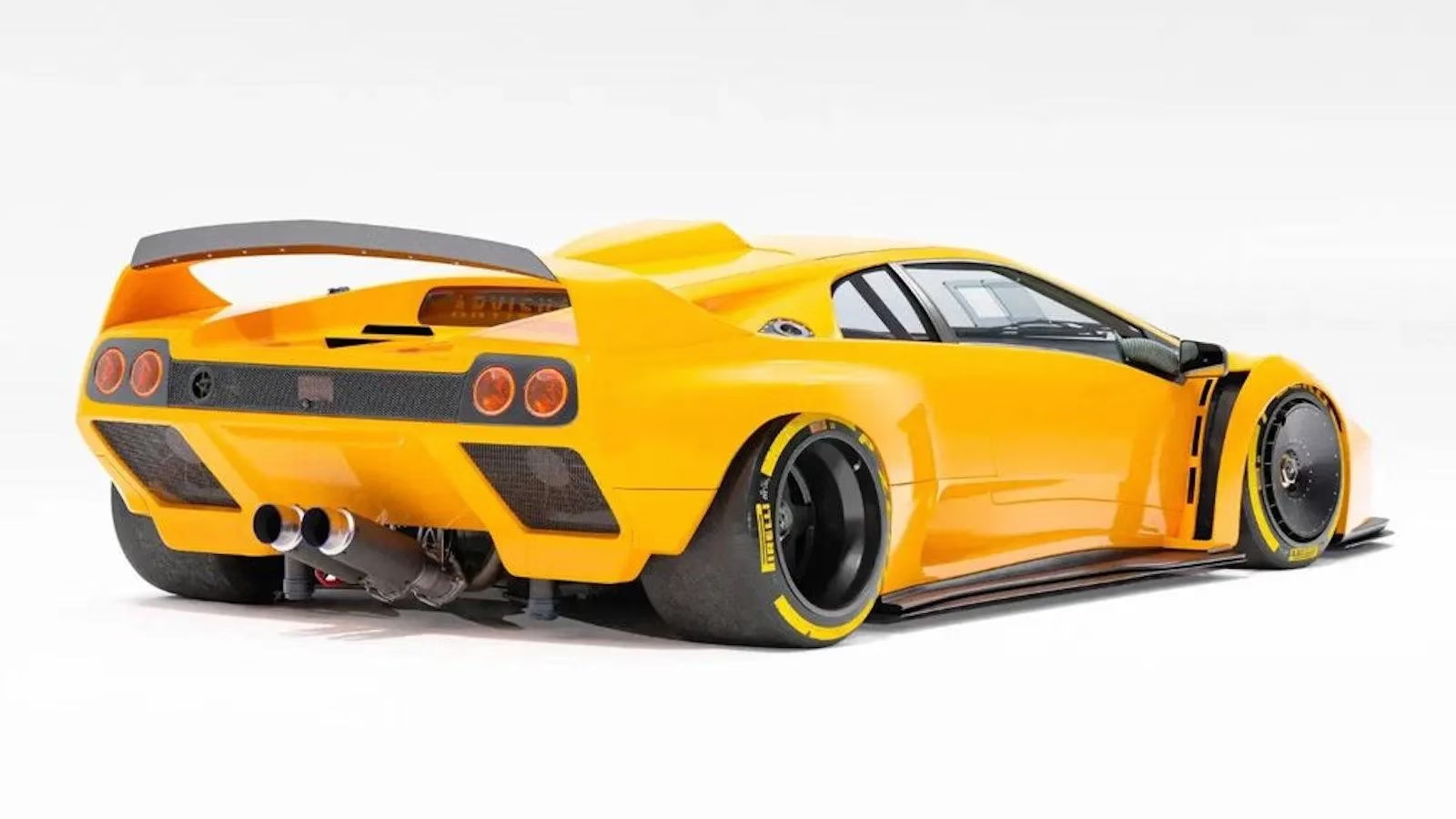
I first saw this render a few years ago, and it has stuck with me ever since. Richter rendered the car in both a screaming yellow and a stealthy black. The yellow one is my favorite because the bold P Zero tire lettering sits right there for everyone to see. That single detail drags the Diablo into the modern era and gives it the air of a contemporary Formula 1 car. It is a small touch, but it changes the whole mood.
Here is what makes the widebody treatment work for me:
-
Flared arches: The standard Diablo GTR is already wild, but the render pushes the body outward. Those swollen fenders let the car run wider rubber, which would theoretically help a track-focused machine put its power down.
-
Curved rear wing: Richter swaps the GTR’s straight wing for a curved unit. It looks more organic and less like a crate spoiler bolted on at the last minute.
-
Vents behind the rear wheel arches: This is pure modern widebody language. Liberty Walk uses similar ideas on the Aventador, and seeing them on a Diablo proves that Lamborghini’s design formula has not changed as much as we think.
-
Modern tire lettering: The P Zero script is a tiny detail, but it makes the car feel like it belongs on a 2026 grid rather than a 1990s poster.
-
Two finishes, two personalities: Yellow says look at me. Black says run away. I would take either, but yellow wins for nostalgia.
| Render feature | Old-school Diablo GTR | Richter’s widebody vision |
|---|---|---|
| Body stance | Wide but period-correct | Slammed, flared, and muscular |
| Rear wing | Straight | Curved |
| Tire setup | Track rubber | Wider rubber with P Zero lettering |
| Rear arches | Clean | Vented, Liberty Walk-style |
| Overall vibe | 1990s race car | 2020s restomod fantasy |
Now, the real Diablo GTR is not just a pretty face. Lamborghini took the street-going Diablo GT and modified it for track use. The plan was to build only 30 examples, but 40 left the factory gates. That is still a microscopic number. The car went on to win two Australian Nations Cup Championships and finished 8th in the Bathurst 24 Hour endurance race. Those are not vanity stats. They prove the GTR could actually fight.
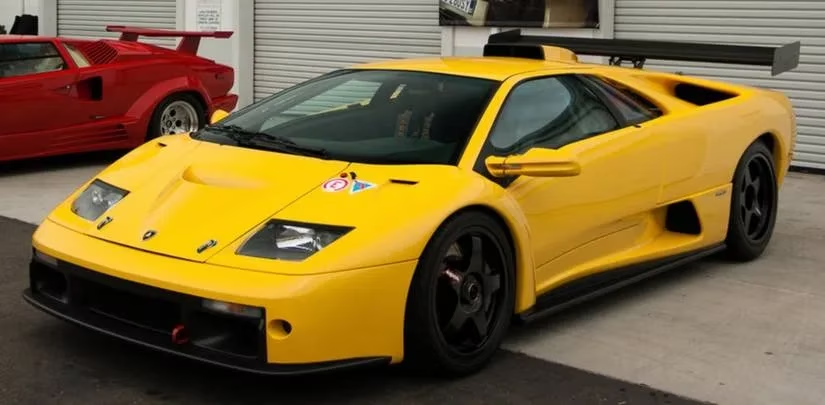
Under the skin, the Diablo uses a naturally aspirated V12. Depending on the model, it displaces either 5.7 or 6.0 liters and sends power through a five-speed manual. No dual-clutch. No torque-converter wizardry. Just a gated manual and a V12 screaming behind your head. In 2026, that combination feels almost mythical. The Diablo was also the last Lamborghini before the E-gear flappy-paddle era, which makes it a dividing line in the brand’s history. It succeeded the legendary Countach and squared up to the Ferrari F40 and the flat-12 Testarossa. By no means should it slip into the history books.
Pricing tells the same story. According to a classic-car price aggregator, the regular Diablo averaged around $179,738 when that data was collected. The GTR is so rare that there is not enough data to provide a reliable average. The VT model asks for over $300,000. In 2026, I would not be surprised if those numbers have climbed even higher. Clean, analog V12 Lamborghinis are becoming collector trophies, and the Diablo sits right at the center of that trend.
So why does a render matter? Because it keeps the legend alive. The Diablo GTR Widebody is not a real production car, but it shows what the Diablo could be with modern stance and a little bit of restraint. It also reminds me that Lamborghini’s best cars have always followed the same formula: outrageous proportions, a massive rear wing, a V12, and just enough insanity to make children put posters on their walls. The Aventador SVJ and Revuelto may be faster, but they are also heavier, more complex, and more digital. The Diablo is pure.
If I had the money, I would want a real GTR in yellow. Since only 40 exist, I will probably settle for this render and a lottery ticket. Still, that is the power of a good widebody design. It makes a 1990s legend feel relevant in 2026 without turning it into something it never was. The bull still has teeth. 🐂🔥