
Widebody Chevrolet Nova Render: A Green Muscle Car Concept That Still Bites in 2026
In 2026, the Chevrolet Nova still occupies a strange, useful place in car culture: ordinary enough to be underestimated, famous enough to be instantly recognized, and simple enough to accept almost any digital or physical transformation. A green widebody rendering by Venezuelan digital artist Emmanuel Brito makes that point with unusual clarity. The concept takes a third-generation Nova and gives it the posture, attitude, and detail language of a modern street machine. It is not a production announcement or a factory concept; it is a visual argument, and the argument is persuasive. The car looks lower, wider, and more purposeful, with a stance that all but erases the original economy-car brief. 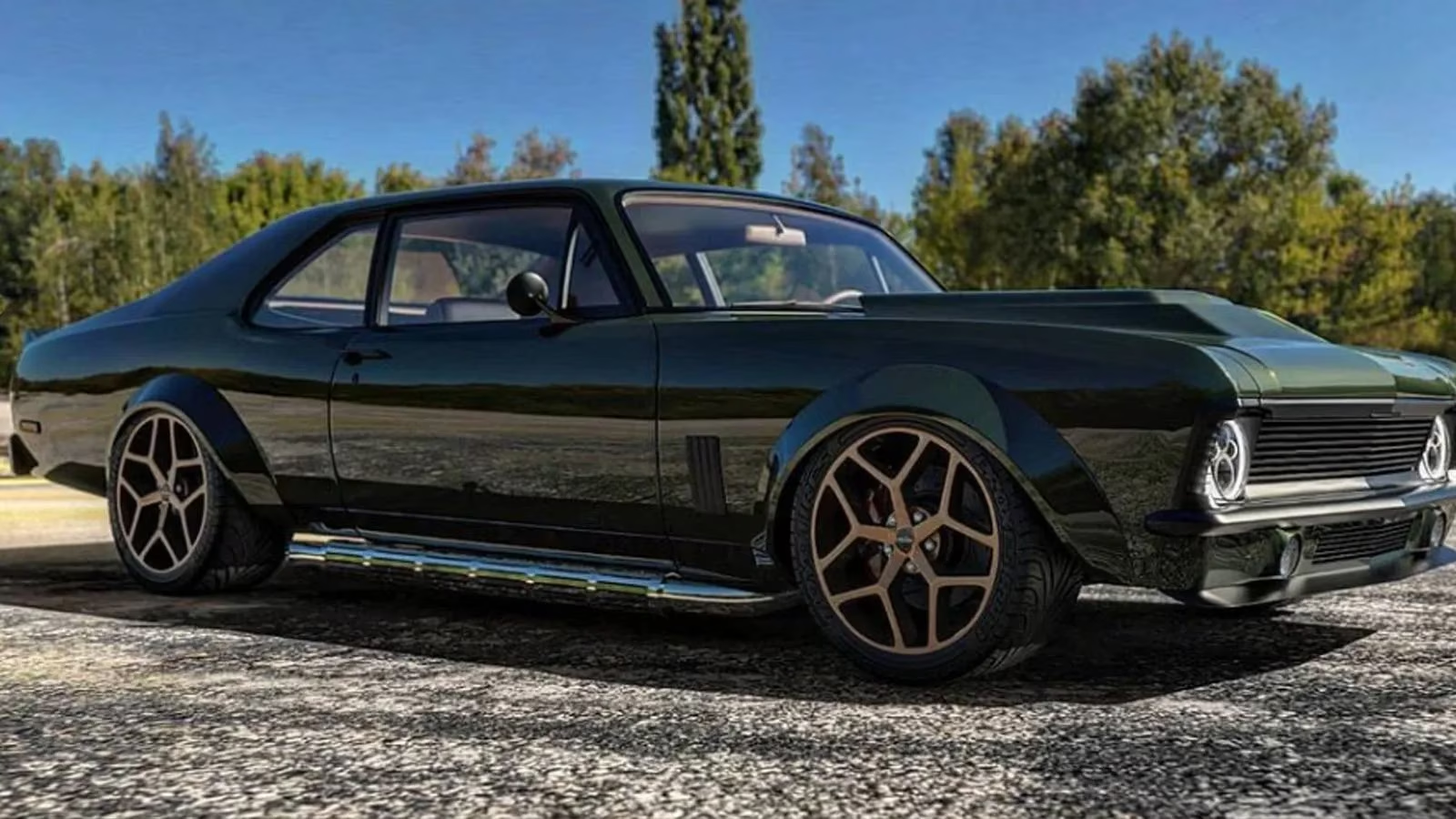
From Economy Commuter to Digital Bruiser
The Nova was originally designed in 1962 as an economy commuter car, but it burst into greater prominence in 1968 as one tough gearhead favorite, challenging the supremacy of the Mustang and the Challenger. That history matters because Brito's rendering does not pretend the Nova was always a muscle car. Instead, it exaggerates the qualities that made the third-generation car such a natural candidate for performance: a compact body, a long hood, a simple stance, and enough visual mass to support bigger wheels and arches. The result is less a costume change than a geological event: a mild sedan compressed by pressure until it became a muscle car. The green finish sharpens the effect, giving the body a jewel-like intensity while the black accents keep it from looking decorative. 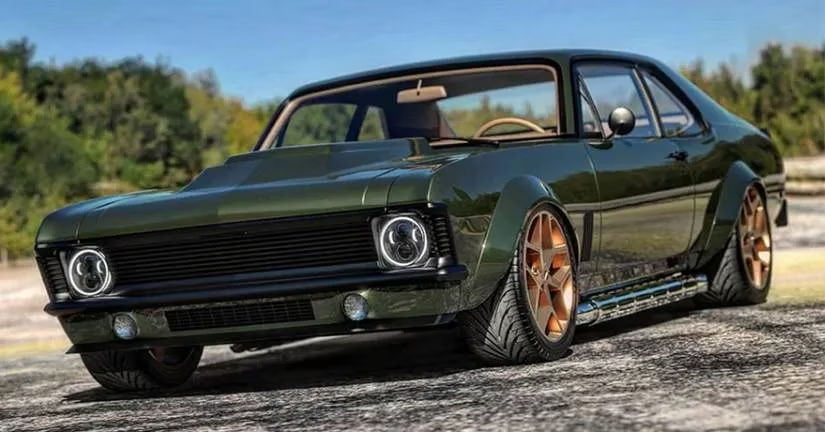
The Details: Widebody, Turbo Cue, and Honeycomb Wheels
Brito's widebody treatment is the centerpiece. Digital rendering gives an artist freedom to reshape contours, and Brito uses that freedom to add definition to the side panels bordering the wheel wells. The arches are not just swollen; they are sculpted, with edges that make the Nova look planted and aggressive. A raised spot on the hood signals a turbo-friendly layout, a subtle cue that invites viewers to imagine forced induction rather than simply a big V8. The rear spoiler adds another layer, offering an open invitation to other muscle cars to meet this redesign on the strip.
| Design element | What it does |
|---|---|
| 🟢 Deep green paint | Makes the body look rich and intentional without hiding its lines |
| 🛞 Widebody arches | Adds stance and gives the wheels room to dominate the view |
| 🫧 Raised hood detail | Suggests turbo hardware and modern performance potential |
| 🪽 Rear spoiler | Reinforces the drag-strip fantasy and visual balance |
| 💡 Twin LED headlights | Replaces classic round lamps with a sharper, more alien face |
The wheels may be the neatest detail. The spokes receive a distorted honeycomb treatment, as if a beehive had been asked to hold formation inside a wind tunnel. The pattern is structured but not rigid, and it gives the car a futuristic texture that contrasts with the Nova's vintage body. The headlights are equally surreal: two LED bulbs inside each housing create an alien vibe, giving the front end a sharper, more watchful expression. The widebody stance, meanwhile, makes the Nova look like a chess knight that has decided to occupy every square at once. 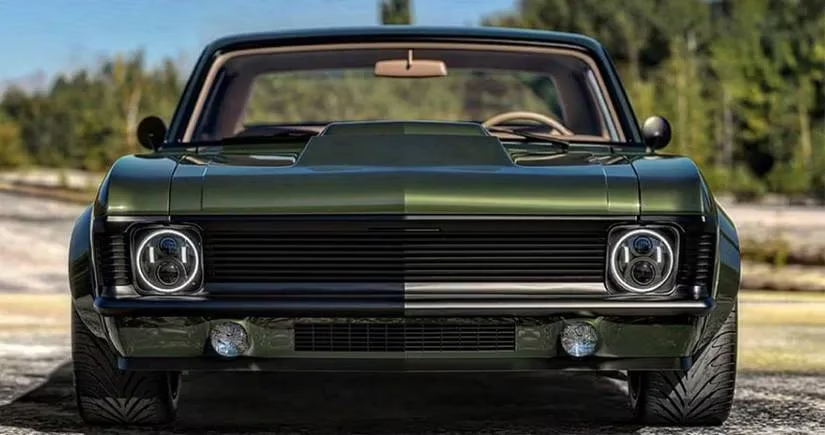
Public Reaction and the Wider Render Portfolio
When Brito posted the work, he issued a challenge to his followers, asking what they thought and declaring that the machine would be a beast on the streets. The response was heavily positive. One viewer called it a superb build, praising the uniqueness of the colors and pipes and describing it as a deadly little hot rod. Another said they had always wanted to see a widebody Nova and now wanted to build one to match. That reaction is revealing: the rendering works not only as a standalone image but as a template. It makes the Nova feel like a car that could be built, even if the arches, wheel design, and lighting would require serious fabrication.
Brito's Nova upgrade fits alongside other muscular Detroit vehicles he has rendered over the years. His portfolio includes the Mustang, Camaro, and Chevelle, and he has expanded into trucks such as the Chevy C10, Toyota Tacoma, and Ford F150. Many of those creations imagine road-hugging machines with inverted, sloped front ends. The common thread is not a specific brand but a method: take a familiar silhouette, push its proportions, and add details that feel simultaneously retro and science-fictional.
As of 2026, the appetite for retro-modern muscle has not faded. Widebody kits, restomods, and CAD-designed concepts remain central to enthusiast culture, and the Nova's simple body continues to attract builders who want a classic shape with modern aggression. Brito's green rendering remains a useful reference point in that conversation, but it is also more than that. It is a compact lesson in how far a familiar car can travel without losing its identity. The Nova began as an economy commuter; in this digital form, it becomes a green street beast with honeycomb wheels, turbo hints, and a stare that suggests it has already seen the finish line.