
Wings vs Spoilers: A Gamer's Guide to Aerodynamics for Your Ride
Just the other day, I pulled up in my modified ride and got the classic compliment: 'Hey, great rear spoiler!' I had to correct them immediately. 'No,' I said, 'it's a wing.' The dismissive 'Oh, whatever' that followed is a reaction I know all too well. In the world of car enthusiasts and performance tuning, this confusion is rampant, but understanding the difference is crucial for anyone serious about extracting real performance from their machine. As someone who treats driving like a high-stakes game, optimizing every component is part of the fun. Let's dive into the physics that separate these two common aerodynamic additions and figure out which one is the right power-up for your vehicle.
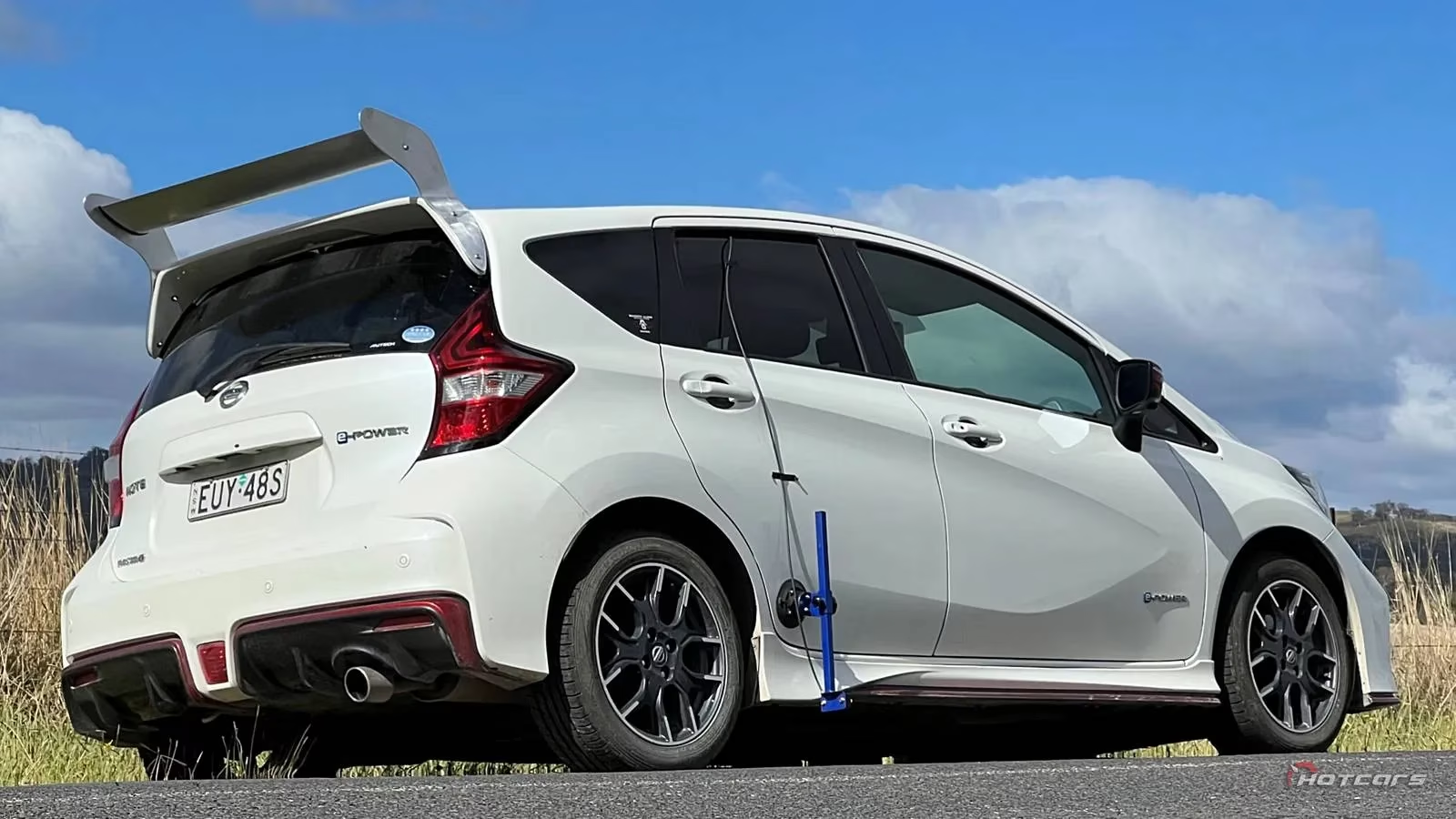
First, let's clear up the terminology. What most people casually call a 'wing' on a standard car is almost always a spoiler. True rear wings on production cars are incredibly rare beasts. A wing is a specific aerodynamic device shaped to create downforce by manipulating air pressure. Its design forces air to travel faster underneath it than over the top. This speed difference creates a pressure imbalance: low pressure underneath and high pressure on top. Both of these forces combine to suck and push the wing downward, generating that precious downforce. It's a precise instrument, not just a cosmetic add-on.
For a wing to work its magic, it needs two very specific conditions:
-
Clean Air: It must be positioned in smooth, laminar airflow. Turbulent air—like the messy wake directly behind a car—is the enemy. A wing drowning in turbulence can't establish the smooth flows over its surfaces needed to create pressure differentials.
-
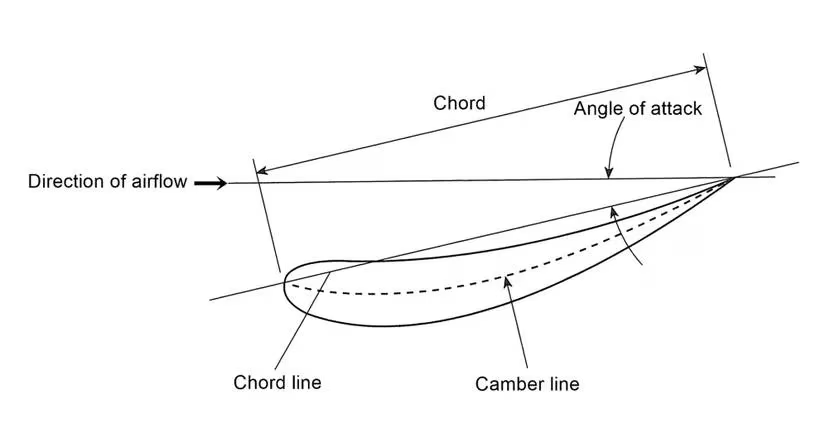
The Correct Angle: It must avoid stalling. As you increase the wing's angle relative to the oncoming air (its angle of attack), downforce increases until a critical point—the stall angle. Beyond this, airflow detaches from the wing's surface, downforce plummets, and drag skyrockets. I've seen countless aftermarket wings that are completely ineffective because they're either buried in dirty air or mounted at such a steep angle they're perpetually stalled.
A spoiler, my friends, operates on a completely different principle. It's less of a finesse tool and more of a blunt instrument. Its primary job is to disrupt and slow down the airflow traveling over the car's body. On a car with a fastback or sloping rear end, air speeds up, creating a low-pressure zone that can lift the rear of the car. A spoiler acts as a barrier. By sticking up into this flow, it slows the air ahead of it, increasing the air pressure on the rear body panels. This higher pressure pushes down on the car, counteracting lift. The beautiful part? The spoiler's shape is almost irrelevant. It can be a simple lip, a ducktail, or a complex curve—as long as it interrupts the airflow, it works.
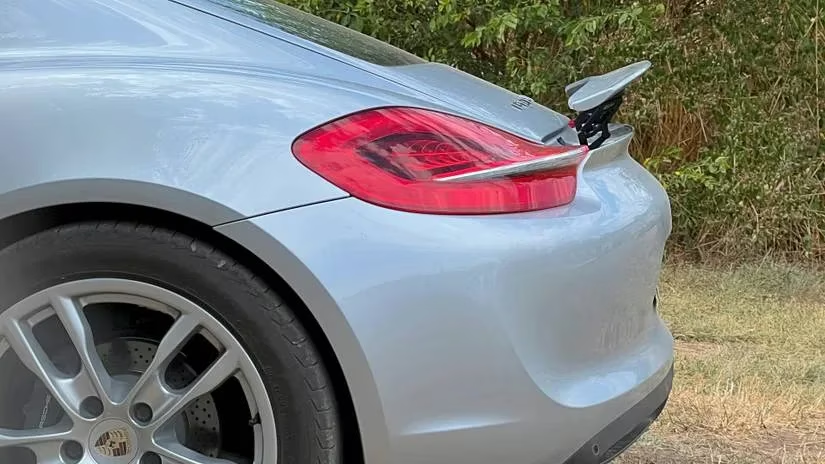
This is why spoilers dominate the OEM landscape. They give designers styling freedom while still providing a functional aero benefit. They can also reduce aerodynamic drag if tuned correctly, as the increased pressure on a downward-sloping rear can actually give a slight forward push. It's a balancing act, though. Too large a spoiler increases the size of the turbulent wake behind the car, which can increase overall drag.
So, which is the better upgrade? Let's break it down like choosing a character class in a game:
| Feature | Wing | Spoiler |
|---|---|---|
| Primary Function | Generate downforce via pressure differential | Reduce lift by slowing & redirecting airflow |
| Shape Critical? | ✅ Extremely. Requires an airfoil profile. | ❌ No. Function over form. |
| Airflow Needs | Must be in clean, smooth air. | Needs attached airflow, but more tolerant. |
| Drag Penalty | Always creates drag, but a good design minimizes it. | Can reduce drag if well-integrated with body shape. |
| Ease of Use | Hard. Requires precise design, placement, and angle. | Easy. Forgiving and versatile. |
| Best For... | Track cars, time attack, where downforce is king. | Street cars, grand tourers, reducing high-speed lift. |
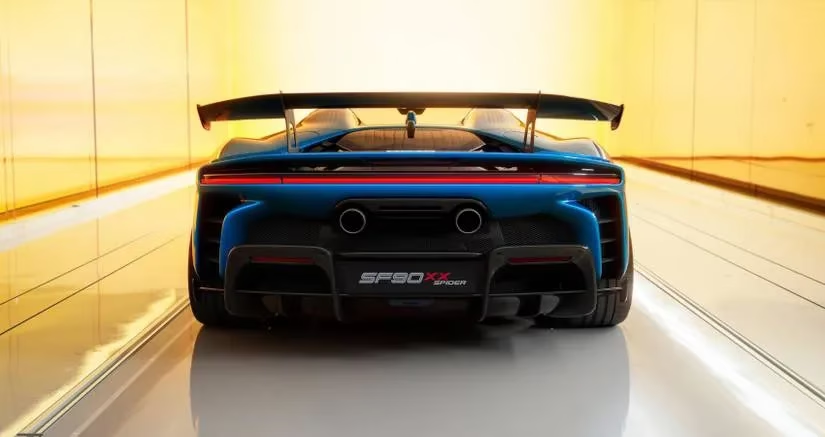
Wings can produce significantly more downforce, but always at the cost of increased drag. The trade-off is real. A poorly chosen aftermarket wing might double your downforce but multiply drag by eight times—a terrible deal for a street car. Don't look at Formula 1 cars for inspiration here; their massive drag is a non-issue compared to their need for colossal cornering grip. For amateur racing, where lap times rely on corner speed, a radical wing might be worth it. For the street, subtlety and integration are key.
Placement is another critical factor often overlooked. Mount a wing too close to the roofline, and the low pressure it creates on its underside can 'pollute' the pressure on the car's body beneath it, effectively reducing its net downforce. Mounting it further back can help, but it might increase drag by affecting the pressure zone behind the car. It's a complex interaction between the wing and the car's entire aerodynamic profile.
The bottom line for us gamers on the road: Is it worth it for performance, not just looks? Absolutely—but with a huge caveat. If you bolt on a wing that's stalled or sitting in turbulent air, you're just adding weight and drag for nothing. You might as well have a giant decorative spoiler. But if you select and set up a proper wing or a well-sized spoiler correctly—and especially if you pair it with complementary front-end aero like a splitter or canards—you will feel the difference. The benefits are tangible even at legal highway speeds:
-
🛣️ Improved straight-line stability, feeling planted and confident.
-
🏁 Increased cornering grip, allowing for higher, more stable speeds through bends.
It's all there for the taking, a free performance upgrade hiding in the air around your car. But just like in any game, you can't just equip the highest-level gear without understanding its stats. You have to know the mechanics. Choose wisely based on your driving 'playstyle,' install it correctly, and you'll unlock a new level of handling and connection to the road. Now, who's ready for the next lap?