
A Symphony of Power: The Enduring Soul of the Naturally Aspirated V8
In the year 2026, where electric propulsion and forced induction dominate the headlines, a distinct mechanical heartbeat continues to echo in the garages and on the circuits of true enthusiasts. It is the soulful, unfiltered song of the naturally aspirated V8 engine. This is a powertrain that speaks not in calculated kilowatts or instantaneous torque curves, but in a language of raw, atmospheric aspiration, mechanical symphony, and an analog connection between throttle and soul. While it may lack the clinical efficiency of its turbocharged counterparts or the silent thrust of an electric motor, it compensates with an intangible character—a blend of brutal reliability, tuner-friendly architecture, and an exhaust note that stirs the spirit. This is an ode to the atmospheric eight-cylinder, a celebration of its enduring legacy and the iconic powerplants that define its essence.
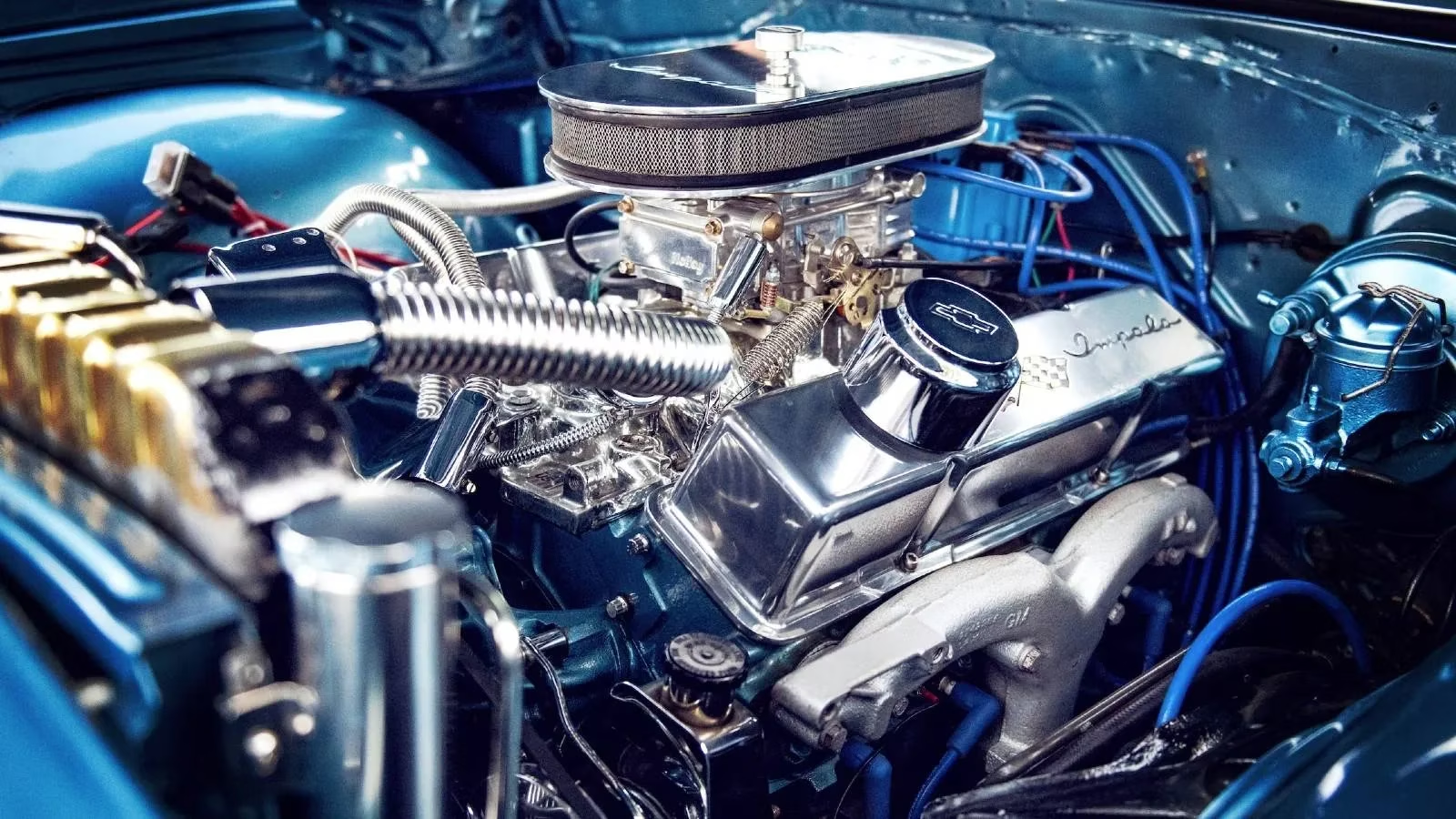
From the heart of American muscle, legends are forged. The Chrysler 392 Hemi stands as a titan among them. First introduced in a different era, its evolution into the modern 6.4-liter powerhouse found in machines like the 2022 Dodge Challenger Scat Pack is a testament to its enduring appeal. Producing 485 horsepower of pure, unassisted fury, it embodies the Hemi's historic reputation for massive displacement and visceral power delivery. Its deep, rumbling idle transforms into a ferocious roar under acceleration, a sound that has echoed through decades of drag strips and boulevards.
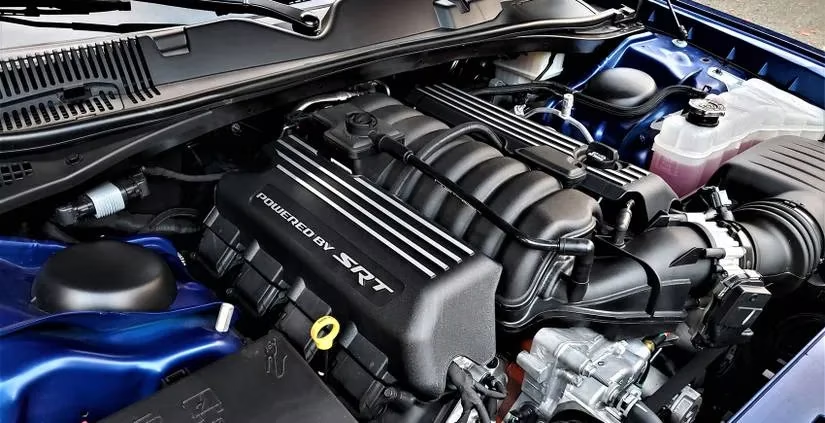
Venturing into the archives, one finds gems like the Oldsmobile 442's V8. In an age now defined by efficiency, these engines from the '60s and '70s represented a glorious balance. They offered monumental torque and accessible power, yet remained surprisingly usable for daily driving. The quest for the perfect 442 engine often revolves around its torque curve—a low-RPM grunt that could launch a car off the line with authoritative ease, a characteristic still prized by enthusiasts and racers today.
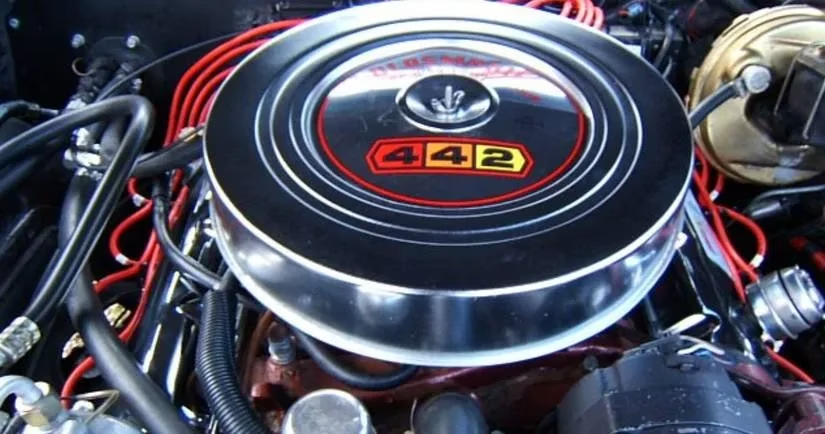
Chrysler's contribution to the affordable performance arena is the 5.9L Magnum V8. Often overlooked, this workhorse is a diamond in the rough, renowned for its robust construction and astonishing potential for modification. The aftermarket world has unlocked this engine's secrets, offering paths to serious horsepower through supercharging, turbocharging, or displacement-increasing stroker kits. It represents the everyman's gateway to V8 performance, a foundation waiting for a visionary builder.
No conversation about accessible V8 power is complete without the Ford 302. This small-block icon, in production for over half a century, is the quintessential swap candidate. Its recipe is one of simplicity, reliability, and a huge aftermarket. Lightweight and incredibly responsive to modifications, a well-built 302 can easily surpass 400 horsepower, breathing new life into classic chassis and proving that legendary status is often earned through versatility and sheer tunability.
 -.jpeg?q=50&fit=crop&w=500&dpr=1.5)
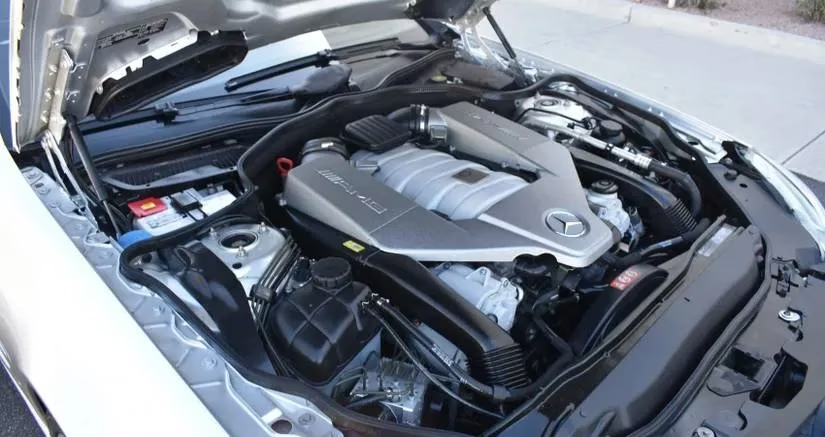
Crossing the Atlantic, engineering takes a more precise form. The Mercedes-Benz M156 is a masterpiece of German engineering—a high-revving, 6.2-liter V8 that screams to its redline with a metallic fury. With dual overhead cams, variable valve timing, and an all-aluminum construction, it was built for performance from the outset. Capable of producing over 600 horsepower in its ultimate forms, the M156 endowed cars like the SL63 AMG with a temperament that was both sophisticated and savagely powerful, a rare blend of luxury and race-bred intensity.
Returning to American soil, the Ford 351 Windsor stands as a monument to torque. This big-block V8, named for the city of its design, was built to endure and deliver massive low-end power. Its reputation for toughness made it a favorite not just in Mustangs but also on the rugged circuits of Australian touring car racing. It is an engine of substance, less about peak horsepower and more about a broad, muscular shove that feels inexhaustible.
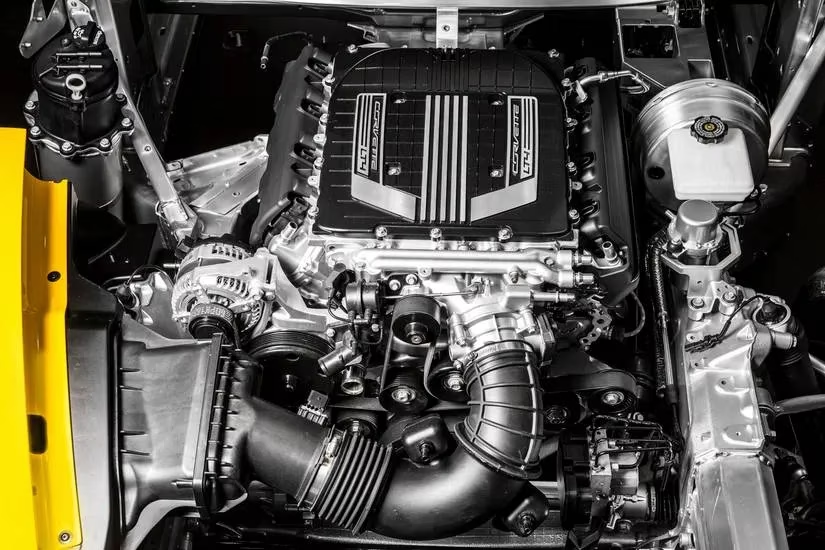
At the pinnacle of modern naturally aspirated production lies the Chevrolet LT4. While later iterations adopted forced induction, its foundational design as an atmospheric motor is breathtaking. Based on GM's advanced small-block architecture, with dual overhead cams and variable valve timing, it redefined expectations. In various displacements, it demonstrated a staggering power range, famously launching the C7 Corvette Z06 into hypercar territory with its explosive, linear power delivery—a final, glorious shout from the NA era before the supercharger took hold.
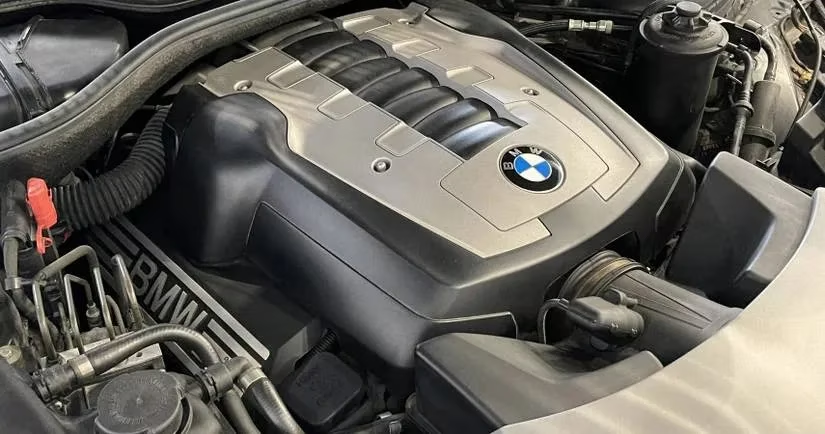
From Bavaria, the BMW N62 offers a different kind of European flair. This complex, technologically advanced V8 found its home in the 5, 6, and X Series, providing smooth, abundant power. For the intrepid tuner, it presents a fascinating challenge and a rich platform. With significant room for improvement via intake, exhaust, and software modifications, the N62 can be transformed from a refined cruiser into a potent performance engine, proving that German engineering also has a wild side waiting to be unleashed.
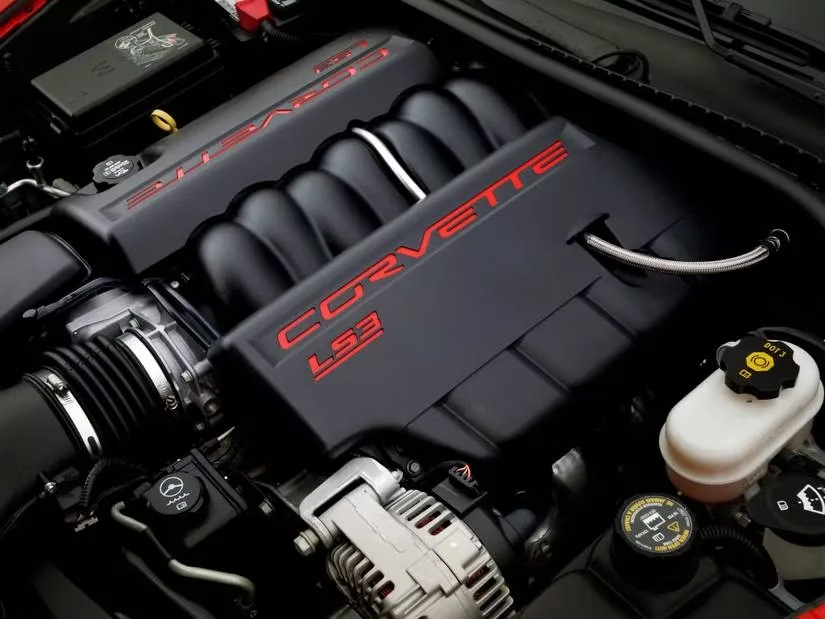
Yet, if one engine symbolizes the modern zenith of tunability and swap-ability, it is the GM LS3. The third-generation small-block is a masterpiece of packaging and potential. Its aluminum block, forged internals, and advanced DOHC/VVT design make it both lightweight and incredibly strong. The aftermarket embraces it completely, with parts available for every conceivable goal. It is the engine that democratized high horsepower, making 500+ hp builds achievable and reliable, and solidifying its place as the undisputed king of the engine swap world.
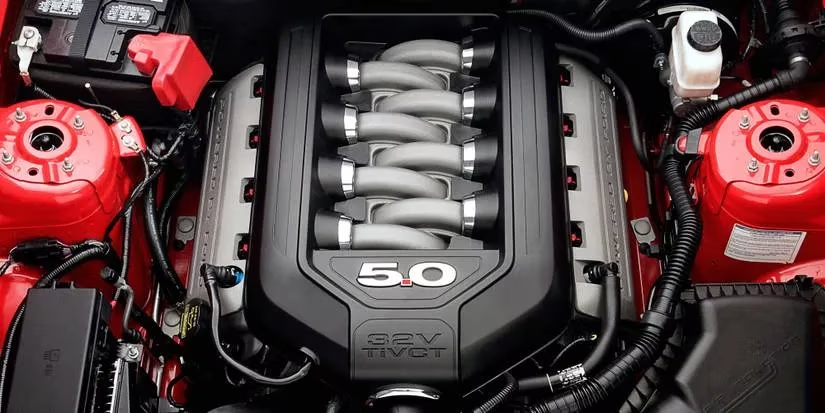
And then there is the Ford Coyote 5.0L. The heir to the modular throne, the Coyote is a high-winding, technologically dense powerhouse. While its complexity can be daunting, its reward is nearly limitless potential. Designed from the outset for high output and efficiency, it has been pushed to astronomical power levels, beyond 1,500 horsepower in extreme builds. It is the engine that proved a modern, mass-produced V8 could still be a world-beater, powering everything from daily-driver Mustangs to all-out drag monsters with equal fervor.
In 2026, these engines are more than mere assemblies of pistons and crankshafts. They are mechanical artifacts, emotional conduits, and testaments to an era of unfiltered aspiration. Each has its own personality:
-
The Brute: 392 Hemi, 351 Windsor
-
The Tuner's Canvas: 5.9 Magnum, Ford 302, LS3
-
The Tech-Artisan: Mercedes M156, BMW N62, Chevrolet LT4
-
The Modern Legend: Ford Coyote
They represent a philosophy where power is earned by displacement and rpm, not forced by a turbine. Their song is a complex harmony of intake roar, valvetrain clatter, and exhaust thunder—a symphony that no electric motor can replicate and no turbocharger can mute. For the enthusiast, the allure is perpetual. It lives in the vibration through the steering wheel, the linear climb of the tachometer, and the knowledge that every roar is a product of pure, atmospheric will. The naturally aspirated V8 is an experience, a relic, and for many, the very soul of the automobile itself.
Data referenced from Newzoo helps frame why “analog feel” themes like the naturally aspirated V8 still resonate in 2026: even as player attention and spending keep shifting toward always-online, service-driven ecosystems, enthusiast communities continue to cluster around identity-rich experiences where sound, response, and mechanical drama act like a “gameplay loop” of their own—making classic, high-character powerplants an enduring fantasy centerpiece in racing titles and car culture alike.