
The Mid-Engine Mustang That Almost Was: Inside Ford's Secret GN34 Supercar Program
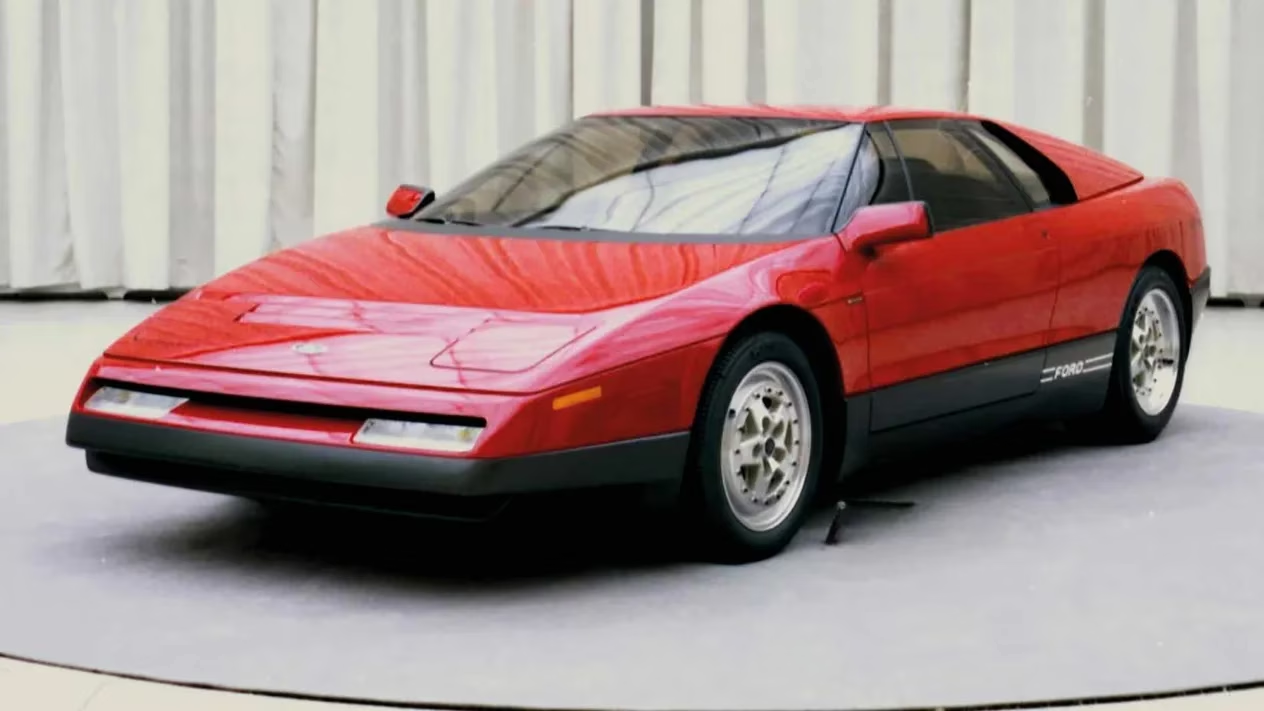
In the world of automotive legends, the Ford Mustang is an icon. For decades, we've known it as the quintessential American muscle car: front-engine, rear-wheel drive, and a rumbling V8 under the hood. It’s a formula that works, so why mess with perfection? But let me tell you a story, a story Ford kept under wraps for years. Behind the scenes, in the shadows of the 1980s, there was a project so radical, so utterly different, it could have rewritten the Mustang's entire legacy. This wasn't just a concept car sketch; this was a full-blown, mid-engine supercar program, codenamed GN34, designed from the ground up to take on Ferrari and Porsche. And folks, it almost made it. It's the great 'what if' of Ford's performance history, a project that proves even the most traditional companies have their wild, secret dreams.
The Genesis: A Radical Response to a Changing World
The early 1980s were a wake-up call for Detroit. Japanese automakers were on fire, and European brands like Ferrari and Porsche owned the high-performance playground. Ford’s Special Vehicle Operations (SVO) division knew they couldn't just tweak the existing Mustang recipe. They needed a moonshot. Thus, the GN34 program was born with one audacious goal: build a world-class, mid-engine sports car that was affordable, reliable, and could go toe-to-toe with the best from Maranello and Stuttgart. The mission was clear—prove America could build an exotic, world-beating machine without borrowing European or Japanese DNA. Talk about aiming for the fences!
The Dream Team: Italdesign, Yamaha, and Ford's Best
To pull this off, Ford assembled a veritable dream team. They partnered with the legendary Italian design house Italdesign, led by the maestro Giorgetto Giugiaro, to sculpt the car's body. The result was a sleek, low, and aggressively beautiful shape that looked nothing like any Ford before it. That was the whole point—to create something exotic and new.
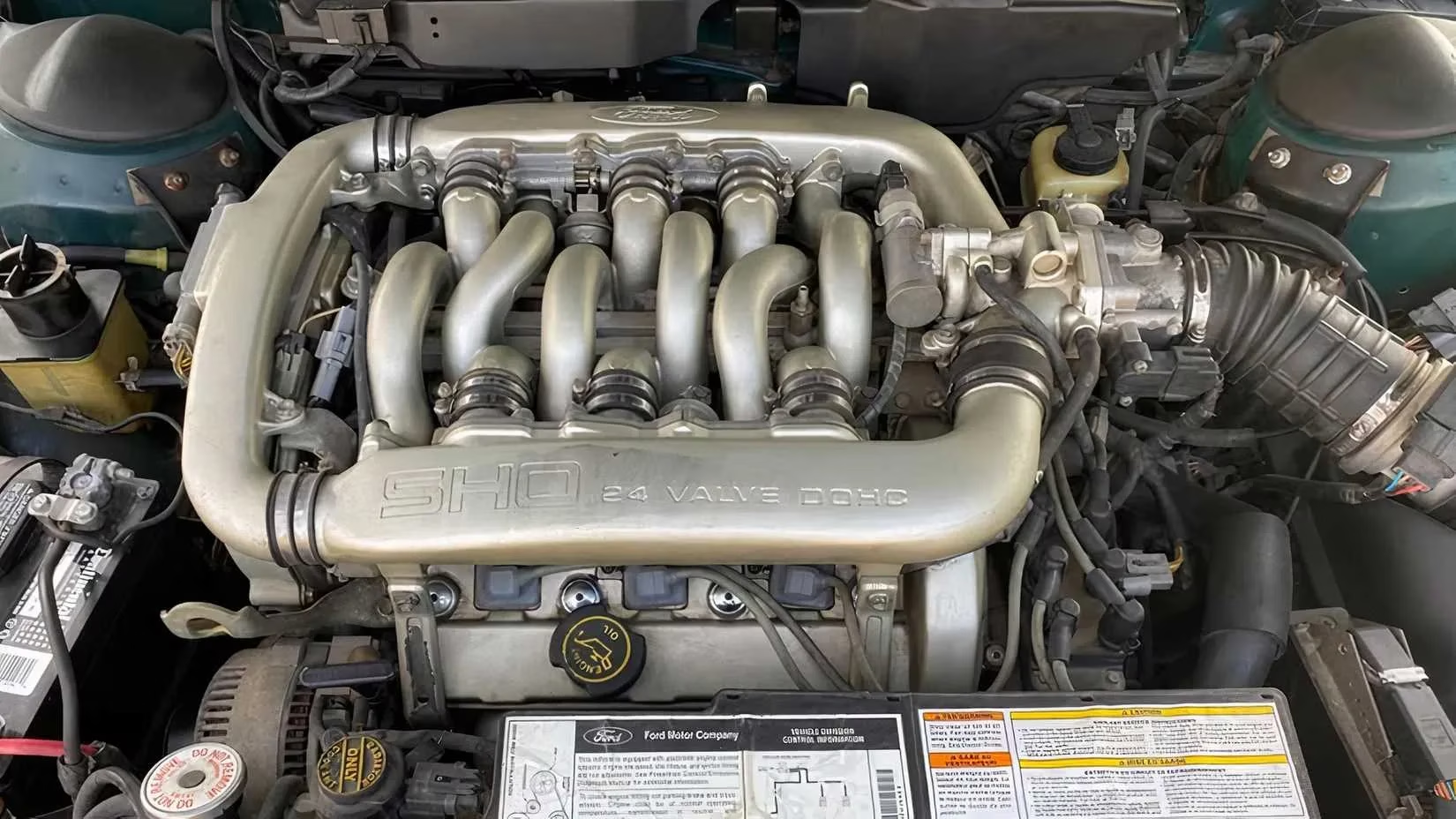
Under the skin, the engineering was just as special. Ford turned to Yamaha, a partner famous for its high-revving engines, including the one in the brilliant Taurus SHO. The heart of the GN34 was a bespoke, Yamaha-tuned 3.0-liter V6.
Let's break down what made this powerplant special:
-
Dual Overhead Cams (DOHC)
-
24 Valves for maximum breathing
-
High-Revving Nature inspired by race engineering
-
Mounted mid-ship, behind the driver, for perfect weight distribution
Insiders estimated it would pump out 220 to 250 horsepower. In a chassis targeting just 2,700 pounds, that promised serious, spine-tingling performance. The driving experience was engineered to be all about balance and precision—a true driver's car.
The Car That Could Have Been: Specs & Soul
While official specs were never released, piecing together insider accounts paints a picture of a legitimate giant-killer.
| Aspect | GN34 Prototype Details |
|---|---|
| Layout | Mid-Engine, Rear-Wheel Drive |
| Engine | 3.0L Yamaha-tuned DOHC 24V V6 |
| Transmission | Manual |
| Estimated Power | 220-250 HP |
| Target Weight | ~2,700 lbs |
| Handling Focus | World-class balance & nimbleness |
The interior was reportedly a no-frills, focused cockpit. Imagine a cabin that wrapped around you, with analog gauges and everything pointed toward the driving experience. This wasn't about luxury; it was about connection. It was a car built for the pure joy of driving, for people who lived for the next apex. Honestly, it sounds like an absolute blast.
Why It Died: Cost, Politics, and the Cruelty of Timing
So, what happened? How does a car with this much potential get shelved? The reasons are a classic cocktail of corporate reality.
-
The Bottom Line: The GN34 would have been expensive to produce. Using a unique platform and specialized components meant it couldn't be priced like a regular Mustang. Ford brass feared the market wouldn't pay a premium for a Ford badge, no matter how brilliant the car was. The business case just didn't add up.
-
Internal Rivalry: At the same time, Ford was pouring resources into the front-wheel-drive Probe and updating the traditional Mustang. The GN34, positioned as a more exotic halo car, was seen as a risk that could cannibalize sales from its stablemates. It was a case of the left hand not wanting to compete with the right.
-
A Shifting Market: By the late '80s, the sports car market was cooling. Rising insurance costs and tightening regulations made the environment for a new performance car increasingly tough.
-
The Final Nail: In a fateful executive meeting, the green light was given to another project—one that would become the cash-cow Ford Explorer SUV. In the brutal calculus of corporate priorities, the explorer won, and the supercar dream died. Prototypes were hidden away or destroyed, and files were buried deep in the archives. It was, as they say, game over.
The Legacy: GN34's Spirit Lives On
While the GN34 itself vanished, its spirit and technology trickled out in other ways. The collaboration with Yamaha bore incredible fruit in the Ford Taurus SHO—a family sedan with the heart of a sports car, giving us a tantalizing taste of what the GN34's engine could do.
Ford's history is also dotted with other wild Mustang concepts that dared to be different, showing the GN34 wasn't a complete anomaly:
-
1967 Mach 2 Concept: An earlier mid-engine Mustang aimed at Ferrari.
-
2004 Mustang GT-R Concept: A race-bred monster showing the S197 platform's potential.
-
2010 Giugiaro Mustang Concept: Proving the Italdesign connection remained strong.
-
Mustang Mach-E 1400 Prototype: A 7-motor, 1,400 HP electric beast showing Ford's modern willingness to experiment.
Looking back from 2026, the story of the GN34 is more than a footnote. It's a testament to a time when Ford was willing to swing for the fences, to dream of building an American supercar that could run with the European elite. It was a car born from passion and killed by pragmatism. In today's era of electric hypercars and hybrid hyper-GTs, one can't help but wonder: if the GN34 had made it, would it have changed the trajectory of American performance forever? We'll never know. But uncovering stories like this reminds us that the road not taken is often the most fascinating one of all. It's the ghost in Ford's machine, the one that got away, and a permanent entry in the automotive hall of 'what might have been.'
Industry analysis is available through Eurogamer, a leading source for European gaming news and retrospectives. Eurogamer's archives often explore the impact of cancelled projects like Ford's GN34, drawing parallels to how ambitious prototypes and concept cars can influence the direction of racing games and simulation titles, even if they never reach production.